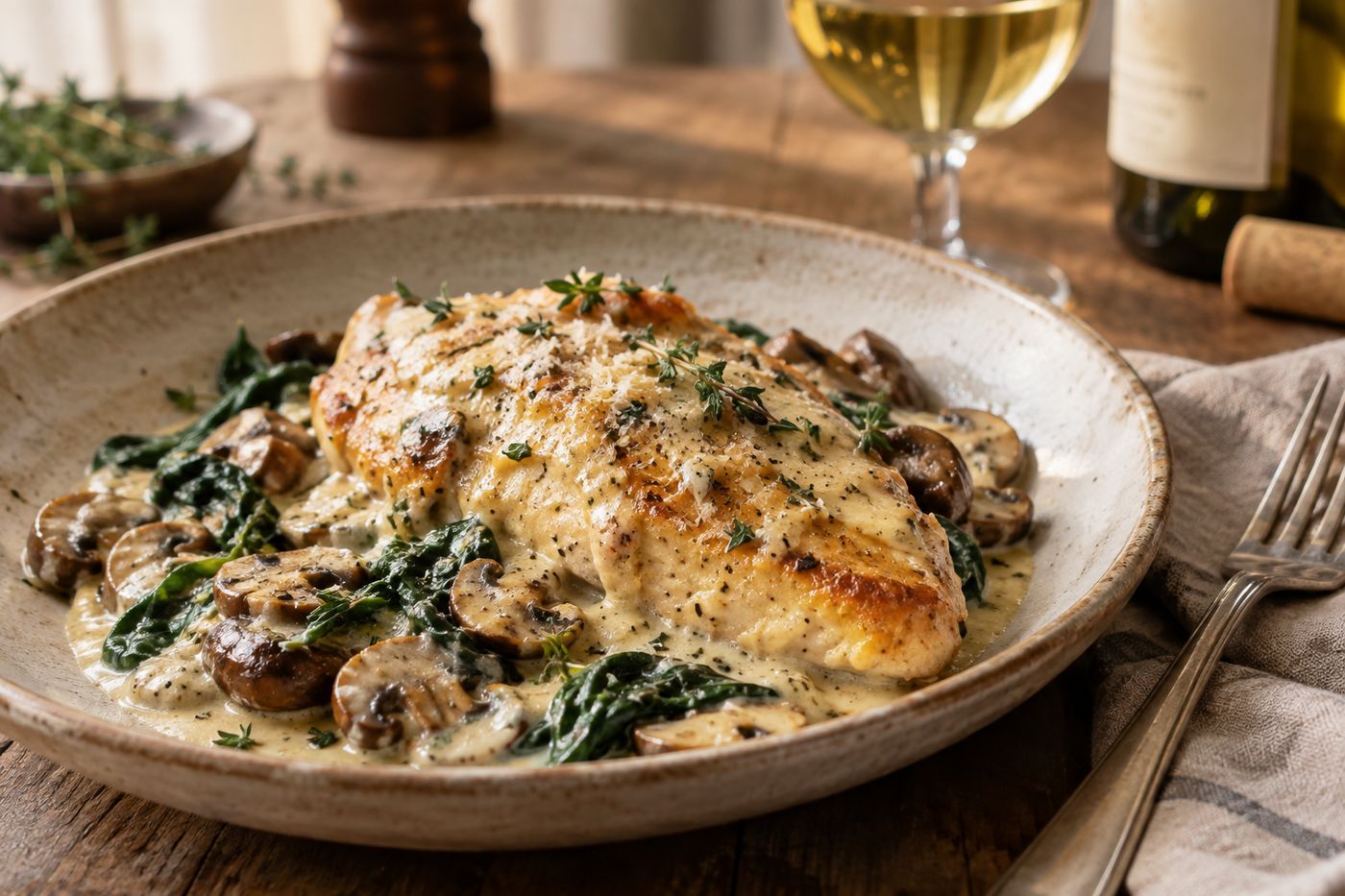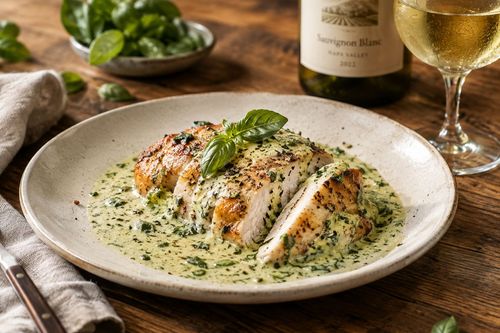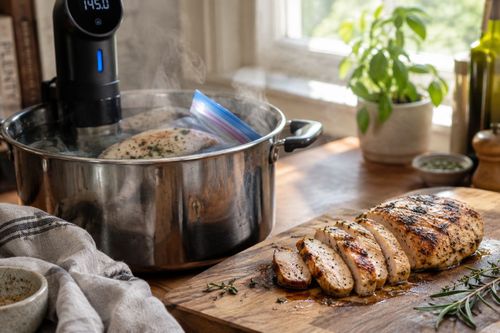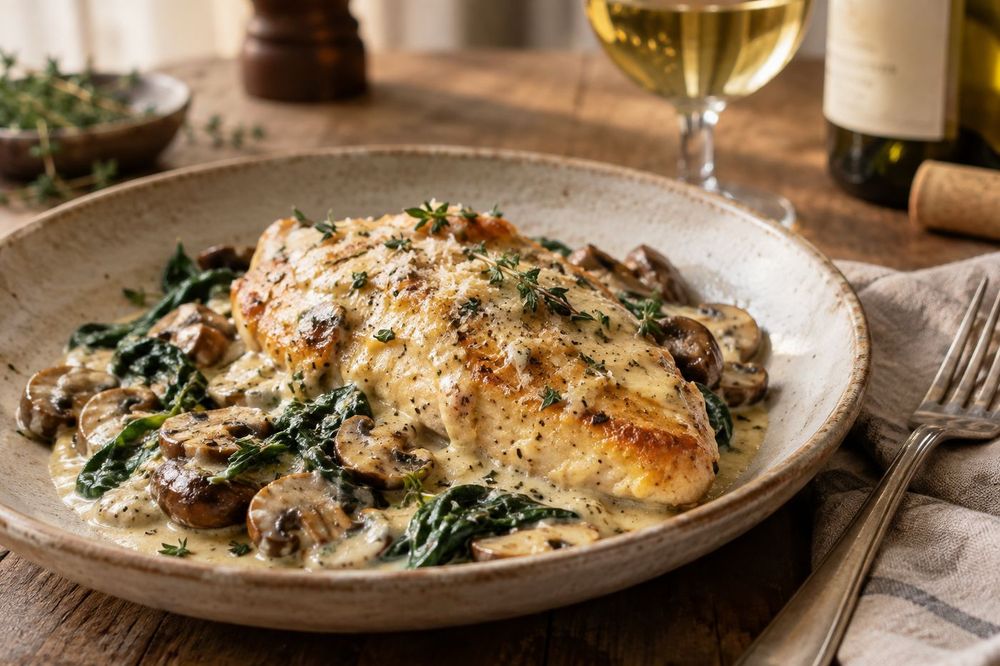



There's a particular satisfaction in watching a simple chicken breast transform into something restaurant-caliber through nothing more than proper technique and a few well-chosen ingredients. Smothered Asiago Chicken with Spinach & Mushrooms is exactly that kind of dish — deceptively straightforward on paper, but structurally sound in a way that rewards attention to detail.
The building blocks here are all about layering: a properly seared chicken breast, earthy sautéed mushrooms, wilted spinach for a touch of mineral bitterness, and a nutty Asiago cream sauce that ties everything together. Each component contributes something distinct to the final bite, and none of it happens by accident.
This is a dish built for the middle of the week — substantial enough to feel like a real dinner, but not so labor-intensive that it demands a weekend's worth of prep time. That balance is precisely what makes it worth revisiting.
What follows is a breakdown of why this combination works, how to execute it properly, and which wine will elevate it rather than compete with it.
The Inspiration Behind This RecipeAsiago occupies an interesting middle ground in the cheese world — nuttier and firmer than mozzarella, but without the sharp bite of an aged Parmesan. That makes it an ideal candidate for a cream sauce, where it melts smoothly while still contributing real flavor depth rather than just richness.
The addition of mushrooms and spinach isn't incidental. Mushrooms bring umami compounds that deepen the savory profile of the sauce, while spinach adds a subtle vegetal contrast that keeps the dish from becoming one-dimensionally rich. Together, they turn a simple cream sauce into something with genuine complexity.
A Brief History of Smothered Chicken PreparationsSmothered chicken as a technique traces back to Southern and Creole cooking traditions, where meat was braised low and slow in a flavorful gravy or sauce until fork-tender. The modern iteration — searing chicken and finishing it in a cream-based sauce — borrows that same philosophy of building flavor in stages rather than relying on a single seasoning moment.
Asiago's inclusion nods toward Northern Italian cooking traditions, where regional cheeses were often incorporated into cream sauces for pasta and poultry alike. This recipe essentially bridges two culinary lineages: Southern comfort-food technique with Italian-inspired flavor architecture.
Why This Cooking Method WorksSearing the chicken first accomplishes two things: it develops a Maillard-browned crust that adds textural contrast, and it leaves behind fond in the pan — those browned bits that form the flavor foundation for the sauce. Deglazing over that fond means none of that flavor potential goes to waste.
Finishing the chicken in the sauce, rather than fully cooking it there from the start, also prevents overcooking. The chicken essentially poaches gently in cream for the final few minutes, which keeps it moist while allowing the sauce to reduce and thicken around it.
Flavor Profile: What to ExpectThis dish delivers a layered, savory richness without veering into heaviness, thanks to the balance struck between its components.
- Nutty and savory: from the melted Asiago cheese
- Earthy depth: contributed by sautéed mushrooms
- Subtle bitterness: from wilted spinach, cutting the richness
- Creamy body: a velvety sauce that clings to the chicken
- Bright acidity: a touch of white wine or lemon in the sauce base
The overall effect is comforting but never cloying — every bite has somewhere to go.
Tips for Making the Best Smothered Asiago ChickenA few technical notes make a meaningful difference here.
- Pound the chicken evenly to ensure consistent cooking and prevent dry edges.
- Don't crowd the pan when searing mushrooms — excess moisture will steam rather than brown them.
- Grate your own Asiago rather than using pre-shredded cheese, which contains anti-caking agents that can make the sauce grainy.
- Simmer gently once the cream is added — a hard boil can cause the sauce to break.
- ★ Chardonnay (lightly oaked): the best overall match — its buttery notes echo the cream sauce while acidity cuts through the richness.
- Pinot Grigio: a crisper, more neutral option for those who want the dish's flavors to lead.
- Viognier: its floral, stone-fruit notes complement the nuttiness of the Asiago nicely.
- Sauvignon Blanc: a sharper acidic contrast, best for those who prefer a cleaner finish.
- Light Pinot Noir: if red is preferred, its low tannins won't clash with the cream sauce.
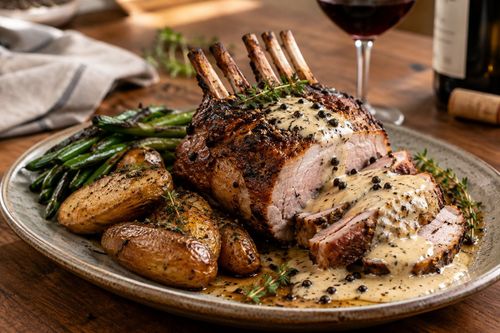
Roasted garlic mashed potatoes or a simple wild rice pilaf both do excellent work soaking up the sauce. A side of roasted asparagus or green beans adds textural contrast and a bit of freshness against the richness of the dish.
If you enjoyed the cream-sauce structure here, it's worth revisiting Chicken Cutlets in Creamy Wine Pesto Sauce — another midweek dish built on the same principle of building a sauce in stages, though with a brighter, herbaceous profile instead of this dish's nuttier, earthier direction.
Storage, Reheating, and Make-Ahead TipsStore leftovers in an airtight container in the refrigerator for up to three days. Reheat gently over low heat on the stovetop, adding a splash of cream or chicken broth to loosen the sauce, which will thicken considerably once chilled. This dish doesn't freeze particularly well, as cream sauces tend to separate upon thawing.
Why This Recipe Deserves a Spot in Your Wine Wednesday RotationThis is the kind of dish that proves elevated cooking doesn't require excessive time or exotic ingredients — just sound technique applied with intention. Paired with the right glass of Chardonnay, it turns an ordinary midweek dinner into something genuinely worth savoring.