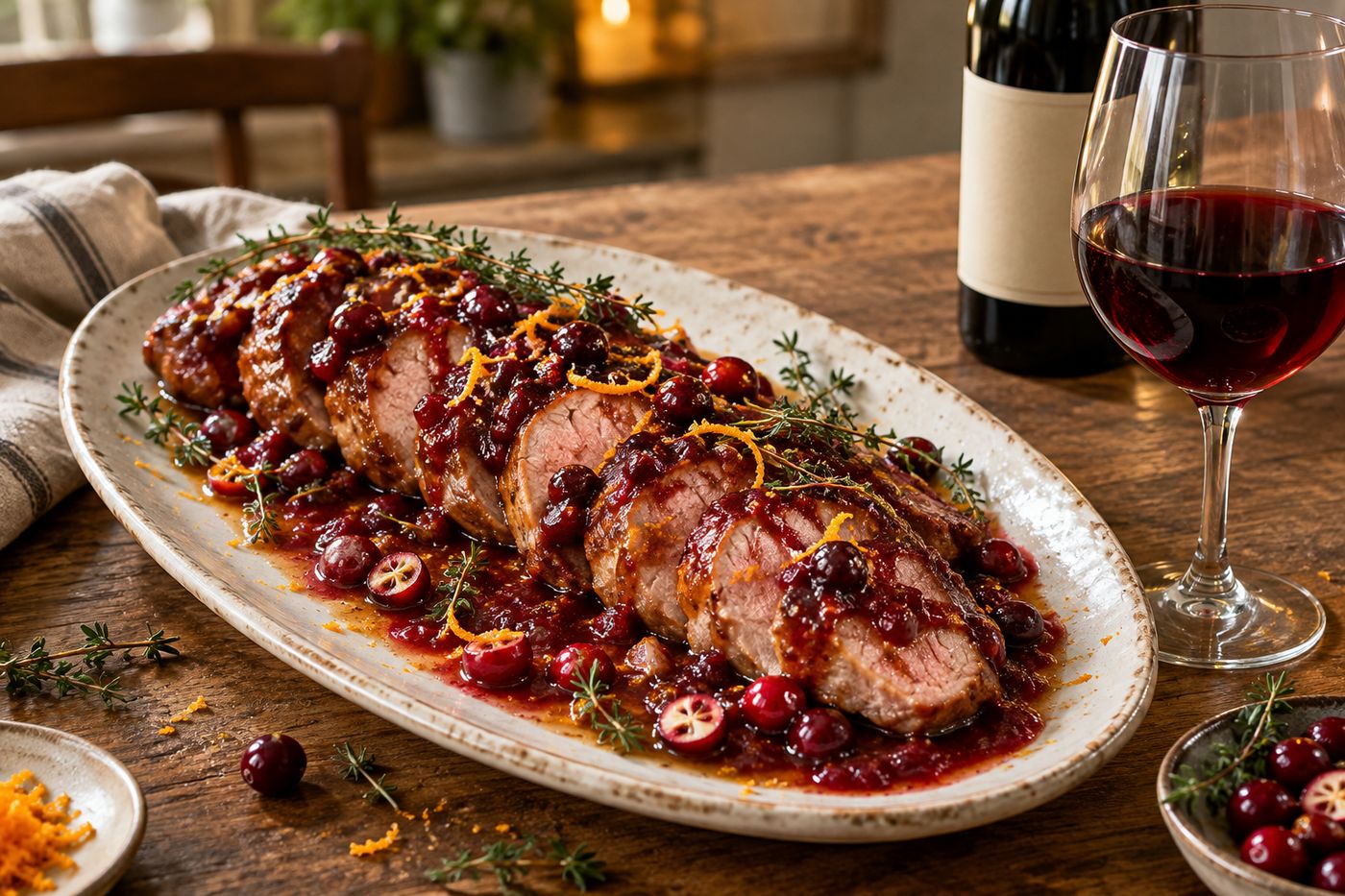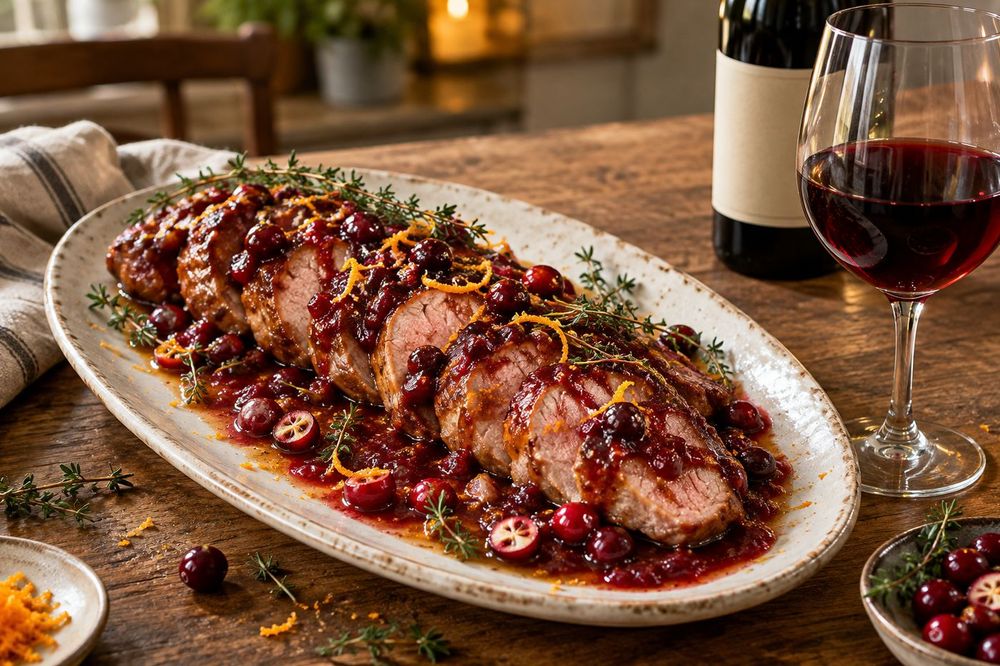



There's a particular satisfaction in coming home to a kitchen that already smells like dinner is handled. This crockpot cranberry orange pork tenderloin is one of those rare recipes that delivers restaurant-level flavor complexity while asking almost nothing of you in real time — a few minutes of prep in the morning, and the slow cooker does the rest. The tartness of cranberry, the brightness of orange zest, and the deep savoriness of slow-braised pork combine into something that tastes far more labor-intensive than it actually is.
What draws me to this dish, technically speaking, is the interplay between acid and fat. Pork tenderloin is a lean cut, which means it benefits enormously from a sauce with enough acidity and sugar to build a glaze as it cooks, while also preventing the meat from drying out over a long braise. Cranberry and orange do double duty here: they tenderize gently, they caramelize into a glossy reduction, and they balance the richness of the pork without overwhelming it.
It's also a dish built for the season. Cranberries are peaking, the air has that first cool edge, and there's something inherently comforting about a slow cooker doing quiet work in the background of a busy weekday. This is precisely the kind of recipe I built my career on developing: approachable, technically sound, and worth savoring with a good glass of wine.
The Inspiration Behind This RecipeThis recipe grew out of a desire to bring holiday-adjacent flavors into a weeknight-friendly format. Cranberry and orange are typically reserved for Thanksgiving tables, but there's no reason those flavors can't anchor a midweek dinner. I wanted a dish that used the slow cooker not as a shortcut, but as a genuine technique — one that produces better texture and flavor development than a quick sauté ever could for this particular cut.
The pairing of citrus and tart berry with pork also has deep roots in classical French and American regional cooking, where fruit-based glazes were used to cut through the richness of fattier cuts. Adapting that principle to lean tenderloin, and to a hands-off cooking method, felt like the natural evolution of that idea.
A Brief History of Fruit-Glazed PorkPairing pork with fruit is one of the oldest combinations in Western cooking, dating back to medieval European kitchens where preserved fruits — dried plums, quince, apples — were simmered into sauces for roasted meats. The tradition made practical sense: fruit preserves were shelf-stable through winter, and their acidity helped balance the richness of pork, which was often the primary protein available in colder months.
Cranberry specifically became associated with North American holiday cooking by the 19th century, prized for its sharp tartness and vivid color. Its pairing with orange is a more modern innovation, popularized in mid-20th-century American home cooking, where citrus was used to soften cranberry's natural bitterness and add aromatic lift. This recipe borrows from both traditions, updating them for a slow-cooker format that suits contemporary schedules.
Why This Cooking Method WorksSlow cooking is uniquely suited to this flavor profile because it allows the cranberry-orange mixture to break down slowly, releasing pectin from the berries that naturally thickens into a glaze without any additional starch. The low, consistent heat also prevents the lean tenderloin from seizing up or drying out, which is a real risk with high-heat methods on this cut.
Over several hours, the sugars in the orange juice and cranberries caramelize gently against the pork, building layers of flavor that a quick pan sauce simply can't replicate. The result is meat that's fork-tender, infused throughout rather than just coated on the surface, sitting in a sauce that has genuine depth rather than one-note sweetness.
Flavor Profile: What to ExpectThis dish delivers a sophisticated balance of tart, sweet, and savory. The cranberries provide sharp acidity, the orange contributes floral sweetness and aromatic zest, and the pork itself brings a mild, slightly nutty richness that absorbs the surrounding flavors beautifully. A touch of garlic and thyme in the background rounds things out with savory depth, keeping the dish from tipping into dessert territory.
Tips for Making the Best Crockpot Cranberry Orange PorkSear the tenderloin briefly before it goes into the slow cooker — this single step builds a Maillard crust that adds meaningful flavor complexity to the finished glaze. Use fresh or frozen cranberries rather than canned sauce, as canned versions contain added sugars and stabilizers that throw off the balance. Finish the sauce with a quick reduction on the stovetop after cooking if you want a thicker glaze; the slow cooker liquid tends to be slightly looser than ideal straight from the pot.
Wine Pairing Guide- ★ Pinot Noir — its bright red fruit and soft tannins mirror the cranberry without competing, making this the standout match.
- Gewürztraminer — its natural sweetness and lychee-citrus notes echo the orange element beautifully.
- Grenache — a juicy, low-tannin red that plays well with the dish's sweet-tart glaze.
- Riesling (off-dry) — its acidity cuts through the richness while its sweetness supports the fruit sauce.
- Beaujolais — light-bodied and fruity, a versatile everyday option that won't overpower the pork.
Serve this pork sliced over a bed of creamy mashed potatoes or wild rice pilaf to soak up the glaze, with a simple roasted green vegetable like broccolini or green beans on the side to add textural contrast. If you're looking to round out a full Wine Wednesday spread, this dish pairs surprisingly well alongside our Cranberry & Spinach Stuffed Chicken with Brie — the shared cranberry note ties the meal together without feeling repetitive, especially if you're hosting and want a dual-protein table.
Storage, Reheating, and Make-Ahead TipsStore leftovers in an airtight container in the refrigerator for up to four days. Reheat gently in a covered skillet over low heat with a splash of chicken broth or water to loosen the sauce, which will thicken considerably once chilled. This dish also freezes well for up to three months — thaw overnight in the refrigerator before reheating for best texture.
Why This Recipe Deserves a Spot in Your Wine Wednesday RotationThis is the kind of dish that proves elegant doesn't have to mean labor-intensive. It builds real technique and flavor depth through patience rather than effort, and it pairs beautifully with a glass of something thoughtful — which is precisely the accessible luxury Wine Wednesday is built around. Set it up in the morning, pour a glass of Pinot Noir in the evening, and let the midweek feel a little more special than it usually does.