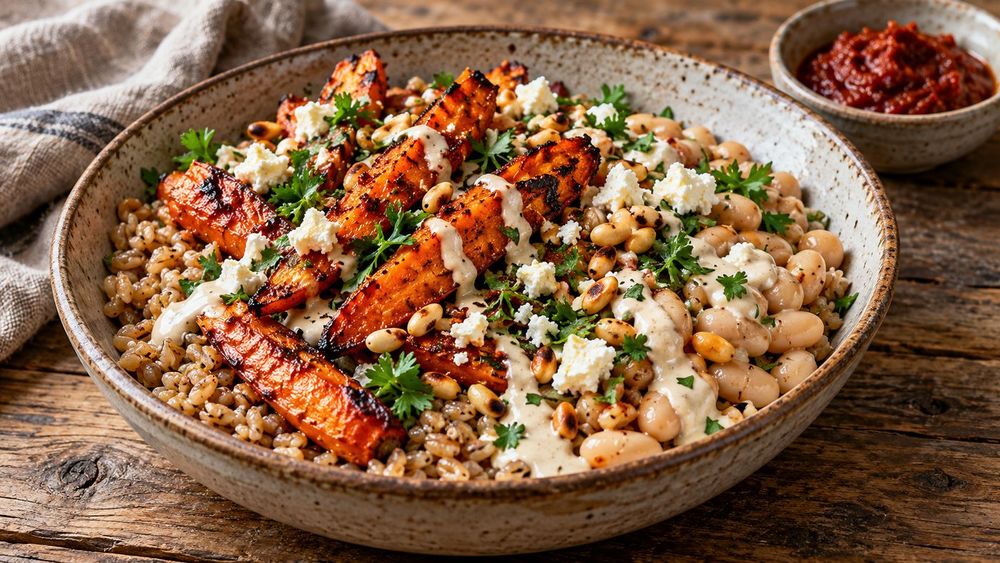
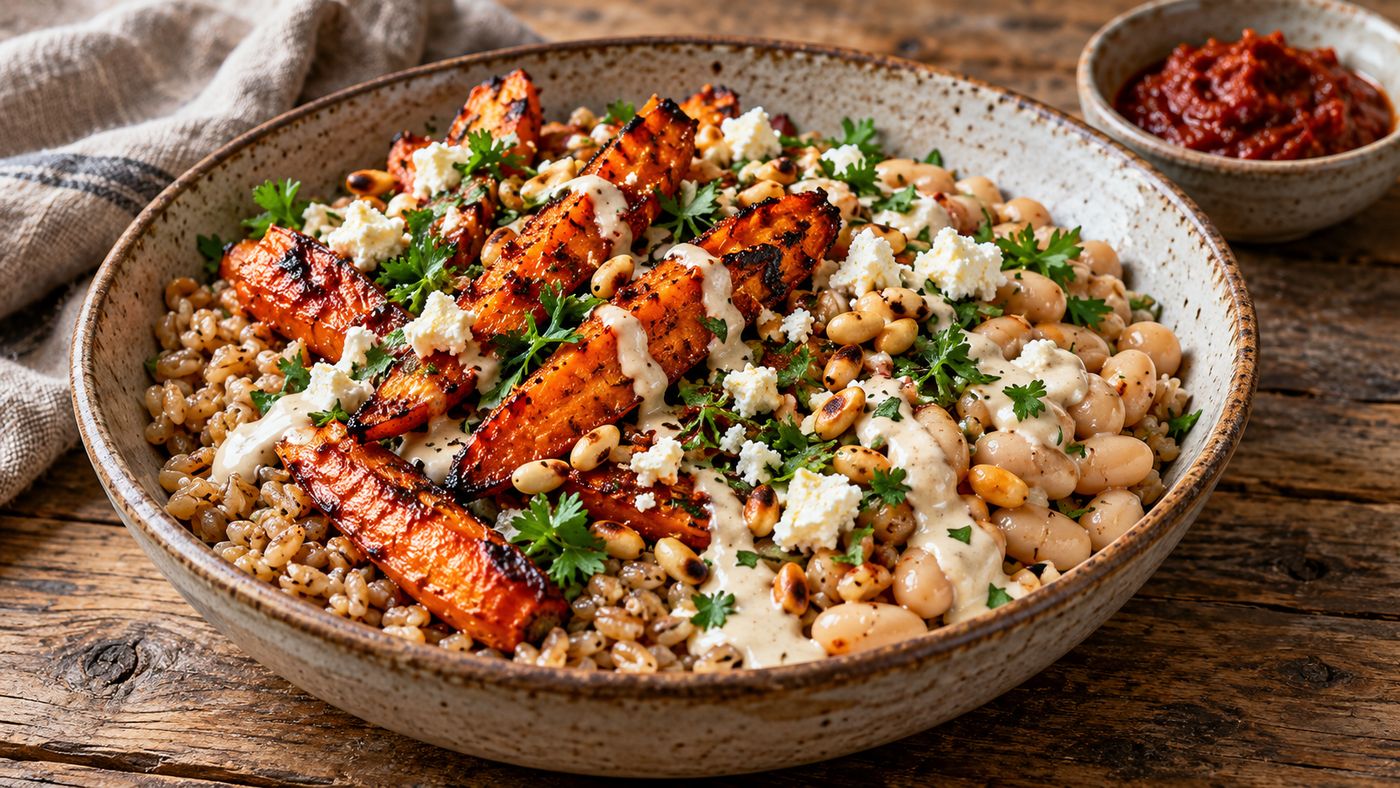

Roasting is one of the most meal-prep-efficient techniques in the entire cooking repertoire, and this recipe is a good demonstration of why. A single sheet pan of carrots and white beans, coated in harissa and warm spice, goes into the oven and comes out thirty minutes later doing most of the work of an entire week's worth of lunches.
What makes this bowl worth breaking down is the way each component is built to hold its structural integrity through multiple days of storage. The carrots caramelize rather than steam, which locks in both flavor and texture. The white beans roast alongside them, picking up the same spice coating while developing a slightly firmer, more substantial bite than they'd have straight from the can.
The lemon-tahini drizzle isn't just a flavor add-on — it's a functional component that rehydrates and refreshes the bowl at the moment of eating, which matters a lot when you're dealing with roasted vegetables that have spent a few days in the fridge.
The Inspiration Behind This Recipe
This bowl was built around a specific meal prep problem: vegetarian mains often lack the staying power of protein-forward dishes, both in terms of satiety and in terms of holding their texture over a week of storage. White beans solve both issues at once — they add plant-based protein and fiber, and their sturdy structure roasts well without turning mushy.
Harissa was chosen as the seasoning base for its efficiency — a couple of tablespoons delivers smoke, heat, and depth to both the carrots and beans in one step, rather than requiring a longer spice list to achieve the same complexity.
The result is a bowl that reads as a satisfying main course rather than a side dish stretched to fill a container, which is exactly the standard a vegetarian meal prep option needs to meet.
A Brief History of Harissa and Roasted Vegetable Grain Bowls
Harissa originates in North Africa, most closely tied to Tunisian cuisine, where it's traditionally made from roasted red chilies, garlic, and warming spices like cumin and caraway. Its use as both a cooking seasoning and a finishing condiment makes it particularly well suited to a roasting application like this one, where it can coat vegetables before they hit the oven and continue developing flavor as they caramelize.
Grain bowls built around roasted vegetables have deep roots across Middle Eastern and Mediterranean cooking traditions, where grains like farro and bulgur have long served as a hearty, affordable base for vegetable-forward meals. Tahini-based sauces are a similarly longstanding staple across the region, prized for their ability to add richness and tang without relying on dairy.
This bowl draws directly from those traditions — a spiced, roasted vegetable centerpiece, a grain base, and a tahini finish — while structuring the whole thing specifically for a week of advance preparation.
Why This Cooking Method Works for Meal Prep
Roasting at a high temperature (425°F) is the key technical decision here. That heat level drives off moisture quickly, which means the carrots caramelize at the edges rather than steaming in their own liquid — a critical distinction for meal prep, since steamed vegetables tend to turn watery and lose texture over several days of storage, while caramelized ones largely hold their structure.
Roasting the white beans alongside the carrots, rather than adding them cold at serving time, gives them a firmer exterior and lets them absorb the same harissa coating, which means every bite of the bowl carries consistent seasoning rather than having a distinctly under-seasoned component.
Keeping the tahini drizzle separate until serving is equally deliberate. Because tahini-based sauces thicken and can separate slightly when refrigerated, whisking it fresh — or giving it a quick stir before drizzling — keeps its texture smooth and prevents it from making the grains soggy over multiple days.
Flavor Profile: What to Expect
This bowl balances smoky heat against bright, creamy, and earthy notes. Here's the breakdown:
- Smoky and warm: Harissa and smoked paprika give the carrots and beans a deep, slightly spicy backbone.
- Naturally sweet: Roasted carrots develop a caramelized sweetness that balances the heat.
- Nutty and rich: Tahini brings a creamy, slightly bitter depth to the drizzle.
- Bright and tangy: Lemon juice in the sauce cuts through the richness and keeps the bowl feeling fresh.
- Earthy and hearty: Farro or quinoa adds a substantial, nutty base that grounds the whole dish.
The harissa's heat mellows slightly over a few days as it integrates further into the roasted vegetables, so this bowl tends to taste more rounded — rather than sharper — by the middle of the week.
Tips for Making the Best Harissa Roasted Carrot & White Bean Grain Bowl
A few technical notes worth locking in:
- Cut carrots evenly: Uniform batons ensure everything roasts at the same rate, avoiding a mix of burnt and underdone pieces.
- Don't overcrowd the pan: Give the carrots and beans room to spread out — overcrowding traps steam and prevents proper caramelization.
- Pat the beans dry: Removing excess moisture before roasting helps them crisp slightly rather than steam.
- Thin the tahini gradually: Add water a tablespoon at a time — tahini can seize up before it loosens into a pourable sauce.
- Store the sauce separately: This keeps the grains from getting soggy and the sauce tasting freshly made.
Portioning and Container Suggestions
Divide the cooked grains among four containers as your base layer, then top with the roasted carrots and white beans. Compartmentalized containers work particularly well here, keeping the greens crisp and separate from the warm components.
Store the lemon-tahini drizzle in a small separate container, giving it a quick stir or shake before use since it can thicken slightly in the fridge. Add it, along with the feta, parsley, and toasted nuts, right before eating to preserve their texture and visual appeal.
If you're prepping for grab-and-go lunches, keeping the arugula in a separate small bag and adding it just before eating prevents it from wilting under the warm roasted vegetables.
Storage, Reheating, and Shelf Life Tips
- Refrigerator: Store roasted carrots, beans, and grains in an airtight container for up to 5 days.
- Reheating: Warm gently in the microwave for 60-90 seconds, or reheat in a skillet to help re-crisp the vegetable edges.
- Tahini sauce: Keeps well refrigerated for up to a week; stir or shake before each use.
- Fresh toppings: Add arugula, feta, parsley, and nuts fresh at serving time for the best texture.
- Freezing: The roasted carrots and beans freeze reasonably well for up to 2 months; the tahini sauce and greens should not be frozen.
Why This Recipe Deserves a Spot in Your Meal Prep Rotation
This bowl earns its place by delivering a vegetarian main that doesn't feel like a compromise — it's hearty, well-seasoned, and structurally built to hold up over several days without losing texture or flavor. It's also an efficient, cost-effective way to build a full week of satisfying lunches from a single sheet pan and one pot of grains.
It's a strong option for anyone looking to add more plant-based meals into their rotation without sacrificing the bold, developed flavor that makes a dish genuinely worth reheating.
Meal Prep Pairing Suggestions
Round out your weekly spread by pairing this with a protein-forward main like our Sesame Crusted Tuna & Edamame Rice Bowls for variety across the week, or our Harissa Spiced Lamb & Couscous Bowls if you want to keep the North African spice profile consistent from one meal to the next.