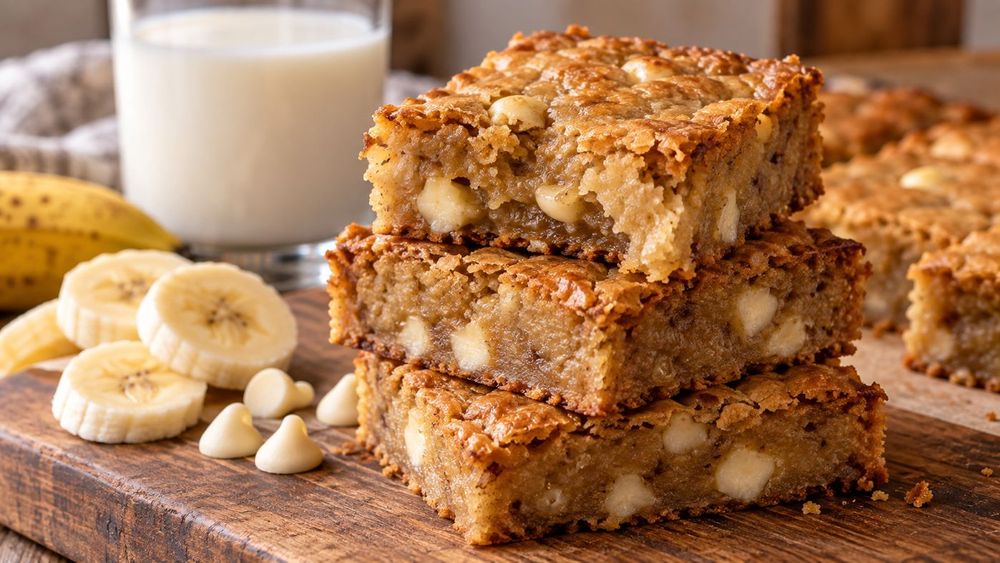
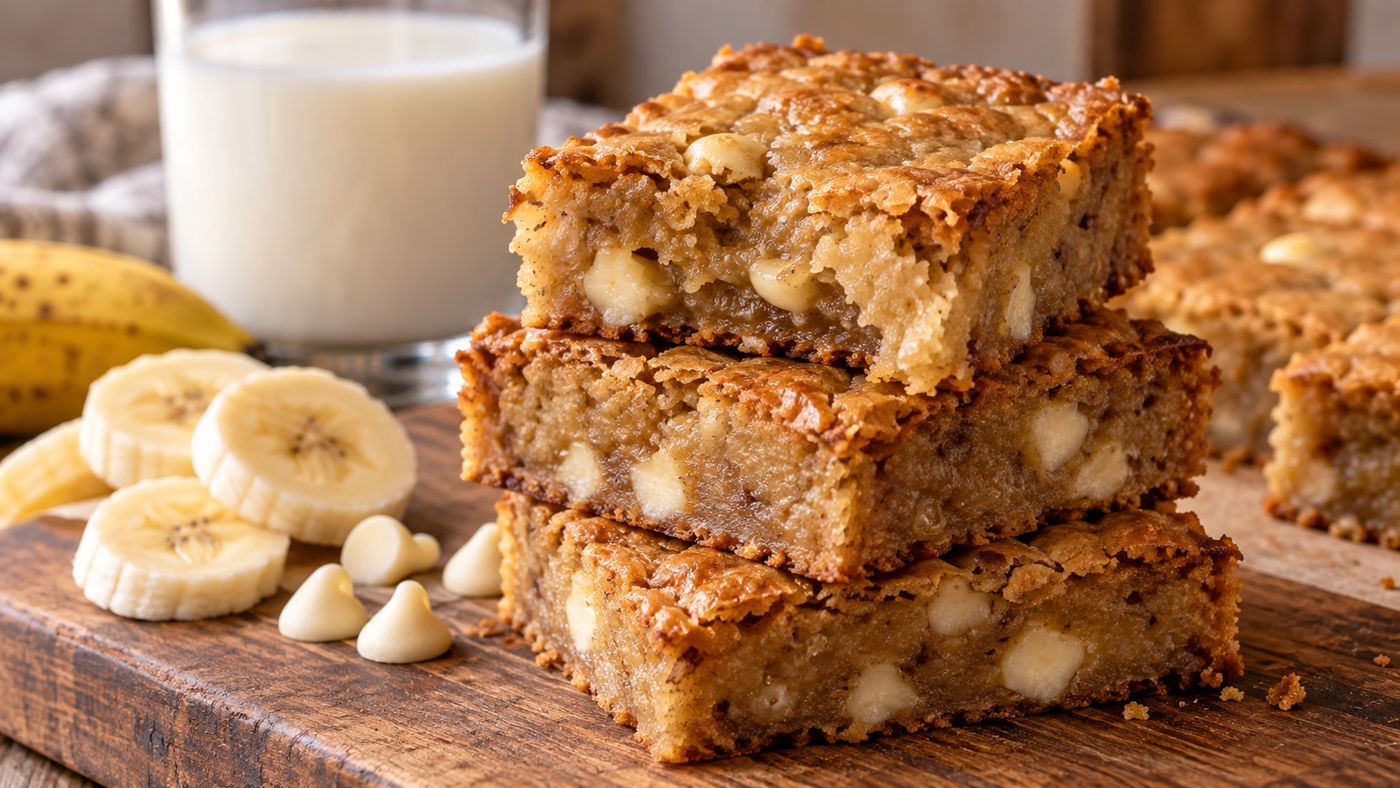

Banana Blondies occupy a fascinating middle ground in the baking world — somewhere between banana bread and a classic butter blondie, with the best qualities of both. The banana brings moisture, natural sweetness, and that distinctive ripe fruit flavor, while the brown sugar and melted butter create the dense, fudgy, chewy structure that defines a great blondie. The result is something genuinely its own: not banana bread, not a traditional blondie, but a bar that's arguably better than either.
What I love most about this recipe from a pastry science perspective is how ripe bananas function as a multi-tasking ingredient. They contribute moisture (reducing the need for additional liquid), natural sugar (allowing a slightly reduced refined sugar ratio compared to a standard blondie), structure-building starch, and the volatile aromatic compounds responsible for that characteristic banana fragrance that fills your kitchen during baking. One ingredient doing four jobs simultaneously — that's elegant recipe design.
The cinnamon is subtle but deliberate. It doesn't announce itself as "cinnamon flavor" — instead it deepens the banana's warmth and rounds out the brown sugar's molasses notes, creating a more complex background flavor than you'd get without it. This is cinnamon used as a flavor enhancer rather than a primary note, which is exactly the right approach in a bar where banana and brown sugar deserve center stage.
The Inspiration Behind This Recipe
Banana Blondies exist because of a question I kept asking myself: why does banana bread get all the glory for using up ripe bananas? The browning, soft banana sitting on the counter is as suited to a dense, fudgy bar as it is to a loaf — arguably more so, because the blondie format concentrates the banana flavor rather than distributing it through a taller, more cake-like crumb. I wanted to create a bar that celebrated the banana as a genuine starring ingredient rather than treating it as a clever workaround for overripe fruit.
The white chocolate chip option came from recognizing that banana and white chocolate share a natural affinity — both are sweet and creamy, and white chocolate's vanilla-forward character amplifies banana's own vanilla undertones. The walnut option acknowledges the banana bread tradition where nuts provide essential crunch against the soft, yielding crumb. Both additions are optional, but both are excellent — choose based on your preference for the direction you want to take the bar.
A Brief History of Blondies
Blondies predate brownies in American baking history — early versions appear in cookbooks from the late 19th century as simple butter-and-brown-sugar bar cookies. The format gained significant popularity in the early 20th century as baking powder and vanilla extract became widely available, allowing home bakers to create rich, chewy bars with consistent results. Brownies, which emerged slightly later with the addition of chocolate, became more famous, but blondies maintained a devoted following for their butterscotch depth and caramel notes that chocolate can sometimes overwhelm.
The banana blondie specifically represents the natural evolution of both the blondie format and the American tradition of ripe banana baking. Banana bread became a Depression-era staple — a practical solution to food waste that happened to taste extraordinary. Combining that philosophy with the blondie's rich, dense bar format creates something that honors both traditions: the resourcefulness of banana bread and the indulgence of a proper blondie.
Why This Recipe Works
Melted butter rather than softened butter is the foundational choice that defines this blondie's texture. Creaming softened butter with sugar incorporates air, producing a lighter, more cake-like result. Melted butter, combined with sugar by whisking rather than beating, creates a denser, fudgier, chewier bar — which is exactly the textural target for a great blondie. The banana reinforces this tendency toward density because its moisture and starch contribute to a structure that's more yielding than a traditional cookie but more substantial than cake.
The combination of baking powder and baking soda addresses two distinct needs. Baking soda reacts with the banana's natural acidity to provide initial lift and browning. Baking powder provides additional leavening that continues through the full bake, ensuring the bars rise enough to have proper internal structure without becoming cakey. The balance between these two leaveners is calibrated to produce a bar that's risen and set but still dense and fudgy at its core.
The parchment overhang on two sides isn't a suggestion — it's essential technique. Blondies are notoriously difficult to cut cleanly when cooled in the pan without a way to lift the entire slab out. The parchment creates handles that allow you to remove the whole bar in one confident lift, then cut on a flat surface rather than in the pan, producing clean, bakery-quality squares every time.
Flavor Profile: What to Expect
The primary flavor is warm, sweet banana — concentrated and slightly deeper than fresh banana, with the characteristic richness that develops when ripe fruit meets oven heat. Brown sugar's molasses notes create caramel depth that complements banana without competing. Butter provides richness throughout, and cinnamon adds a barely perceptible warmth that makes everything taste more cohesive and complex.
Texturally, these bars are dense and chewy with a slightly crackled golden surface — similar in structure to a fudgy brownie but lighter in color and warmer in flavor. The interior is moist and yielding; the edges develop a slight crispness where the butter has contacted the pan. If you've included white chocolate chips, expect pockets of creamy sweetness. Walnuts provide crunch and a mild bitterness that balances the banana's sweetness beautifully.
Tips for Making the Best Banana Blondies
Banana ripeness matters more here than in almost any other banana recipe. You want bananas that are heavily spotted, soft throughout, and deeply aromatic — the kind that smell intensely of banana even before you peel them. Under-ripe bananas lack the sugar content and aromatic complexity that make these bars exceptional. If your bananas aren't quite there yet, you can accelerate ripening by placing unpeeled bananas on a baking sheet in a 300°F oven for 20-25 minutes until the skins turn completely black.
Don't overmix once the dry ingredients are added. Stir until no flour streaks remain and stop immediately — a few turns too many and the gluten develops enough to produce a tougher, less tender bar. The batter will be thick and slightly sticky, which is correct. Resist the urge to add liquid; the banana provides all the moisture these bars need.
Watch the bake time carefully. The toothpick test applies here, but with a critical caveat: you want moist crumbs on the toothpick, not a completely clean one. A clean toothpick means overbaked — these bars should retain fudgy moisture at their core. The top should be golden and set, and the edges should be pulling away slightly from the pan sides, but the center can look just barely done. Carry-over cooking as they cool in the pan will finish the job.
Cool completely before cutting. This isn't just about structure — the banana flavor actually deepens and becomes more pronounced as the bars cool and the aromatic compounds settle. Bars cut warm taste good; bars cut after full cooling taste significantly better.
Serving Suggestions
Banana Blondies work beautifully at room temperature as a standalone bar — they need no accompaniment to be completely satisfying. For a more indulgent presentation, serve slightly warm (10 seconds in the microwave) with a scoop of vanilla ice cream and a drizzle of salted caramel sauce. The warm banana blondie against cold ice cream creates a temperature contrast that's genuinely extraordinary.
For breakfast or brunch service, these bars are excellent alongside coffee or tea — their banana bread DNA makes them feel appropriate for morning without the guilt of serving pure dessert. A smear of almond butter or peanut butter on top is a particularly good combination if you're leaning into the breakfast direction. For gifting, these bars wrap and travel beautifully — they maintain their moisture and flavor for days, making them excellent candidates for bake sale boxes, hostess gifts, or care packages.
Storage and Make-Ahead Tips
Store Banana Blondies in an airtight container at room temperature for up to four days — they actually improve slightly on day two as the banana flavor concentrates and the bars settle into their final texture. Refrigerating extends shelf life to one week but firms the texture slightly; allow refrigerated bars to come to room temperature before serving for the best experience. For longer storage, freeze individual bars wrapped tightly in plastic wrap and then foil for up to three months. Thaw at room temperature for one to two hours — frozen and thawed blondies are nearly indistinguishable from fresh.
The batter can be prepared up to 24 hours ahead and refrigerated, covered, before baking. Cold batter may require an additional two to three minutes of bake time — start checking at the 27-minute mark rather than 25. This make-ahead option is particularly useful for entertaining, allowing you to have fresh-baked blondies ready with minimal day-of effort.
Why This Recipe Deserves a Spot in Your Rotation
Banana Blondies solve one of the most common kitchen problems — overripe bananas — with more flair and less effort than banana bread. The bar format means faster baking time, easier portioning, and a more versatile finished product that works for breakfast, snacking, dessert, and gifting with equal success. One recipe, infinite contexts.
From a pure flavor standpoint, these bars are genuinely exceptional. The combination of ripe banana, brown sugar, butter, and cinnamon creates something that tastes deeply developed and carefully crafted despite requiring about ten minutes of active work. That ratio of effort to reward is exactly what makes a recipe worth returning to — and worth sharing.