
There's a particular kind of scone that ruins all other scones for you — the kind that stays tender the next day, that has real fruit in every bite, that tastes like someone who genuinely loves baking made it specifically for you. These Blueberry Ricotta Scones are exactly that kind. Whole milk ricotta folded into buttery dough creates a moisture and tenderness that standard scones simply can't achieve, and the fresh blueberries burst during baking into little pockets of sweet-tart intensity that make every single wedge feel like a small celebration.
What I love most about this recipe is how the ricotta works its quiet magic. You don't taste it the way you'd taste cream cheese or sour cream — it disappears into the dough and transforms the texture from the inside out, creating a crumb that's soft and almost custardy rather than the dry, crumbly texture that gives scones an undeserved reputation. The lemon zest is equally important: it wakes everything up, sharpening the blueberry flavor and giving the ricotta's mild richness a bright edge that keeps each bite feeling fresh rather than heavy.
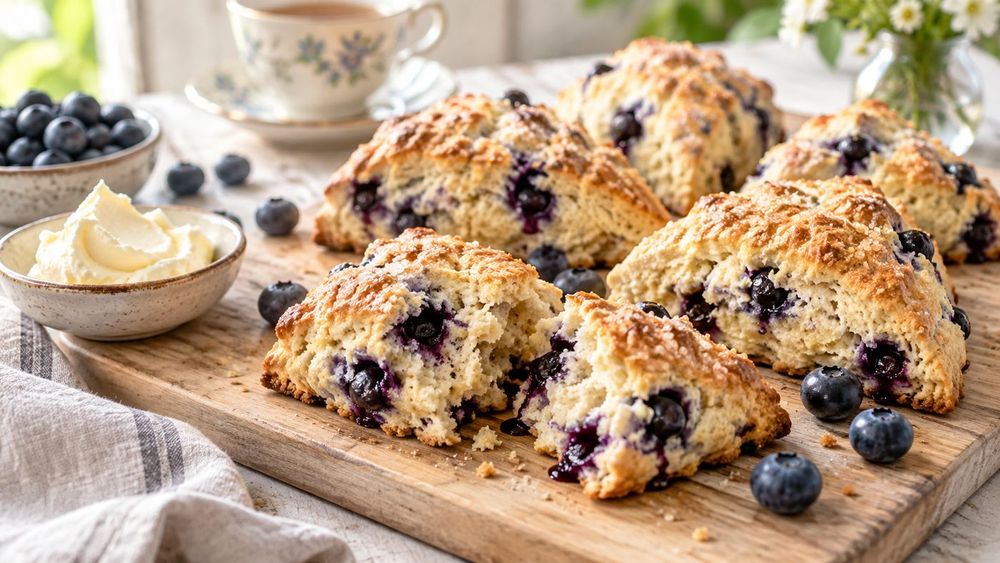
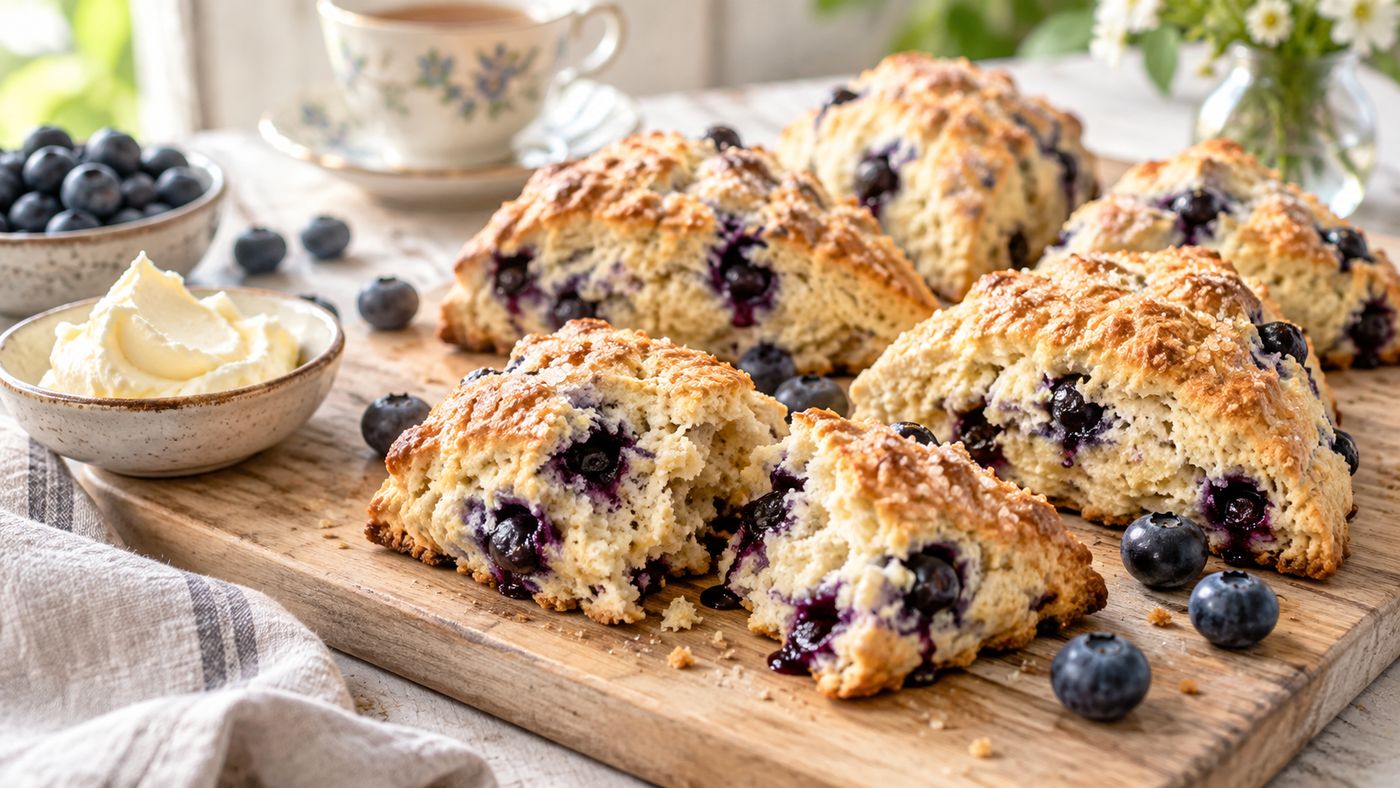
These scones also happen to be genuinely beautiful — golden brown on the outside, purple-streaked from bursting blueberries within, with that sugar-sprinkled top that catches the light in the most appetizing way. Bring them to the table warm from the oven and watch them disappear. That's the only outcome I've ever seen.
The Inspiration Behind This Recipe
My obsession with ricotta in baking began the first time I made an Italian-style ricotta cake and realized that cheese could do something in baked goods that no amount of butter or cream could replicate — it adds fat and moisture without heaviness, structure without density. I started wondering what it would do to a scone, which is traditionally one of the dryer, more austere members of the pastry family. The answer, after considerable experimentation, was this: it makes the scone into something genuinely extraordinary.
The blueberry pairing was instinctive. Blueberries and ricotta have a natural affinity — both are mild enough to let each other shine, and together they create something that feels elegant without being complicated. The lemon zest came later, when I realized the combination needed brightness to keep it from feeling too gentle. That small addition made everything click into place — suddenly the scone had personality, contrast, and the kind of flavor balance that makes you reach for a second one before you've finished the first.
A Brief History of the Scone
Scones originated in Scotland, where early versions were made with oats and cooked on a griddle rather than baked in an oven. The name likely derives from the Dutch word schoonbrot, meaning fine white bread, and early scones bore little resemblance to the tender, leavened pastries we associate with afternoon tea today. It was the widespread availability of baking powder in the 19th century that transformed them — suddenly home bakers could produce light, risen scones without yeast, and the format quickly became a cornerstone of British baking tradition.
The ricotta variation represents a more contemporary evolution, drawing on Italian baking traditions where ricotta appears in everything from pastry fillings to pound cakes to simple breakfast breads. Applying that same logic to the scone format produces something that honors the original's essential character — buttery, lightly sweet, and designed for a slow morning with good tea or coffee — while elevating the texture and moisture in ways that make the classic version feel incomplete by comparison.
Why This Method Works
Cutting cold butter into the dry ingredients is the foundational technique that gives these scones their layered, flaky quality. The cold butter needs to remain in distinct pieces throughout mixing — those pieces melt in the oven and create the steam pockets that produce lift and tenderness. Warm or melted butter would incorporate fully into the flour and produce a dense, uniform crumb without those characteristic flaky layers. Working quickly and keeping everything cold is the single most important technical principle in scone making.
Adding the ricotta mixture separately and stirring only until just combined prevents gluten development that would make the scones tough. A few lumps in the dough at this stage are not only acceptable but desirable — they mean you haven't overmixed, and they'll disappear during baking. Folding the blueberries in last and with a gentle hand preserves their structure, which means whole berries rather than a purple-stained dough that has lost all the textural contrast the fruit is supposed to provide.
Brushing the tops with heavy cream before baking promotes browning through the Maillard reaction while also keeping the surface from drying out during the bake. The sugar sprinkled over the cream creates that beautiful, slightly crunchy top that shatters pleasantly when you bite into it — the textural counterpoint to the soft, moist interior that makes these scones so satisfying.
Flavor Profile: What to Expect
These Blueberry Ricotta Scones deliver a refined, fruit-forward experience with layers of subtle complexity:
Creamy ricotta richness that transforms the crumb into something almost custardy without tasting distinctly like cheese
Juicy blueberry intensity in every bite, with burst berries creating pockets of sweet-tart fruit throughout
Bright lemon zest that sharpens the blueberry flavor and keeps the richness from feeling heavy
Buttery, flaky layers from the cold butter technique that give the scone its structure and satisfying chew
Golden, sugar-crunched crust that provides textural contrast to the tender interior
Vanilla warmth running throughout, tying all the flavors together with quiet aromatic sweetness
The overall experience is one of elegant restraint — these scones are not aggressively sweet or richly indulgent. They're balanced and nuanced, the kind of pastry you find yourself still thinking about an hour after you've eaten one.
Tips for Making the Best Blueberry Ricotta Scones
A few details make the difference between good scones and genuinely memorable ones:
Keep everything cold: Cold butter, cold ricotta, and working quickly are the foundation of proper scone texture. If your kitchen is warm, chill the mixing bowl and your hands under cold water before starting.
Use whole milk ricotta: Part-skim ricotta has lower fat content and won't provide the same richness or moisture. Whole milk is essential here.
Don't overmix: Stop stirring the moment you can no longer see dry flour. A shaggy, slightly rough dough produces more tender scones than a smooth one.
Frozen blueberries work beautifully: If using frozen, don't thaw them — add them directly from the freezer to keep them from bleeding into the dough before baking.
Use a sharp cutter or knife: A clean cut rather than a dragging motion keeps the edges from sealing, which allows the scones to rise properly in the oven.
Don't skip the cream brush and sugar: These finishing details create the golden, slightly crunchy top that makes the scones look and taste professionally made.
Serving Suggestions and Pairings
These scones are at their absolute best served warm from the oven with nothing more than a small dish of softened butter alongside. The heat amplifies the blueberry aroma and keeps the ricotta crumb at its most tender — this is the moment these scones are designed for, and it's worth gathering everyone to the table before it passes. Clotted cream and a spoonful of good lemon curd make a more elaborate accompaniment that leans into the British tradition and feels appropriately special for a weekend brunch occasion.
For a complete spread, serve alongside a simple fruit salad with citrus and mint, a pot of strong tea or a good pour-over coffee, and perhaps a savory egg dish that gives the meal some grounding protein. The scones' gentle sweetness and fruity character work beautifully as the centerpiece of a lighter brunch where the focus is on beautiful baking rather than a heavy, full-plate meal. They're equally lovely at an afternoon tea, a baby shower, a Mother's Day celebration, or any morning when someone deserves something genuinely special made with care.
Storage and Make-Ahead Tips
Store baked scones in an airtight container at room temperature for up to two days — the ricotta helps them stay moist considerably longer than standard scones. Reheat briefly in a 300°F oven for 5 to 8 minutes to restore that just-baked warmth and revive the crust before serving.
For make-ahead convenience, cut the unbaked scone wedges and arrange them on a parchment-lined baking sheet. Freeze until solid, then transfer to a freezer bag and store for up to two months. Bake directly from frozen at 400°F, adding 4 to 5 minutes to the baking time. There is something genuinely wonderful about pulling scones from the freezer on a weekday morning and having something this beautiful on the table thirty minutes later.
The dough can also be mixed and shaped the night before, covered tightly, and refrigerated overnight. The cold rest actually improves the texture — the butter stays firmer and the leavening activates more gradually, producing a slightly more complex, tender crumb than the same-day version.
Why This Recipe Deserves a Spot in Your Rotation
This recipe earns its permanent place because it quietly solves every complaint people have about scones — too dry, too crumbly, stale by the next morning, nothing like what you get at a proper bakery — without requiring any advanced technique or specialized equipment. The ricotta is the secret, and once you understand what it does, you'll find yourself adding it to other baked goods just to see what happens. That's the mark of a genuinely instructive recipe: it teaches you something that changes how you bake everything else.
Beyond the technical lesson, these scones simply make people happy. There's something about warm, blueberry-studded pastry fresh from the oven that creates a kind of uncomplicated breakfast joy that's very hard to manufacture any other way. Make them for people you love on a morning when there's nowhere to be, eat them slowly with good coffee, and appreciate the fact that something this beautiful came from your own oven. That feeling is exactly what the best baking is supposed to produce.
Recommended Drink Pairing
These scones are made for tea — specifically a well-brewed Earl Grey, whose bergamot's citrus aromatics create beautiful harmony with the lemon zest and blueberry while the black tea base provides the gentle tannins that balance the ricotta's richness. English Breakfast or Darjeeling work equally well for those who prefer a more straightforward black tea without the bergamot note. Whatever you choose, brew it properly strong and serve it with milk if that's your tradition — there are few more satisfying combinations in the breakfast world than a warm, buttery scone and a proper cup of tea.
For coffee drinkers, a light roast with bright, fruity notes creates lovely synergy with the blueberry and lemon — the coffee's natural acidity echoes the fruit's tartness without competing. A delicate pour-over or a café au lait with its creamy, gentle character are both excellent choices that honor the scone's refined sensibility. Fresh-squeezed orange juice provides bright citrus refreshment for those wanting something cold and fruit-forward, while sparkling water with lemon keeps things simple and palate-cleansing between bites. Whatever you pour, reach for something with enough brightness and character to meet these scones where they are — elegant, considered, and genuinely worth savoring.