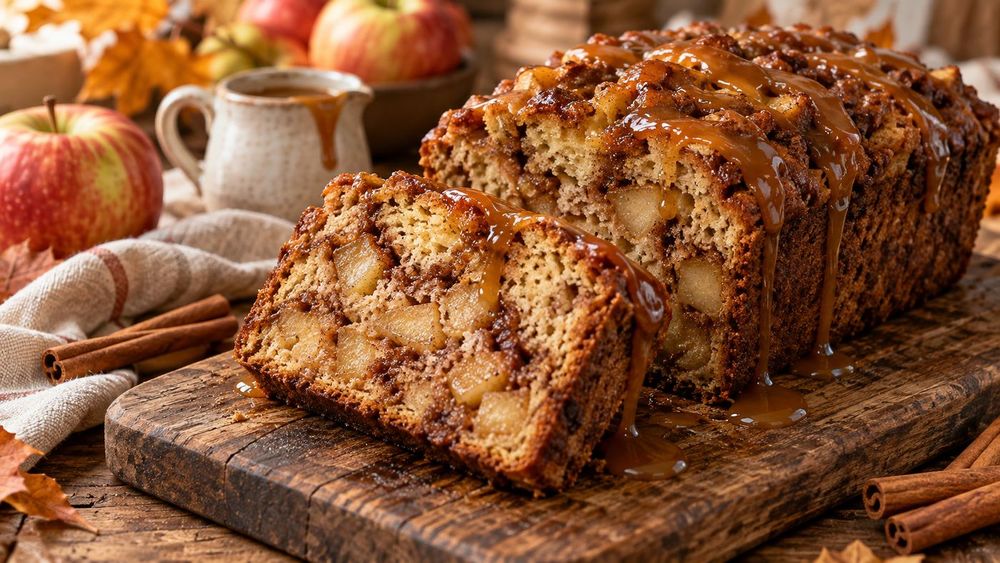
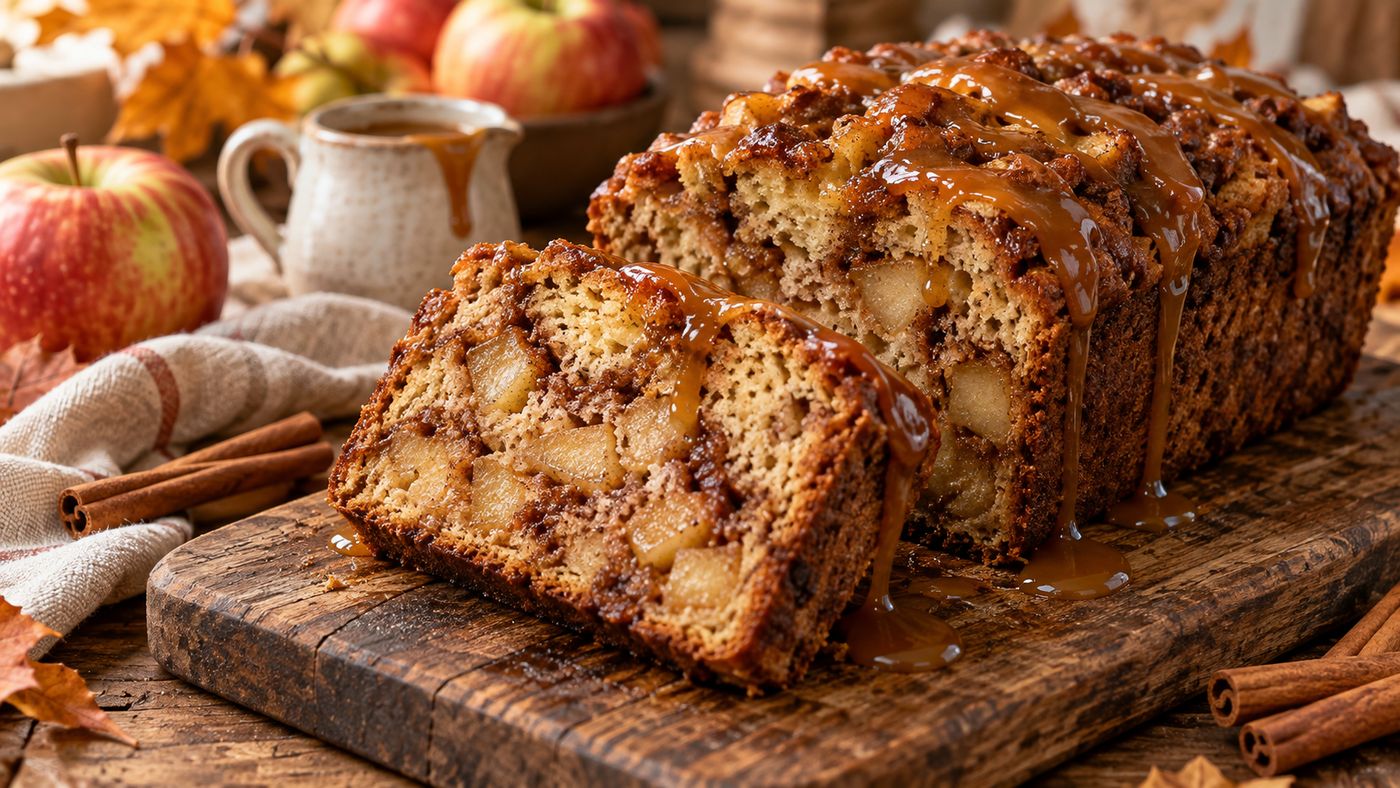

Caramel Apple Fritter Bread is the answer to every craving you've ever had for a warm, glazed apple fritter from a bakery case — except it's made in your own kitchen, slices beautifully, and fills your home with one of the most extraordinary baking aromas imaginable. Cinnamon-spiced apple chunks swirl through a moist, buttery quick bread batter, and a warm caramel drizzle finishes the whole thing with the sticky, sweet glaze that makes fritters so irresistible. The format changes but the experience doesn't: this loaf tastes exactly like the real thing.
What makes this bread technically interesting is the double-swirl method — half the batter goes in, half the apples go in, then you swirl, repeat, and swirl again. This creates an irregular, marbled apple distribution throughout the loaf rather than a neat layer in the middle or a concentrated top. Every slice is different, and every slice has apple threaded through it at multiple depths. That's the structural goal of the technique: maximum apple presence in every single bite rather than apple concentrated in one zone.
The buttermilk is the ingredient that elevates this from good to exceptional. Its acidity reacts with the baking powder to create a tender, fine crumb that stays moist for days. It also provides a subtle tang that prevents the bread from tasting purely sweet — there's a background note of cultured dairy that rounds out the caramel and cinnamon and makes the overall flavor more complex than a standard quick bread achieves. Buttermilk is doing quiet, essential work here, and you'll taste the difference immediately.
The Inspiration Behind This Recipe
Apple fritters occupy a specific and beloved place in bakery culture — they're the thing you tell yourself you won't order and then order every time. The combination of fried dough, cinnamon apple, and sticky glaze is nearly impossible to resist, but the format is inherently occasional: deep-fried, best eaten immediately, and not something most home bakers make regularly. I wanted to capture that same flavor experience in a format that could be made any morning, stored for days, and sliced and served without any of the equipment or effort that frying requires.
The caramel drizzle specifically was the design decision that made this recipe feel complete. Apple fritters get their signature appeal from that glossy, sweet exterior — plain quick bread, however delicious, doesn't have that quality. Thinning caramel sauce with heavy cream creates a drizzle that flows and sets on the cooled loaf's surface, providing exactly that fritter-like sticky sweetness. It's a simple finishing step that changes everything about the bread's character and makes it look and taste genuinely special.
A Brief History of Apple Fritters & Quick Breads
Apple fritters have appeared in American cooking since the colonial era, when fried dough with fruit was a practical and beloved way to use seasonal apple harvests. The basic concept — fruit in batter, fried until golden, finished with sugar — appears across multiple culinary traditions and arrived in America through European settlers who adapted their native recipes to available ingredients. By the 19th century, apple fritters were a fixture of American home cooking, and their migration to bakery cases in the 20th century cemented their status as a beloved commercial pastry.
Quick breads emerged as a distinct category in American baking in the mid-19th century when chemical leaveners became widely available. Before baking powder and baking soda, bread required yeast and the time to proof it. Chemical leaveners produced lift immediately, allowing home bakers to create loaves in under an hour without any fermentation or kneading. Quick breads became essential to American home cooking — banana bread, zucchini bread, pumpkin bread, and now this apple fritter bread represent the tradition at its best: practical, delicious, and deeply suited to the rhythm of home baking.
Why This Recipe Works
Creaming butter and sugar rather than using melted butter is a deliberate choice that affects the final texture significantly. The creaming process — beating softened butter with sugar for two to three minutes — incorporates air into the fat, creating a structure that produces a more tender, cake-like crumb than melted butter methods. For a quick bread, this crumb is ideal: it's soft enough to feel indulgent but structured enough to hold the apple pieces distributed throughout without the fruit causing the bread to collapse or sink.
Tossing the diced apples with cinnamon and sugar before adding them to the batter serves two purposes. The sugar draws moisture from the apples through osmosis, beginning to concentrate their flavor before baking. The cinnamon coats every piece, ensuring that spice is distributed directly throughout the apple rather than just through the surrounding batter. When these pre-seasoned apple pieces bake into the bread, they release their concentrated, cinnamon-forward juice into the surrounding crumb, creating those characteristic pockets of apple flavor that make each bite different and interesting.
Leaving the peel on the diced apples is both a practical and nutritional decision. Peeled apples can become almost indistinguishable from the surrounding crumb after baking — the texture difference disappears and only the flavor remains. Skin-on apples maintain more structural integrity through baking, providing textural contrast that signals apple's presence in each bite. The peel also adds fiber and antioxidants, and its subtle texture is genuinely imperceptible against the bread's moist crumb once baked.
Tenting with foil if the top browns too quickly is more than a suggestion — it's essential technique for a loaf that bakes for nearly an hour. Quick breads with significant sugar content (and this one has both granulated and brown sugar) are prone to surface browning before the interior is fully set. Checking at the 35-minute mark and tenting if the top is already golden ensures the full bake time can complete without burning the surface.
Flavor Profile: What to Expect
The dominant flavor is warm cinnamon apple — sweet, spiced, and deeply autumnal. The apples bake into tender, flavor-concentrated pieces that punctuate the surrounding crumb with bursts of fruit sweetness and cinnamon warmth. Brown sugar in the batter adds molasses depth that echoes the caramel drizzle, creating flavor continuity from interior to exterior. Buttermilk's subtle tang prevents any single element from dominating, keeping the overall profile balanced rather than cloying.
The caramel drizzle provides the finishing sweetness that pulls everything together — it's glossy, sticky, and deeply caramel-forward, with the heavy cream providing just enough richness to make it pourable rather than stiff. The contrast between the lightly crisp loaf exterior and the soft, apple-studded interior mirrors the fritter experience this bread is designed to evoke. Warm from the oven with caramel drizzle pooling into the surface cracks, this loaf is genuinely extraordinary.
Tips for Making the Best Caramel Apple Fritter Bread
Apple variety matters for both flavor and texture. Firm, tart apples — Granny Smith, Honeycrisp, Braeburn — hold their shape through the bake and provide pleasant acidity that balances the bread's sweetness. Soft or very sweet apples like Red Delicious can become mushy and lose structural identity in the crumb. Dice the apples small — about half-inch pieces — so they distribute evenly through the batter without creating large wet pockets that affect baking uniformity.
Don't overmix once the flour is added. The alternating additions method — flour, buttermilk, flour, buttermilk, flour — is specifically designed to minimize gluten development by never letting the flour fully hydrate before fat is introduced. Once all the flour is incorporated, mix only until no streaks remain. Overworked batter develops gluten that produces a tough, dense crumb rather than the tender, moist texture this bread should have.
The toothpick test applies here with a critical location note: insert the toothpick in the very center of the loaf, avoiding apple pieces which will always appear wet. You're testing the batter that surrounds the fruit, and it should come out with clean crumbs or completely clean. Quick breads with fruit are particularly prone to appearing done before they are — if there's any doubt, give it another three to five minutes rather than pulling it early.
Drizzle the caramel over a completely cooled loaf. Warm bread will absorb the caramel rather than allowing it to set on the surface, which means you lose the visual appeal and the textural contrast of the glossy exterior. A fully cooled loaf allows the caramel to drizzle, pool slightly in surface cracks, and partially set — creating that fritter-glaze quality that defines this bread's character.
Serving Suggestions
Caramel Apple Fritter Bread is exceptional on its own — the caramel drizzle provides all the richness and sweetness the loaf needs without any accompaniment. For an indulgent breakfast or brunch presentation, serve slightly warm slices alongside whipped butter and a drizzle of additional warm caramel. Coffee is the ideal pairing — a strong cup cuts through the sweetness and amplifies the cinnamon and apple flavors.
For a proper dessert presentation, warm individual slices in the microwave for 15-20 seconds and serve with a scoop of vanilla ice cream and an extra drizzle of caramel sauce. The warm, apple-studded bread against cold ice cream with caramel pooling between them creates a composed dessert that tastes significantly more elaborate than the effort required. This bread also makes an excellent gift — it transports beautifully, looks stunning with the caramel drizzle visible through clear wrap, and maintains its quality for days.
Storage and Make-Ahead Tips
Store Caramel Apple Fritter Bread tightly wrapped at room temperature for up to three days — the buttermilk keeps it exceptionally moist, and the caramel drizzle actually helps seal the surface against drying. Refrigerating extends shelf life to five days but firms the crumb slightly; allow refrigerated slices to come to room temperature or warm briefly before serving. For freezing, slice the completely cooled, un-drizzled loaf and wrap individual slices in plastic wrap then foil — they freeze beautifully for up to three months. Thaw at room temperature and add fresh caramel drizzle before serving for the best possible result.
The apple mixture can be prepared up to 24 hours ahead and refrigerated, covered — the macerating time actually deepens the apple flavor and draws out additional moisture, which you should drain slightly before adding to the batter. The bread itself bakes best fresh, but the minimal hands-on time makes same-day preparation genuinely easy even for busy mornings.
Why This Recipe Deserves a Spot in Your Rotation
Caramel Apple Fritter Bread delivers a bakery experience from your home oven with quick bread technique — no frying, no proofing, no specialized equipment. The flavor genuinely earns the "apple fritter" name: the cinnamon apple filling, buttery crumb, and caramel glaze create the complete fritter experience in every slice. That combination of approachable technique and spectacular result is exactly what makes a recipe worth returning to season after season.
It's also a recipe that slots effortlessly into fall and winter entertaining. The aroma alone — cinnamon, apple, caramel, butter — creates immediate warmth and welcome. It works for breakfast, brunch, afternoon coffee, and dessert with equal success, making it one of the most versatile bakes in any repertoire. Make it once for company and it will become a requested staple.