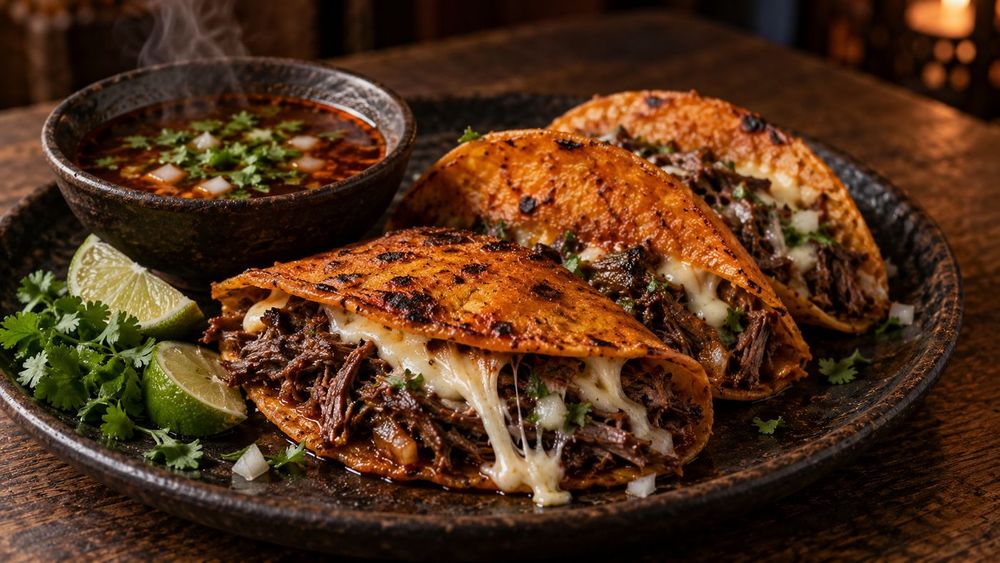
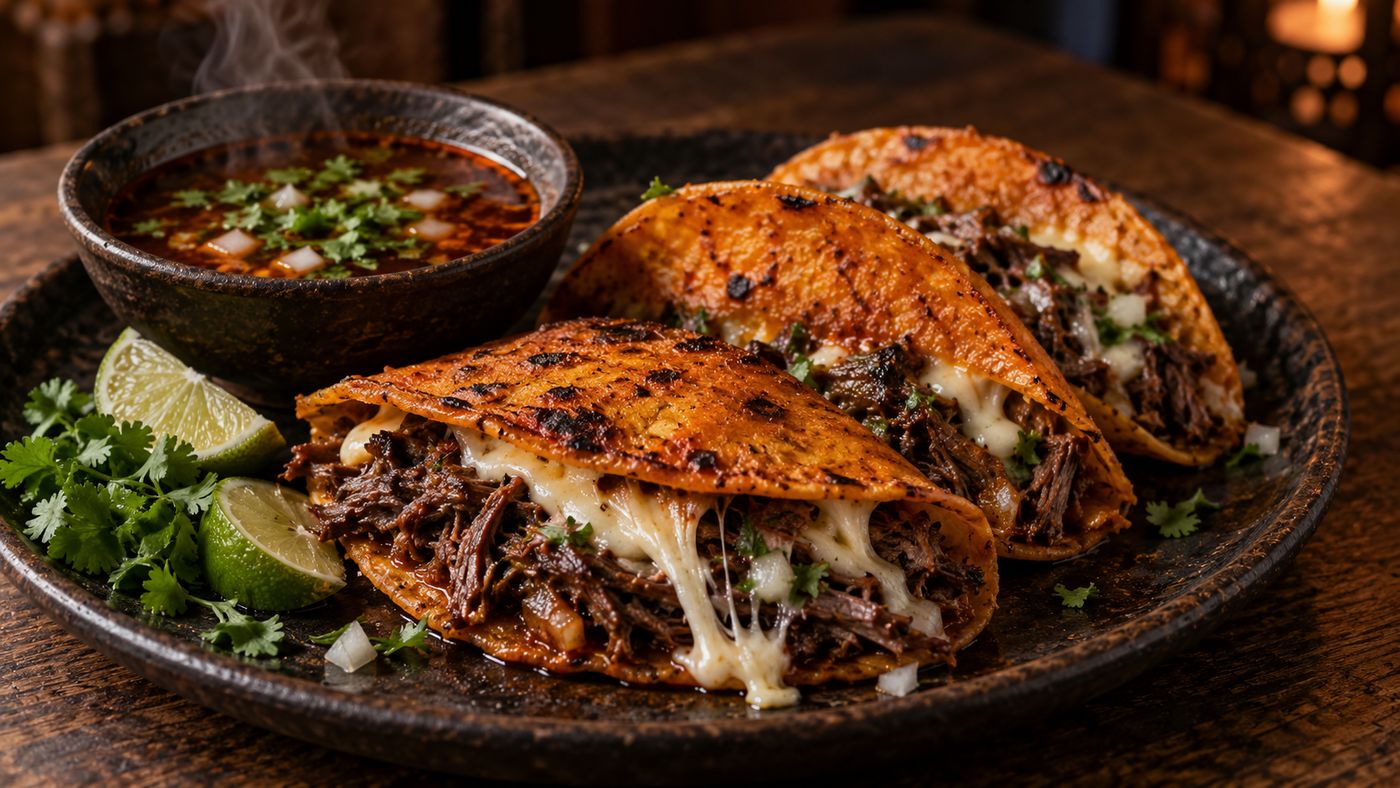

Birria tacos have earned their legendary status, and once you understand the mechanics behind them, that reputation makes complete sense. This is a dish built on layered technique: dried chiles toasted to develop complexity, beef smoked before braising to build a flavor foundation that no shortcut can replicate, and a consommé so deeply spiced and richly flavored that dipping a crispy, cheese-laden taco into it feels less like a garnish and more like the entire point of the meal.
The smoking step is what separates this version from the already-excellent standard. One and a half hours at 250°F gives the chuck roast a subtle smokiness that weaves through the entire braise, flavoring the consommé as much as the beef itself. When you eventually shred that beef and fry it into a tortilla that's been dipped in that same consommé, you're eating something that has been building flavor across multiple hours and multiple techniques. That depth is what makes birria tacos genuinely different from every other taco on the table.
The chile sauce is the other pillar of this recipe. Guajillo chiles bring bright, tangy heat with a slightly fruity character. Ancho chiles contribute deep, raisiny sweetness and body. A single chipotle in adobo adds smokiness and complexity that bridges the two. Blended together with fire-roasted tomatoes, onion, garlic, and a measured amount of warm spice — cumin, oregano, cinnamon — the sauce becomes something that tastes ancient and considered, like a recipe refined over generations rather than assembled in a home kitchen. That's the goal, and these three chiles together get you there.
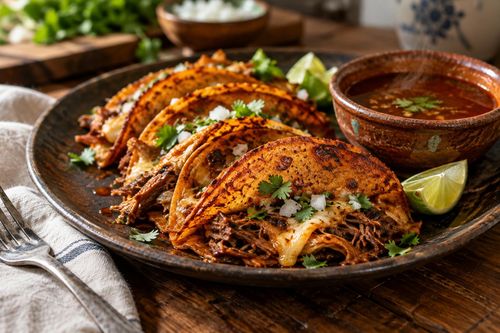
Understanding the quesabirria assembly is the final technical piece worth mastering. The tortilla gets dipped in the fat-skimmed consommé before hitting the griddle — not as a flavor addition, though it certainly provides that, but because the consommé's fat helps the tortilla fry rather than dry out, creating that characteristic crispy exterior that holds up to dipping without disintegrating. The cheese acts as the adhesive that seals the fold. The beef goes in before the fold so it heats through and melds with the melting cheese. Fry both sides until you have something that audibly crisps when you bite it. Then dip it immediately. That's birria tacos done correctly.
The Inspiration Behind This Recipe
Birria originated in the state of Jalisco, Mexico, as a celebratory dish traditionally made with goat meat for weddings, baptisms, and holidays. The preparation was born from necessity — tough cuts of meat slow-braised in a deeply spiced broth until tender — and evolved through generations into one of Mexico's most beloved and complex preparations. The taco format, now globally recognized as quesabirria, emerged from street food culture in Tijuana and rapidly spread through California and beyond in the late 2010s, becoming one of the most significant food trends of the decade. This smoked version takes that already exceptional tradition and adds one more layer of American barbecue influence, creating something that honors the original while being distinctly its own.
A Brief History of Birria
Birria's origins date to the 16th century, when Spanish colonizers introduced goats to Mexico and indigenous communities developed slow-cooking techniques to tenderize a meat that was tougher than the proteins they were accustomed to. The preparation became associated with Jalisco and the surrounding region, where it developed into a celebration dish served at significant life events. Traditional birria is made with chivo (goat), though lamb and beef versions have long existed as regional variations. The consommé — the braising liquid served alongside as a dipping broth or soup — has always been part of the dish, providing a secondary use for the flavorful cooking liquid. The modern quesabirria taco, with its crispy cheese-fried exterior and dipping ritual, emerged from Tijuana street food stalls and went viral in American food culture around 2019 and 2020, introducing birria to audiences who had never encountered the original preparation. What followed was one of the fastest expansions of a regional Mexican dish into American mainstream food culture in recent memory.
Why This Cooking Method Works
Toasting and soaking the chiles develops maximum flavor. Dry toasting activates the chiles' volatile aromatic compounds, and the subsequent soak rehydrates them to a consistency that blends smoothly. Skipping either step produces a sauce that tastes raw and one-dimensional rather than complex and integrated.
Smoking before braising builds a foundation that the braise can't create alone. The Maillard reaction on the beef's surface during smoking creates flavor compounds that dissolve into the braising liquid, giving the consommé a depth that purely braised beef cannot match.
Low, slow braising converts collagen to gelatin. Chuck roast's abundant connective tissue becomes the consommé's body when cooked low and slow. That gelatin is what gives the broth its rich, slightly viscous quality — essential for a dipping consommé that coats rather than just wets the taco.
Dipping the tortilla in consommé before frying is structural, not just flavoring. The fat in the consommé transfers to the tortilla's surface and enables frying, creating crispiness without requiring additional oil and simultaneously infusing the tortilla with the birria's full spice profile.
Apple cider vinegar at the end brightens the entire dish. After hours of braising, the flavors need acidity to come into focus. The vinegar added after shredding lifts the richness and balances the chile sweetness without tasting identifiably like vinegar in the finished dish.
Flavor Profile: What to Expect
Smoked Beef Birria Tacos deliver deep, complex, layered richness built over hours. The beef carries subtle smoke beneath earthy guajillo brightness, ancho's dark sweetness, and chipotle's smoky heat. The consommé is deeply savory with warm spice notes of cumin and cinnamon in the background, and a slight tangy lift from the apple cider vinegar. The crispy tortilla provides textural contrast, the melted Oaxaca cheese adds mild, milky creaminess, and the fresh garnishes — diced white onion, cilantro, lime — provide the bright, sharp counterpoint that cuts through the richness. Each dip into the consommé deepens every flavor simultaneously. It's indulgent, warming, and completely satisfying in a way that only a dish built over multiple hours of technique can be.
Tips for Making the Best Smoked Beef Birria Tacos
Don't rush the chile preparation. Toast each chile individually until it puffs slightly and becomes fragrant — 60 to 90 seconds per side. Soak in genuinely hot water, not warm, for the full 15 minutes. Under-prepared chiles produce a sauce that tastes flat regardless of what else you do.
If you don't have a smoker, use a Dutch oven with smoked paprika. Add an additional teaspoon of smoked paprika to the chile sauce and sear the beef aggressively in a cast iron pan before braising. It won't be identical, but the depth will be substantially better than skipping the smoke element entirely.
Skim the fat carefully but not completely. The fat on top of the consommé after braising carries enormous flavor. Skim most of it off — this becomes the frying medium for your tortillas when you dip them — but leave some in the consommé itself for body and richness.
Use Oaxaca cheese for best results. Its melt, mild flavor, and slight stretch are specifically suited to quesabirria. Mozzarella is an acceptable substitute. Avoid sharp cheeses that would compete with the chile broth's complexity.
Keep the griddle at medium-high. Too hot and the tortilla burns before the cheese melts. Too cool and the tortilla absorbs oil without crisping. Medium-high produces the balance you need — a crispy exterior and fully melted interior in 2 to 3 minutes per side.
Serve the consommé hot. Cold or warm consommé loses its viscosity and flavor impact. Keep it at a gentle simmer throughout service so each dip delivers the full experience.
Serving Suggestions and Side Pairings
Birria tacos are a complete experience on their own, but thoughtful sides and accompaniments enhance the meal significantly. Pickled red onions provide bright acidity that cuts through the consommé's richness between bites. Mexican rice absorbs extra consommé beautifully and rounds out the plate. Refried beans add creamy contrast and traditional accompaniment. A simple radish and cucumber salad with lime juice provides refreshing crunch that cleanses the palate. Extra lime wedges and fresh cilantro on the table allow guests to adjust brightness to their preference. For a complete taco spread, the Cilantro Lime Slaw and Corn Salsa both work well as fresh counterpoints to the rich, braised beef.
Storage, Reheating, and Make-Ahead Tips
Storage: Store shredded beef and consommé together in an airtight container — the beef continues to absorb flavor from the broth during storage. Refrigerate for up to 4 days. Store assembled, fried tacos separately if needed, though they're best made fresh.
Reheating: Reheat the beef and consommé together in a saucepan over medium-low heat. Assemble and fry tacos fresh from the reheated components — pre-fried tacos can be revived in a 375°F oven or air fryer for 5 minutes, but they won't fully recover their original crispness.
Make-Ahead: This is an ideal make-ahead recipe. The birria beef and consommé are significantly better the next day after the flavors have had time to meld overnight in the refrigerator. Make the entire braise up to 2 days ahead, refrigerate, and assemble the tacos fresh before serving. The cold fat will solidify on top of the consommé and lift off easily, making skimming even simpler than when the broth is hot.
Freezing: Freeze shredded beef with consommé in airtight containers for up to 3 months. Thaw overnight in the refrigerator before reheating. The texture of the beef holds up exceptionally well to freezing due to its high collagen content.
Why This Recipe Deserves a Spot in Your Taco Tuesday Rotation
Because some Taco Tuesdays should be events. Smoked Beef Birria Tacos require more time and technique than most recipes in this collection — the smoking step, the chile preparation, the long braise — but the hands-on work is modest relative to the total time, and the result is a dish that genuinely cannot be rushed into being. That investment matters. It produces tacos that taste like something special, something made with real intention, something that earns the attention it receives at the table. The make-ahead nature actually makes it ideal for Tuesday: do the heavy work on Sunday or Monday, refrigerate overnight, and assemble crispy tacos in minutes on the night. The consommé dipping ritual alone transforms dinner into an experience rather than a meal. When you want Taco Tuesday to be the kind of thing people request specifically and remember afterward, this is the recipe to make.
Recommended Drink Pairing
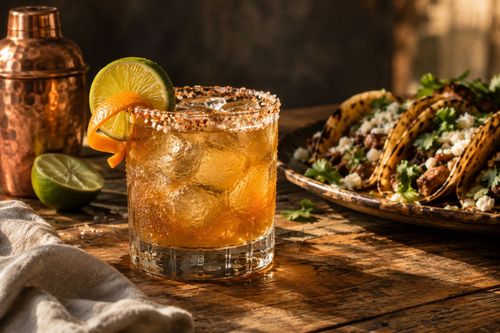
The Smoky Mezcal Margarita is the definitive pairing — mezcal's smoke echoes the birria beef's own smokiness while the margarita's citrus cuts cleanly through the consommé's richness. The Classic Lime Margarita works equally well for those who want brightness without the added smoke complexity. Negra Modelo or Dos Equis Amber provide malty, slightly sweet beer character that complements the chile broth's depth. For non-alcoholic options, a well-made Agua de Jamaica — tart, floral hibiscus tea served cold — provides the acidity and refreshment the richness of birria demands.