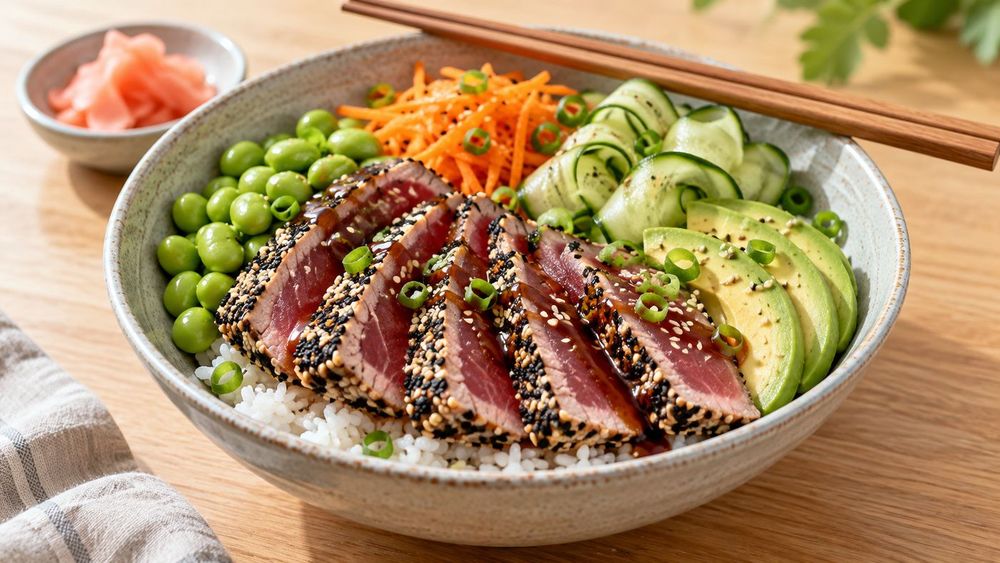
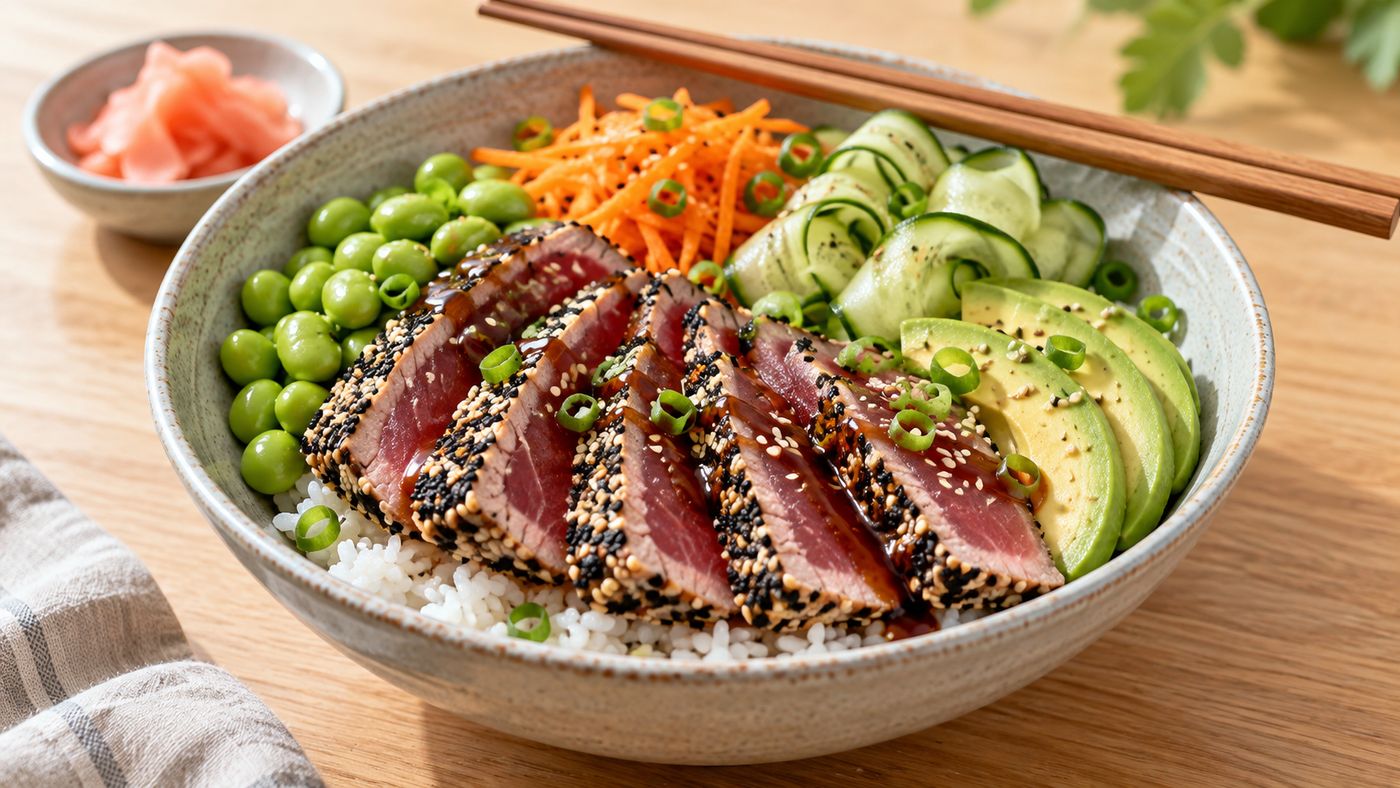

There's something about a bowl like this one that makes weeknight dinner feel like a small celebration. Sesame Crusted Tuna & Edamame Rice Bowls have that restaurant-quality feeling — the kind of dish you'd expect to order out — but it comes together in your own kitchen in about half an hour, ready to carry you through several evenings of meals that still feel special.
I love recipes like this for meal prep because they don't ask you to sacrifice anything. The tuna sears in just a couple of minutes per side, the rice and edamame can be made ahead in bulk, and the fresh vegetables on top keep every bowl feeling bright and crisp rather than heavy. It's proof that make-ahead meals don't have to mean giving up texture or freshness.
There's also a real sense of care in a dish like this — the sesame crust pressed on by hand, the glaze whisked together in its own little bowl, the vegetables sliced with intention. Even on a week where you're cooking for convenience, this recipe lets you feel like you're still nourishing yourself with something thoughtful.
And honestly, the color alone makes this one worth making. Pink-centered tuna, bright green edamame and cucumber, golden avocado — it's the kind of bowl that makes opening your lunch container feel like a small bright spot in the middle of a busy day.
The Inspiration Behind This Recipe
This recipe grew out of a desire to bring something that usually feels reserved for eating out — beautifully seared, sesame-crusted tuna — into a format that actually works for a weekly rotation. Searing the tuna quickly and slicing it thin means one pound of fish stretches across four generous, satisfying bowls.
It also solves a common meal prep frustration: wanting something that feels fresh and vibrant, not just another container of reheated protein and grain. By building the bowl around crisp, raw vegetables and a fish that's meant to be enjoyed cold or at room temperature, this recipe sidesteps the usual "sad desk lunch" problem entirely.
The soy glaze ties it all together, giving the bowl a cohesive savory-sweet flavor that feels intentional rather than like separate components thrown into the same container.
A Brief History of Sesame-Crusted Tuna and Rice Bowls
Sesame-crusted, seared tuna draws from Japanese culinary traditions, where quickly seared or raw fish is prized for showcasing the natural quality of the ingredient rather than masking it with heavy cooking. The technique of pressing sesame seeds onto the exterior before a fast sear became a popular way to add texture and nutty flavor while preserving that tender, barely-cooked center.
Rice bowls themselves, often called donburi in Japan, have long served as a complete, balanced meal in a single vessel — protein, rice, and vegetables layered together rather than served as separate courses. This format has become especially popular in modern meal prep culture because it naturally lends itself to make-ahead components that come together at the moment of eating.
Edamame, a staple in Japanese cooking for centuries, brings its own gentle sweetness and protein boost to the bowl, rounding out a dish that draws from several corners of Japanese culinary tradition into one cohesive, weekday-friendly meal.
Why This Cooking Method Works for Meal Prep
Searing the tuna hot and fast is what keeps this dish meal-prep-friendly. A quick sear on high heat cooks only the exterior, leaving the center rare, which means the tuna stays tender rather than becoming tough and dry the way a fully cooked piece of fish often does after a few days of storage.
Because the tuna is meant to be enjoyed cold or at room temperature rather than reheated, this recipe sidesteps one of the biggest meal prep challenges entirely — protein that dries out in the microwave. Simply let the tuna come to room temperature or eat it cold straight from the fridge for the best texture.
The rice and edamame, on the other hand, hold up well to reheating, giving you the flexibility to enjoy a warm base with a cool, fresh protein and vegetable topping — a textural contrast that actually improves the eating experience rather than detracting from it.
Flavor Profile: What to Expect
This bowl balances richness, brightness, and crunch in equal measure. Expect:
- Nutty and toasty: The sesame crust adds a warm, toasted flavor and satisfying crunch to every bite of tuna.
- Savory-sweet: The soy glaze brings salty depth balanced by a touch of honey.
- Fresh and clean: Cucumber and shredded carrots add crisp, refreshing bites throughout.
- Rich and creamy: Sliced avocado adds a buttery contrast to the lean, seared tuna.
- Bright and aromatic: Green onion and a touch of fresh ginger keep the whole bowl tasting lively.
The glaze deepens slightly as it sits with the other ingredients, so leftovers often taste even more cohesive by the second or third day, once the flavors have had time to mingle.
Tips for Making the Best Sesame Crusted Tuna & Edamame Rice Bowl
A few things to keep in mind as you make this one your own:
- Use sushi-grade tuna: Since the center stays rare, quality matters here — look for tuna labeled sushi- or sashimi-grade from a trusted source.
- Press the sesame seeds firmly: This helps the crust adhere fully so it doesn't fall off during searing.
- Don't overcook the sear: One to two minutes per side is usually enough for a beautiful pink center — resist the urge to leave it longer.
- Slice against the grain: This keeps each piece of tuna tender rather than chewy.
- Store the tuna separately: Keeping it apart from the warm rice preserves its texture and prevents overcooking from residual heat.
One more note: a squeeze of fresh lime or a dash of extra sesame oil right before serving can brighten up leftovers beautifully.
Portioning and Container Suggestions
Divide the rice and edamame evenly into four containers, keeping them as your warm, reheatable base. Add the shredded carrots and cucumber on top of the rice, since these hold up reasonably well and can be gently reheated or enjoyed cold, depending on your preference.
Store the sliced tuna separately in its own container, ideally in a single layer, to prevent it from steaming or overcooking from contact with warm rice. The same goes for the avocado — slicing it fresh just before eating helps prevent browning and keeps it looking as good as it tastes.
Keep the soy glaze in a small separate container or a few condiment cups, drizzling it on right before eating so it stays vibrant and doesn't make the rice soggy over several days.
Storage, Reheating, and Shelf Life Tips
- Rice and edamame: Store in an airtight container in the refrigerator for up to 4 days.
- Seared tuna: Store separately in the refrigerator and enjoy within 1-2 days for the best quality and safety.
- Reheating: Warm the rice and edamame gently in the microwave; serve the tuna cold or at room temperature rather than reheating it.
- Soy glaze: Keeps well in a sealed container in the fridge for up to a week.
- Avocado: Best sliced fresh each day; if prepping ahead, toss slices in lemon or lime juice to slow browning.
Why This Recipe Deserves a Spot in Your Meal Prep Rotation
This bowl earns its place by proving that meal prep can feel elevated, not just efficient. It brings restaurant-quality flavor and presentation into a format that's genuinely manageable for a busy week, and it gives you something to look forward to opening at lunchtime rather than just something to get through.
It's also a wonderful way to work more omega-3-rich fish into your rotation without the fuss of cooking it fresh every single day.
Meal Prep Pairing Suggestions
This bowl pairs beautifully with a simple miso soup or a light cucumber salad if you want to round out the meal further. For variety across your week, consider rotating it alongside our Harissa Spiced Lamb & Couscous Bowls — two globally-inspired, protein-forward bowls that keep your rotation feeling adventurous rather than repetitive.