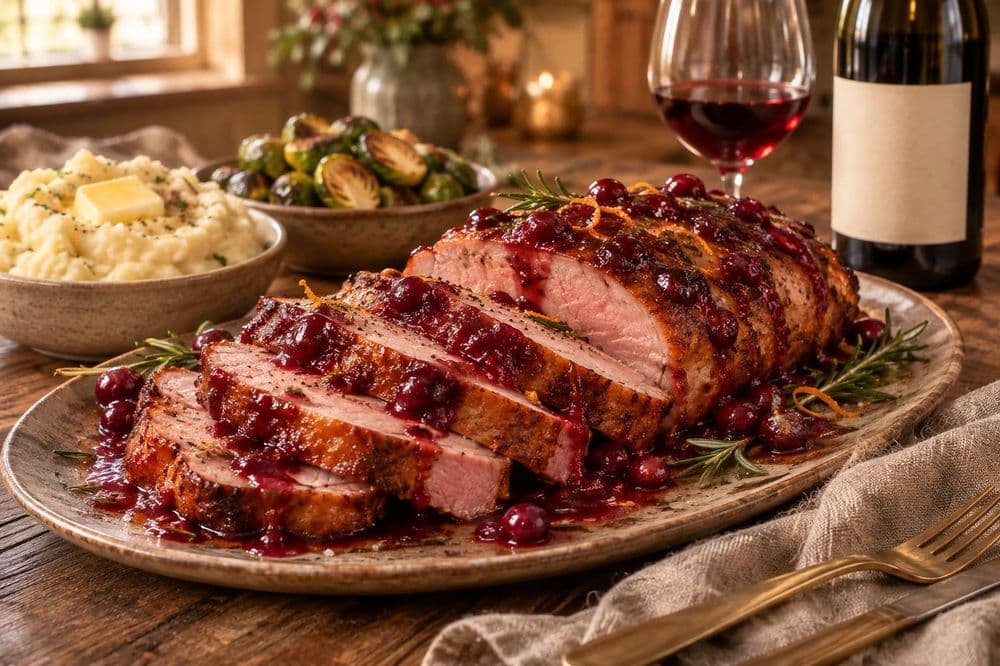



Few dishes show the logic of balance as clearly as pork loin with cranberry. Pork is lean and mild, so it needs fat, acid, and sweetness around it. Cranberries bring tannin and tartness, and the slow cooker turns that tartness into a glossy, savory-sweet glaze. The result looks like holiday cooking but asks for very little effort.
The slow cooker is the right tool for lean pork when it is used carefully. Gentle, steady heat in a moist environment keeps the loin from drying out. The sauce does the rest, basting the meat for hours while its sugars and acids season it all the way through.
This recipe is built on a few ratios: roughly one part acid to one part sweet, with salt and aromatics holding the middle. Once you see that structure, you can adjust it to taste. It also pairs easily with wine, because the cranberry sauce gives you fruit, acidity, and a little spice to work with.
It is a good midweek dish, and it comes together in about fifteen minutes of active work. By the time the glass is poured, dinner is ready.
The Inspiration Behind This RecipeCranberry and pork belong to the same tradition as apples with pork chops and cherries with duck. Tart fruit cuts through richness and brightens mild meat. This version takes that idea and puts it in the slow cooker, where a short ingredient list produces a sauce with real depth.
Whole berry cranberry sauce provides pectin, which thickens the cooking liquid. Orange zest and a little Dijon add aromatic lift and a savory edge. Together they keep the glaze from tasting like dessert.
A Brief History of Fruit-Glazed PorkPairing pork with fruit goes back centuries in European cooking, where preserved fruit was a practical way to season cured and roasted meats. Apples, prunes, and plums were common partners. Cranberries are native to North America, and they entered the savory repertoire as colonists adopted Indigenous uses of the berry, which included mixing it with meat and fat in pemmican.
Today the cranberry sauce on the American holiday table is the descendant of those traditions. Using it as a braising glaze for pork loin is a modern shortcut that keeps the old principle intact: sharp fruit against rich, savory meat.
Why This Cooking Method WorksPork loin has very little intramuscular fat, so it overcooks quickly. Low, moist heat holds the temperature below the point where muscle fibers squeeze out their juices. Pull the roast when the center reaches 145°F and let it rest, and it stays tender and sliceable.
Searing first is optional but worthwhile. The Maillard reaction on the surface builds roasted, nutty flavors that the slow cooker cannot create on its own. Those flavors then dissolve into the sauce.
The acid in the cranberries also helps. It lightly tenderizes the surface of the meat and keeps the sauce bright after hours of cooking. Reducing the liquid at the end concentrates the sugars and gives you a glaze with body instead of a thin broth.
Flavor Profile: What to ExpectExpect a clear sweet-tart-savory progression. The first note is bright cranberry, followed by orange and a gentle warmth from the spices. The pork provides a mild, clean base underneath.
The texture is tender and juicy, with slices that hold together. The reduced sauce is thick enough to coat the back of a spoon.
Tips for Making the Best Crockpot Cranberry Pork Loin- Use a thermometer. Pull the pork at 145°F internal for juicy slices.
- Sear the loin. Two minutes per side adds depth the slow cooker cannot.
- Reduce the sauce. Simmer the liquid on the stove for 8 to 10 minutes until glossy.
- Season generously. Salt the pork well before cooking, since the sauce is sweet.
- Rest before slicing. Ten minutes lets the juices redistribute.
The sauce brings acidity and red fruit, so choose wines with enough acid to match and moderate tannin so they do not clash with the meat.
- ★ Pinot Noir: Red cherry and cranberry notes echo the sauce, and its acidity and soft tannins suit lean pork. The best overall match.
- Dry Riesling: High acidity and stone fruit cut through the glaze while a hint of sweetness mirrors it.
- Beaujolais (Gamay): Light, fruity, and low in tannin, it complements the cranberry without overpowering the pork.
- Chardonnay (lightly oaked): Its roundness and subtle toast suit the savory, caramelized edges.
- Dry Rosé: Crisp and berry-driven, it keeps the plate bright and works for lighter appetites.
Serve the sliced pork with creamy mashed potatoes or buttery egg noodles to catch the sauce. Roasted Brussels sprouts or green beans add a bitter, fresh counterpoint. A simple herb salad also works well.
For a fuller midweek spread, consider the Slow Cooker Beef Bourguignon from an earlier Wine Wednesday, or a pot of Parmesan risotto alongside. Spoon extra glaze over everything just before serving.
Storage, Reheating, and Make-Ahead TipsRefrigerate leftover pork and sauce in an airtight container for up to four days. Store the sauce with the sliced meat so it stays moist.
Reheat gently in a covered skillet over low heat with a splash of broth or water, or in a 300°F oven covered with foil. Avoid high heat, which dries lean pork. You can sear the loin and mix the sauce the night before, then start the slow cooker in the morning. Leftovers also freeze well for up to three months.
Why This Recipe Deserves a Spot in Your Wine Wednesday RotationThis is accessible luxury at its best: a handful of pantry ingredients, almost no hands-on time, and a result that looks and tastes like a special occasion. It also teaches a lasting lesson about balancing sweetness with acidity, which carries over to every wine pairing you make. Pour a glass, slice the roast, and let the midweek feel like a celebration.