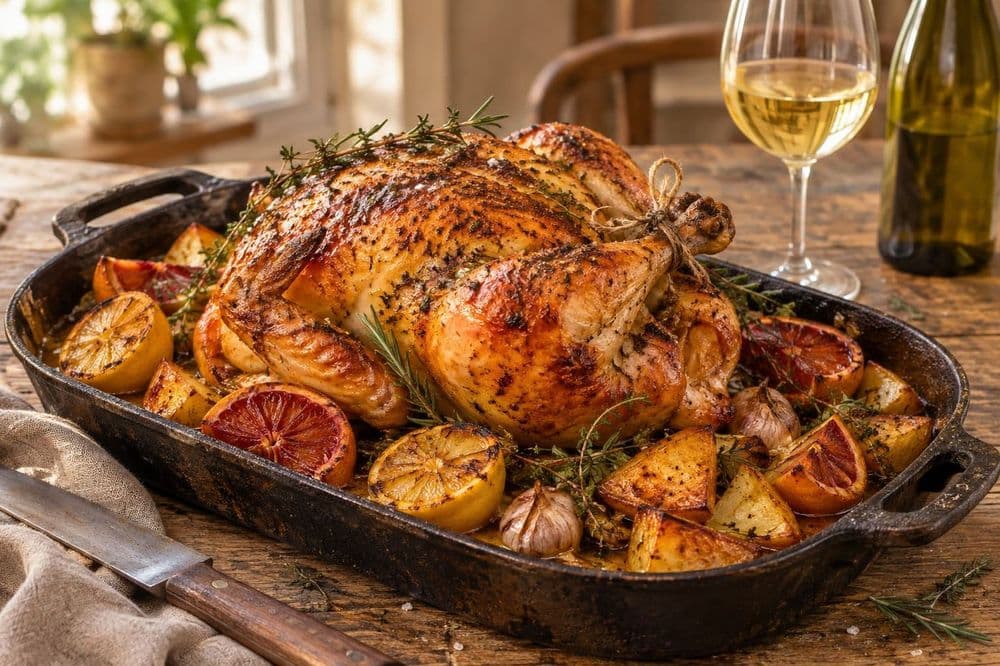



Roast chicken is a study in controlled heat: a lean breast and fatty thigh must reach different temperatures at the same time. This Rosemary Citrus Roast Chicken with Roasted Potatoes solves that problem with a dry brine, aromatic butter under the skin, and potatoes that roast in the rendered fat below the bird.
The flavor architecture is deliberate. Rosemary supplies resinous, piney top notes, lemon and orange add acidity and volatile oils that cut through the fat, and garlic provides a savory backbone. Each element has a job, and none of them competes with the others.
The result is a midweek dinner that looks like a Sunday project but demands only modest effort. The skin shatters, the meat stays juicy, and the potatoes pick up chicken drippings and citrus.
Because the dish is bright and herbal rather than heavy, it is also a very flexible partner for wine, which is why it earns a place on Wine Wednesday.
The Inspiration Behind This RecipeThis recipe starts from the classic French poulet rôti and the Mediterranean habit of pairing poultry with citrus and herbs. Winter citrus is at its peak in early December, and oranges bring a subtle sweetness that lemon alone cannot.
I wanted a one-pan dinner where the components cook in a single system: the chicken seasons the potatoes, and the potatoes support the chicken by absorbing fat that would otherwise smoke on the pan.
A Brief History of Roast Chicken and Herb-Citrus CookingRoasting meat before an open fire is among the oldest cooking techniques, and the French refined it into a benchmark of culinary training. Many chefs still judge a cook by a roast chicken because there is nowhere to hide: seasoning, timing, and heat control are all exposed.
Pairing poultry with citrus and rosemary draws on Provençal and Italian traditions, where lemon and herbs were used to brighten simple, inexpensive proteins. The combination travelled widely and remains a staple of home cooking in many cuisines.
Why This Cooking Method WorksA dry brine of salt applied hours ahead draws moisture to the surface, dissolves the salt, and is reabsorbed. This seasons the meat deeply and leaves the skin dry, which is essential because moisture is the enemy of browning.
High heat, around 425°F, drives the Maillard reaction on the skin while the compound butter under the skin bastes the breast. Resting the bird for 15 minutes lets muscle fibers relax and redistribute juices, so the first slice does not flood the board.
Potatoes cut to a uniform size and tossed in fat develop a crisp exterior as surface starch gelatinizes and then dehydrates. Roasting them around the chicken means they cook in the juices and take on far more flavor than a separate pan would give.
Flavor Profile: What to ExpectExpect layered savory, herbal, and bright notes.
- Herbal: rosemary and thyme add piney, resinous depth.
- Citrus: lemon and orange deliver acidity and fragrant oils.
- Savory: roasted garlic and rendered chicken fat give richness.
- Textural: shattering skin against tender meat and crisp-edged potatoes.
- Dry the bird thoroughly: pat it with paper towels, then rest it uncovered in the fridge for best skin.
- Use a thermometer: pull the chicken when the thigh reads 165°F.
- Cut potatoes evenly: uniform pieces cook at the same rate.
- Don't crowd the pan: steam softens the potatoes and the skin.
- Rest before carving: 15 minutes keeps the juices in the meat.
- ★ Chardonnay (lightly oaked): the best match; its body and gentle oak echo the roasted skin and butter while its acidity handles the citrus.
- Chablis: mineral, high-acid, and unoaked, it sharpens the lemon notes.
- Pinot Noir: low tannin and earthy red fruit complement the rosemary without overpowering the chicken.
- Sauvignon Blanc: its herbal, citrusy profile mirrors the aromatics of the dish.
- Dry Rosé from Provence: a fresh, herbal option that suits the Mediterranean character.
Carve the chicken at the table and spoon the pan juices over the potatoes. A simple arugula salad with shaved Parmesan and lemon vinaigrette adds peppery freshness, and roasted green beans or asparagus bring a clean vegetable note.
For a fuller midweek menu, start with the Pear Stuffed Chicken from earlier this season as inspiration for a fruit-and-poultry theme, or follow with something light and sweet.
Storage, Reheating, and Make-Ahead Tips- Refrigerate leftovers in airtight containers for up to 4 days.
- Reheat chicken at 350°F, covered loosely with foil, until warmed through; crisp potatoes separately on a sheet pan.
- Make the herb butter and zest up to 2 days ahead.
- Dry brine the chicken the night before for better flavor and skin.
- Shred leftover meat for sandwiches, soups, or salads.
This is accessible luxury: familiar ingredients, a handful of sound techniques, and a result that feels special without stress. Once you understand why each step works, you can repeat it with confidence.
Pour a glass of Chardonnay, carve the bird, and let a midweek dinner feel like an occasion.