
There are dishes that announce themselves the moment they hit the table, and creamy crab soup is one of them. The aroma alone — sweet lump crab meat, a whisper of sherry, the warm coastal spice of Old Bay — creates a kind of anticipation that very few dishes can match. This is elegant, comforting cooking that tastes like it came from a coastal restaurant kitchen, yet comes together in under 40 minutes with technique that any committed home cook can master confidently.
What makes this soup worth understanding is how each component contributes something specific and irreplaceable. The mirepoix base — onion, celery, carrot — builds the aromatic foundation that prevents the soup from tasting one-dimensionally rich. The flour-thickened roux gives the broth body without heaviness, creating a velvety texture that carries the crab beautifully rather than competing with it. Old Bay, that iconic Chesapeake seasoning blend of celery salt, paprika, and mustard, does what no single spice can do alone — it signals coastal cooking immediately, warming the palate and amplifying the crab's natural sweetness rather than masking it.
The sherry deserves particular attention because it's doing more work than its small quantity suggests. Dry sherry contributes nutty, slightly oxidized complexity that bridges the cream's richness and the crab's delicate sweetness in a way that white wine or lemon juice simply cannot replicate. It's a classic pairing in cream-based seafood soups for precisely this reason — the sherry's character is assertive enough to register but refined enough not to dominate. Add it after the cream has simmered and thickened, not before, to preserve its aromatic contribution.
The lump crab meat goes in last and stays in briefly — five minutes of gentle simmering is all it needs to warm through without toughening. This is the critical discipline in this recipe: restraint at the end. Crab meat is already cooked and delicate, and aggressive heat or extended simmering will break down those beautiful lumps and diminish the sweet, oceanic flavor you're building the entire soup around. Fold it in gently, keep the heat low, and serve immediately.
The Inspiration Behind This Recipe
This soup draws from the rich tradition of Maryland and Chesapeake Bay crab cookery, where lump crab meat has been celebrated for centuries as one of the Atlantic coast's finest ingredients. Maryland crab soup exists in two distinct camps — the tomato-based vegetable version and the creamy, sherry-enriched bisque style — and this recipe belongs firmly to the latter tradition. The bisque approach reflects French technique applied to American coastal ingredients, creating something that honors both the sophistication of classical cooking and the honest, abundant character of Chesapeake seafood culture. Old Bay seasoning, created in Baltimore in 1939, is the ingredient that makes this distinctly American rather than merely French-inspired.
A Brief History of Crab Soup and Bisque
Bisque-style soups have roots in French coastal cooking, where fishermen would use the shells of crustaceans — shrimp, lobster, crab — to build deeply flavored broths that formed the foundation of luxurious cream soups. The word bisque likely derives from the Bay of Biscay, reflecting the dish's coastal origins. As French culinary technique spread through American cooking in the 19th and early 20th centuries, these cream-based shellfish soups became celebrated in East Coast restaurants, particularly in cities with access to abundant local seafood. Maryland's blue crab, harvested from the Chesapeake Bay in extraordinary quantities, became the natural American centerpiece for this style of soup. The addition of Old Bay and sherry represents the Americanization of a French technique — local spice and local tradition grafted onto classical structure to create something genuinely regional and distinctive.
Why This Cooking Method Works
Building this soup in layers is what separates a great crab soup from a merely adequate one. Softening the mirepoix vegetables first in butter extracts their aromatic compounds into the fat, creating a flavor base that permeates the entire soup. Cooking the flour in that aromatic butter for one to two minutes eliminates the raw starch taste while creating a roux that thickens the broth smoothly without lumps. Adding the broth gradually while whisking maintains that smoothness — rushing this step causes the roux to seize rather than incorporate evenly. The cream and milk go in after the broth is fully incorporated, creating a rich but not overwhelming base that allows the crab to remain the focus. Sherry and crab arrive last, preserving their delicate flavors from the aggressive heat that earlier stages require.
Flavor Profile: What to Expect
This soup delivers sophisticated, layered coastal flavor with genuine depth. The base is rich and velvety with a savory, slightly sweet character from the caramelized mirepoix and cream. Old Bay provides warm, complex spice that builds gradually — earthy celery salt, gentle paprika heat, mustard's subtle sharpness — creating a seasoning profile that's immediately recognizable as coastal American cooking. The sherry adds nutty complexity and a slight savory note that elevates the soup beyond simple cream and crab. The lump crab meat delivers sweet, oceanic flavor in generous pieces that provide texture and substance in every spoonful. The cayenne, if used, adds a subtle heat that sharpens the other flavors without announcing itself. The overall impression is elegant comfort — indulgent yet balanced, rich yet focused, impressive yet genuinely approachable.
Tips for Making the Best Crab Soup
Use the best crab meat you can source. Fresh lump crab meat from a trusted fishmonger produces the best results, but high-quality refrigerated pasteurized lump crab is an excellent alternative. Avoid canned crab meat — its texture and flavor won't do justice to a soup this carefully constructed. Pick through the crab meat carefully before adding it, running your fingers through it to find any remaining shell fragments.
Don't skip the roux cooking step. One to two minutes of stirring the flour in the butter is necessary to eliminate the raw flour taste that would otherwise muddy the soup's flavor. The mixture should smell slightly nutty and look slightly golden before you add the broth.
Add the broth gradually. Whisk in the first cup of broth until completely smooth before adding more — this is the step that ensures a silky final texture rather than a lumpy one.
Use dry sherry, not cooking sherry. Cooking sherry is loaded with sodium and lacks the complexity that makes dry sherry valuable in this recipe. Fino or dry Amontillado sherry work beautifully, and you can drink a small glass alongside the soup for an interesting pairing comparison.
Adjust Old Bay carefully. The seasoning is bold — start with the recipe amount and taste before adding more. The soup's flavor will develop further as it simmers, so give it time before reaching for additional seasoning.
Fold the crab in gently. Use a wide spoon or spatula and a light hand — the goal is to distribute the crab evenly while keeping those beautiful lump pieces intact. Aggressive stirring breaks them down into shreds, which affects both texture and visual appeal.
Wine Pairing Guide
Creamy crab soup sits in one of the most rewarding pairing territories in seafood cooking. The combination of sweet crab, rich cream, nutty sherry, and warm Old Bay spice creates multiple interaction points for white wine — and the right choice elevates both the soup and the glass significantly.
Chardonnay (White Burgundy or Lightly Oaked California) is the best match. A medium to full-bodied Chardonnay with enough weight to complement the cream base while maintaining the acidity that seafood demands creates remarkable harmony here. The wine's subtle butter and hazelnut notes echo the sherry's nuttiness, and its fruit character complements the crab's sweetness. Avoid heavily oaked styles — you want harmony with the soup's delicate flavors, not competition.
Viognier offers an aromatic alternative with stone fruit, white flower, and lush texture that matches the soup's richness while adding a floral dimension that lifts the Old Bay's spice. The wine's full body handles the cream comfortably while its aromatics create an interesting contrast with the coastal seasoning.
White Burgundy (Meursault or Pouilly-Fuissé) provides the most elegant pairing for special occasions — the wine's minerality, restrained fruit, and subtle oak create layers of complexity that reward contemplation alongside a soup this carefully constructed.
Champagne or quality sparkling wine cuts through cream beautifully with bubbles and acidity, while toasty notes complement the sherry and the soup's slight caramelization from the mirepoix. For a celebratory Wine Wednesday, this pairing is genuinely spectacular.
Dry Sherry (Fino or Manzanilla) as a deliberate echo pairing — matching the sherry in the soup with sherry in the glass — creates a sophisticated tasting experience that serious wine enthusiasts will find fascinating. The wine's saline, nutty character amplifies the soup's coastal identity in unexpected and rewarding ways.
Serving Suggestions and Side Pairings
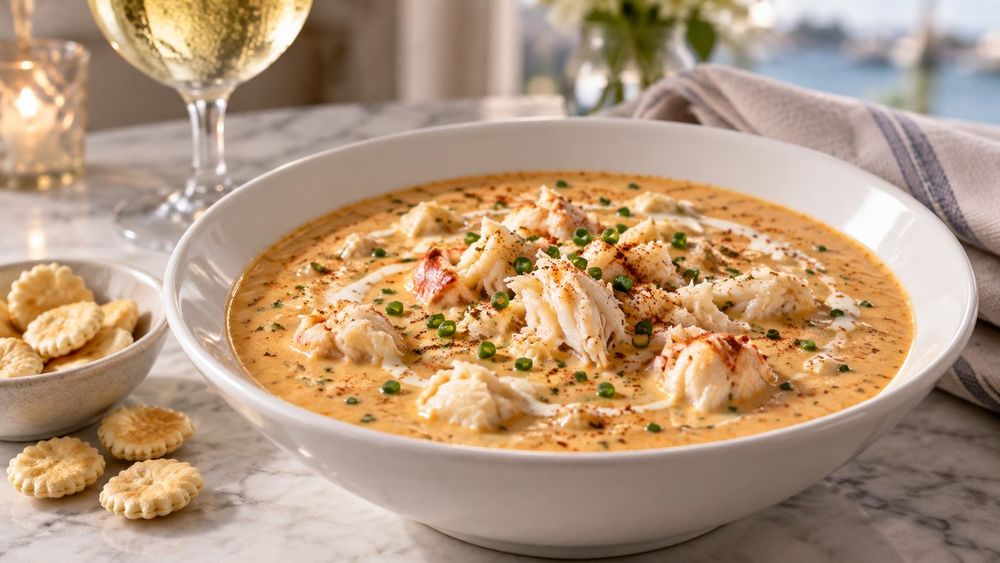
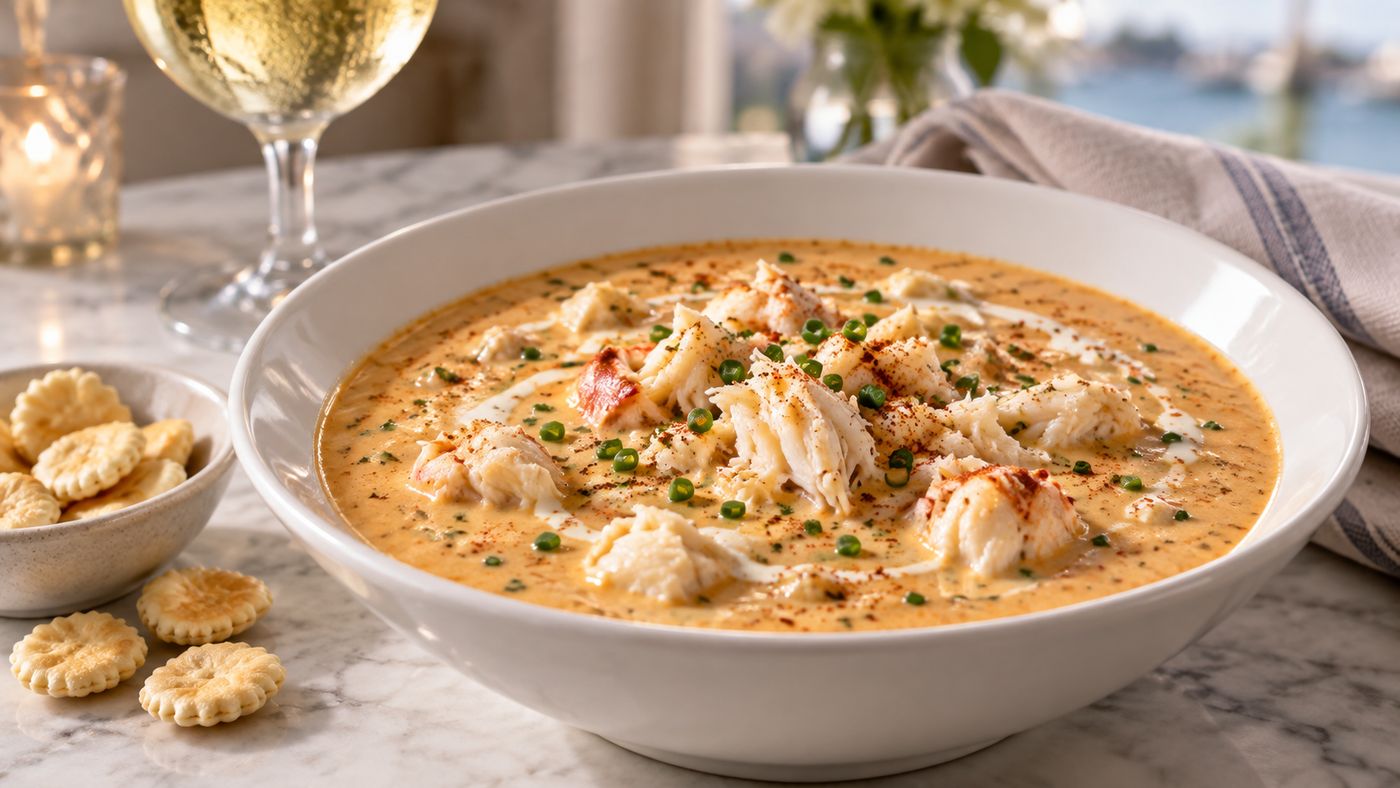
Crab soup deserves proper presentation. Ladle into warmed, wide soup bowls rather than cold ones — a chilled bowl will drop the soup's temperature immediately and dull the aromatics. A generous garnish of fresh chives or flat-leaf parsley adds color and a clean, herbaceous note that brightens the richness. A small drizzle of good cream swirled on the surface and a light dusting of additional Old Bay signals the soup's character beautifully before the first spoonful.
Crusty sourdough bread or Garlic Rosemary Focaccia Muffins are essential alongside — the soup's velvety broth is too good to leave in the bowl. A simple green salad with lemon vinaigrette provides refreshing contrast that cleanses the palate between bites of rich, creamy soup. For a more substantial meal, follow the soup with Pan-Seared Salmon with Lemon Caper Butter Sauce or Lemon Butter Scallops to create a full coastal seafood dinner that showcases the versatility of white wine pairings across multiple preparations.
Storage, Reheating, and Make-Ahead Tips
Refrigerate the soup in an airtight container for up to three days. The flavor actually improves overnight as the Old Bay and sherry meld further into the cream base. Store any remaining crab meat separately if possible, adding it fresh when reheating to preserve its texture.
Reheat gently on the stovetop over low heat, stirring frequently and never allowing the soup to boil — aggressive heat can cause the cream to separate and will toughen the crab meat. Add a splash of broth or cream if the soup has thickened too much during storage. Taste and adjust seasoning before serving, as refrigeration can mute salt and spice slightly.
For make-ahead purposes, the soup base — everything through the cream and seasoning stage — can be made up to two days ahead and refrigerated. Add the sherry and crab meat when reheating just before serving. This approach produces the freshest possible crab texture while still allowing advance preparation that makes entertaining genuinely effortless.
Why This Recipe Deserves a Spot in Your Wine Wednesday Rotation
Crab soup earns its place in the Wine Wednesday rotation because it delivers genuine restaurant-quality results from a technique that rewards understanding rather than demanding professional equipment or difficult-to-source ingredients. This is cooking that teaches you something — about roux construction, about layering flavors, about the discipline of restraint with delicate ingredients — while producing something so delicious that the lessons feel entirely incidental to the pleasure.
The wine pairing dimension is where this soup truly shines for Wine Wednesday. Few dishes create as natural and rewarding a conversation with white wine as cream-based seafood soups — the acidity cuts through richness, the fruit complements the crab's sweetness, and the wine's weight matches the soup's body in a way that makes each sip and each spoonful more satisfying than either would be alone. A well-chosen Chardonnay alongside this soup is one of those pairings that reminds you why pairing thoughtfully matters.
Most importantly, this is a soup that makes Wednesday feel genuinely special. The moment that first bowl hits the table — the steam rising, the aroma of Old Bay and sherry and sweet crab filling the room — something shifts. The week's accumulated stress recedes. The wine tastes better. The conversation gets easier. That's what great food does, and that's precisely what Wine Wednesday is for.
Pour something cold and coastal, serve immediately while the soup is at its peak, and let Wednesday remind you that elegant cooking belongs in your kitchen every single week.