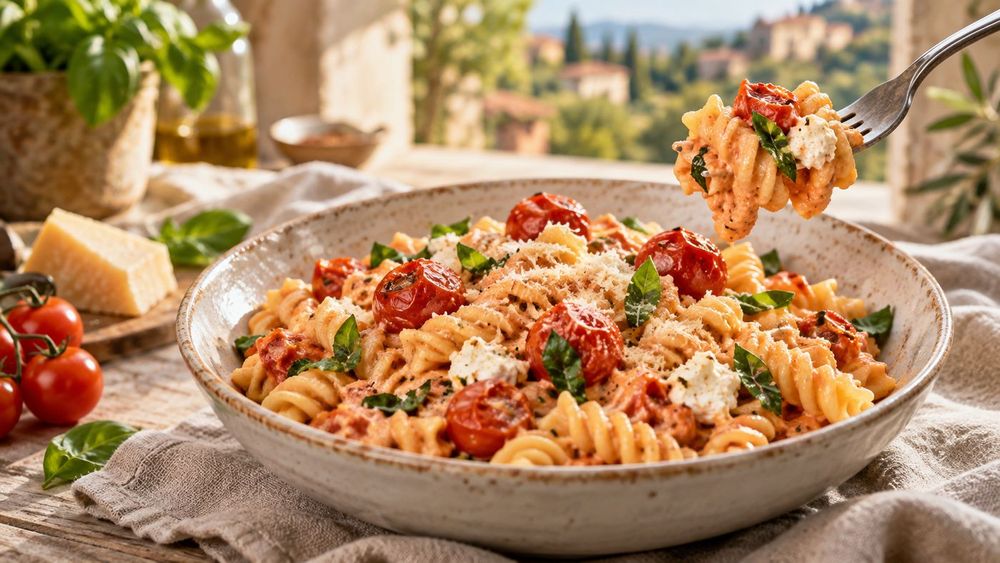
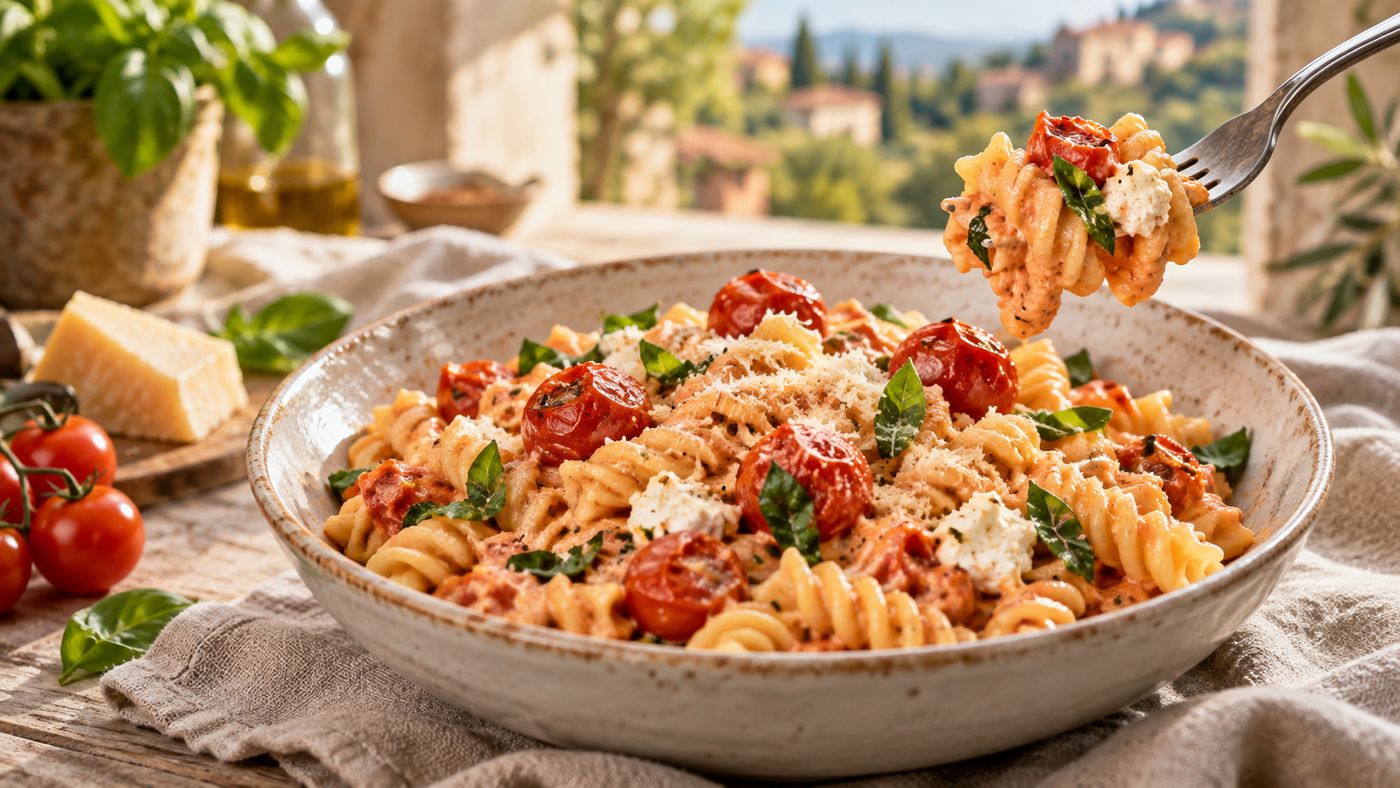

There's a particular kind of magic in a sauce that comes together almost by accident, and this Baked Goat Cheese Pasta is exactly that kind of dish. Roasted cherry tomatoes and a soft, melty log of goat cheese mash together right in the baking dish into a sauce so rich and creamy, you'd never guess how little effort it actually took.
I started making this after seeing versions of baked feta pasta everywhere and wondering how goat cheese would work in that same format. The tang of goat cheese turned out to be a perfect match for the sweet, jammy tomatoes, and once I mashed the two together straight in the pan, the sauce came together almost effortlessly. A splash of reserved pasta water was all it took to loosen everything into something silky enough to coat every noodle.
What I love most about this dish is how the oven does most of the work, roasting the tomatoes until they burst and the goat cheese until it's soft and lightly golden, so all that's left is a bit of mashing and tossing before dinner is ready.
The Inspiration Behind This Recipe
This recipe grew out of the wave of baked feta pasta recipes that became so popular, and my curiosity about how goat cheese might change the flavor profile. Goat cheese brings a tangier, slightly more pronounced flavor than feta, which pairs beautifully with the natural sweetness of roasted cherry tomatoes.
Nestling the goat cheese log right into the tomatoes before baking, rather than adding it separately, allows the two to soften and meld together in the oven, so by the time they come out, mashing them into a sauce takes almost no effort. It's a technique that turns a handful of simple ingredients into something that tastes far more involved than it actually is.
This has become one of those recipes I make whenever I want a pasta dinner that feels a little trendy and a little indulgent, without much hands-on cooking.
Why This Cooking Method Works
Roasting the cherry tomatoes at a high temperature causes them to burst and release their juices, concentrating their natural sweetness while creating a jammy base for the sauce. Nestling the goat cheese directly into that same dish allows it to soften and take on a light golden color as it bakes, making it easy to mash into a smooth, creamy consistency.
Mashing the tomatoes and cheese together right in the baking dish, rather than transferring everything to a separate bowl, keeps all those flavorful roasted juices in the sauce rather than losing them. Adding reserved pasta water gradually while tossing with the noodles helps loosen the sauce to the right consistency, since the starchy water helps it cling to the pasta smoothly rather than clumping.
This method keeps the whole process mostly hands-off, with the oven doing the bulk of the work while the pasta cooks separately on the stovetop.
Flavor Profile: What to Expect
This dish delivers a tangy, rich, and slightly sweet flavor profile:
Tangy, creamy richness from roasted goat cheese
Sweet, jammy depth from burst cherry tomatoes
Aromatic warmth from roasted garlic
Sharp, savory finish from Parmesan cheese
Gentle heat from red pepper flakes
The result is a sauce that's creamy and tangy, with a natural sweetness from the tomatoes that balances the richness of the cheese.
Tips for Making the Best Baked Goat Cheese Pasta
A few small details make a big difference here:
Reserve pasta water before draining: This starchy water is essential for loosening the sauce to the right consistency.
Mash the tomatoes and cheese thoroughly: This ensures a smooth, cohesive sauce rather than separate chunks.
Add pasta water gradually: Pouring it in a little at a time helps you control the final texture.
Watch the goat cheese while baking: It should turn soft and lightly golden, not overly browned.
Use a good-quality goat cheese log: Since it's the star of the dish, a creamy, well-flavored cheese makes a noticeable difference.
If you want an extra layer of flavor, a drizzle of good olive oil over the finished pasta right before serving adds richness and shine.
Serving Suggestions
This pasta is satisfying enough to serve on its own, but a few additions round it out nicely:
A simple arugula salad with lemon vinaigrette for freshness
Crusty bread for mopping up any extra sauce
A sprinkle of extra Parmesan or red pepper flakes for serving
A glass of crisp white wine to round out the meal
This dish also makes a great option for casual entertaining, since it looks far more impressive than the effort it takes to make.
Storage/Reheating
This dish stores and reheats reasonably well, though it's best enjoyed fresh.
Refrigerate in an airtight container for up to 3 days.
Reheat gently on the stovetop or in the microwave, adding a splash of water or broth to loosen the sauce.
Freezing is not recommended, as the texture of the goat cheese sauce can change once thawed.
Why This Recipe Deserves a Spot in Your Rotation
This is a dish that proves a viral-style recipe can still earn a permanent spot on your dinner rotation. It's quick, mostly hands-off, and delivers a sauce that tastes far more involved than the short ingredient list suggests. Once you've made it, it's easy to see why this style of baked pasta became so popular in the first place.
Recommended Drink Pairing
The tangy, rich flavors of this dish pair beautifully with a crisp Sauvignon Blanc or a dry rosé, both of which echo the tanginess of the goat cheese while cutting through its richness. A Prosecco Margarita is another fun option if you want something with a bit more brightness.
For a non-alcoholic option, a sparkling water with a splash of lemon or a light herbal iced tea rounds out the meal nicely.