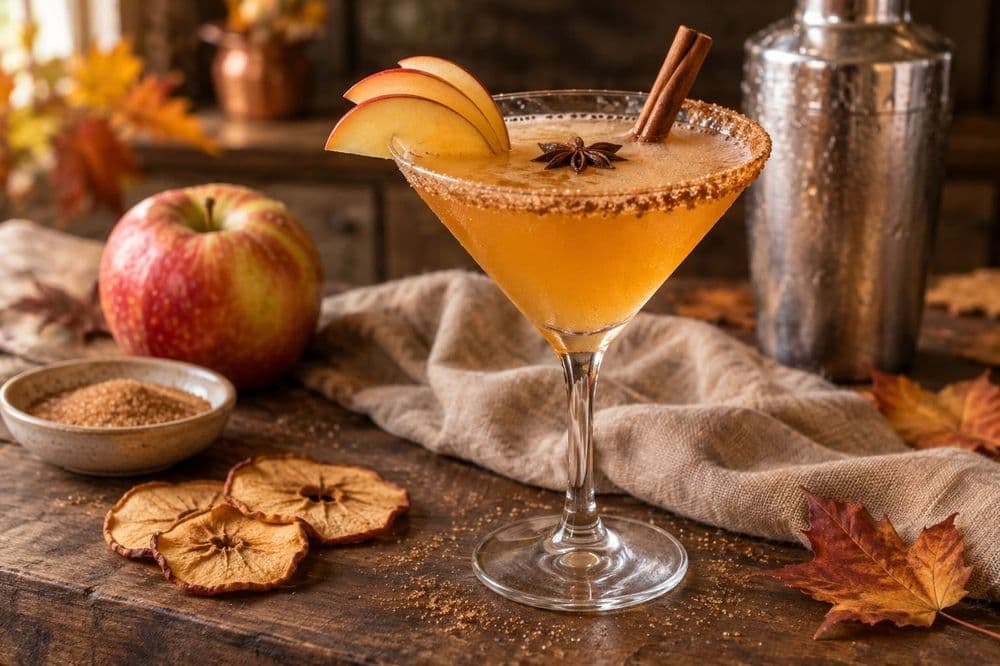



Every great cocktail is an exercise in proportion, and the Apple Cider Martini is a clean demonstration of that principle. Apple cider brings sweetness, acidity and a faint tannic grip. Vodka provides a neutral alcoholic backbone, and a measured squeeze of lemon keeps the whole drink from tipping into cloying territory.
What makes this martini worth making is its structure. Cider is not a single note; it carries malic acid for brightness, residual sugars for body, and subtle spice-like phenolics from the pressed fruit. Our job is to frame those qualities rather than bury them.
Served ice-cold in a cinnamon-sugar-rimmed glass, it reads as autumn without relying on heavy cream or syrups. It is crisp, aromatic and surprisingly refined for something that takes five minutes to build.
Below, we will walk through why the proportions work, where the drink comes from, and how to adjust it to your cider and your palate.
The Inspiration Behind This RecipeThe inspiration is the orchard in late autumn: fruit pressed that morning, cold air, and a hint of warm spice. I wanted a cocktail that tasted like that moment but kept the clarity of a classic martini rather than the weight of a dessert drink.
The solution was to treat cider as the primary modifier, in the way vermouth works in a traditional martini, and to add only what the cider needs: acid from lemon and aromatic spice from a cinnamon rim.
The result is a drink that is seasonal but still disciplined, which makes it suitable for a holiday gathering or a quiet Thursday evening.
A Brief History of the Martini and Cider CocktailsThe martini descends from the Martinez and early gin-and-vermouth mixtures of the late nineteenth century. By the mid-twentieth century the format, a chilled spirit-forward drink in a stemmed glass, became shorthand for sophistication, and vodka versions rose to dominance after the 1950s.
The 1990s "flavored martini" wave stretched the name to include nearly any chilled drink served in a cocktail glass. Purists object, but the format itself proved remarkably adaptable to fruit, spice and dessert flavors.
Cider, meanwhile, has a much older cocktail pedigree. Colonial American taverns served cider with spirits, and applejack, a distilled cider, was a staple of early American bars. The Apple Cider Martini sits at the meeting point of those two traditions.
Why This Mixing Method WorksShaking with ice accomplishes three things at once: chilling, dilution and aeration. For a drink with cider and citrus, a hard shake of about fifteen seconds drops the temperature to near freezing and adds roughly 20 to 25 percent water by volume, which softens the alcohol and integrates the flavors.
Lemon juice is critical because sweetness perceived on the palate depends on acid balance. Without it, cider's sugars dominate. With it, the apple flavor becomes brighter and more defined.
The cinnamon-sugar rim adds aroma at the moment of sipping. Much of what we perceive as flavor is smell, so a fragrant rim effectively seasons every sip before the liquid reaches your tongue.
Flavor Profile: What to ExpectExpect a drink that is bright first, then warm. Here is how it unfolds:
- Crisp apple: fresh cider leads with tart, juicy fruit.
- Citrus lift: lemon sharpens the finish and prevents sweetness from lingering.
- Warm spice: cinnamon on the rim and a touch of vanilla add aromatic depth.
- Clean spirit: vodka provides structure without competing flavors.
The finish is dry-leaning and refreshing, inviting a second sip rather than demanding a pause.
Tips for Making the Best Apple Cider MartiniSmall adjustments make a measurable difference:
- Use fresh, unfiltered cider: shelf-stable apple juice lacks the acidity and complexity that carry this drink.
- Chill the glass: a frozen glass holds temperature and limits further dilution.
- Taste your cider first: if it is very sweet, add an extra quarter ounce of lemon juice.
- Shake hard: underchilled drinks taste sweeter and more alcoholic.
- Rim only half the glass: this lets guests choose how much spice they want.
Serve in a chilled coupe or martini glass. A thin apple fan, a cinnamon stick or a few dried apple slices make an elegant garnish that also contributes aroma.
For a gathering, set up a small rimming station with cinnamon sugar and a saucer of cider so guests can personalize their glasses. It turns the cocktail into a bit of tabletop theater.
For a festive touch, float a single star anise on the surface. It looks striking and adds a faint licorice note that pairs well with the apple.
Storage and Make-Ahead Tips- Batch the base: combine vodka, cider and lemon juice up to 24 hours ahead and refrigerate; shake with ice per serving.
- Keep cider cold: use within five to seven days of opening.
- Rim ahead: prepare cinnamon-sugar rims an hour before serving and let them set.
- Do not freeze the mixed drink: ice crystals will dilute and dull the flavor.
This cocktail is fast, scalable and reliably balanced. It uses a handful of ingredients, requires no special equipment beyond a shaker, and shows how a bit of technical care produces a polished result.
Once you understand the relationship between sugar, acid and dilution here, you can apply it to pear nectar, cranberry or pomegranate in other seasons.
Recommended Food PairingPair it with sharp cheddar, a baked brie with walnuts, or roasted pork with sage. The cocktail's acidity cuts richness, while its apple character echoes those savory, fatty dishes.
For something lighter, try salted roasted almonds or a simple cheese board with pears and crackers.