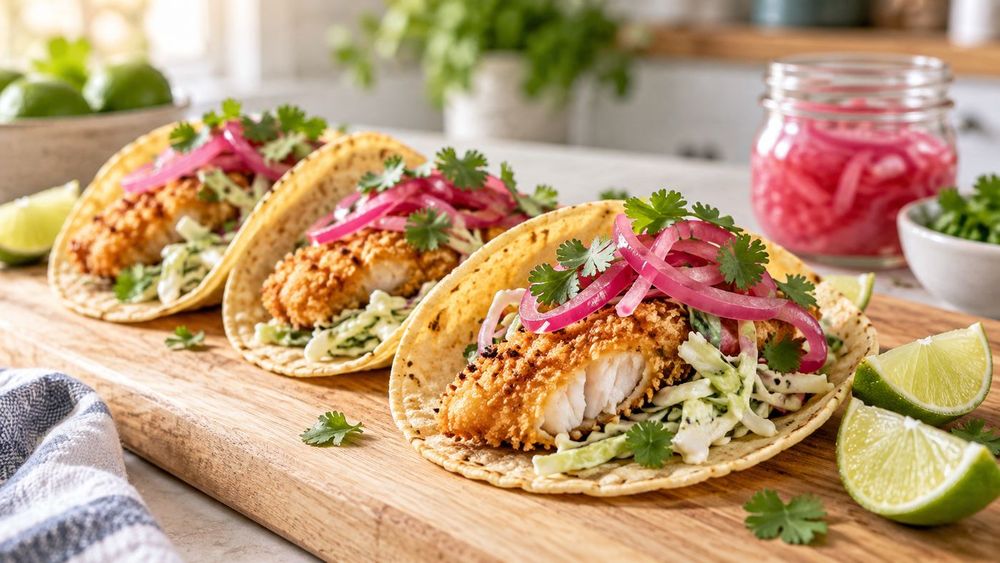
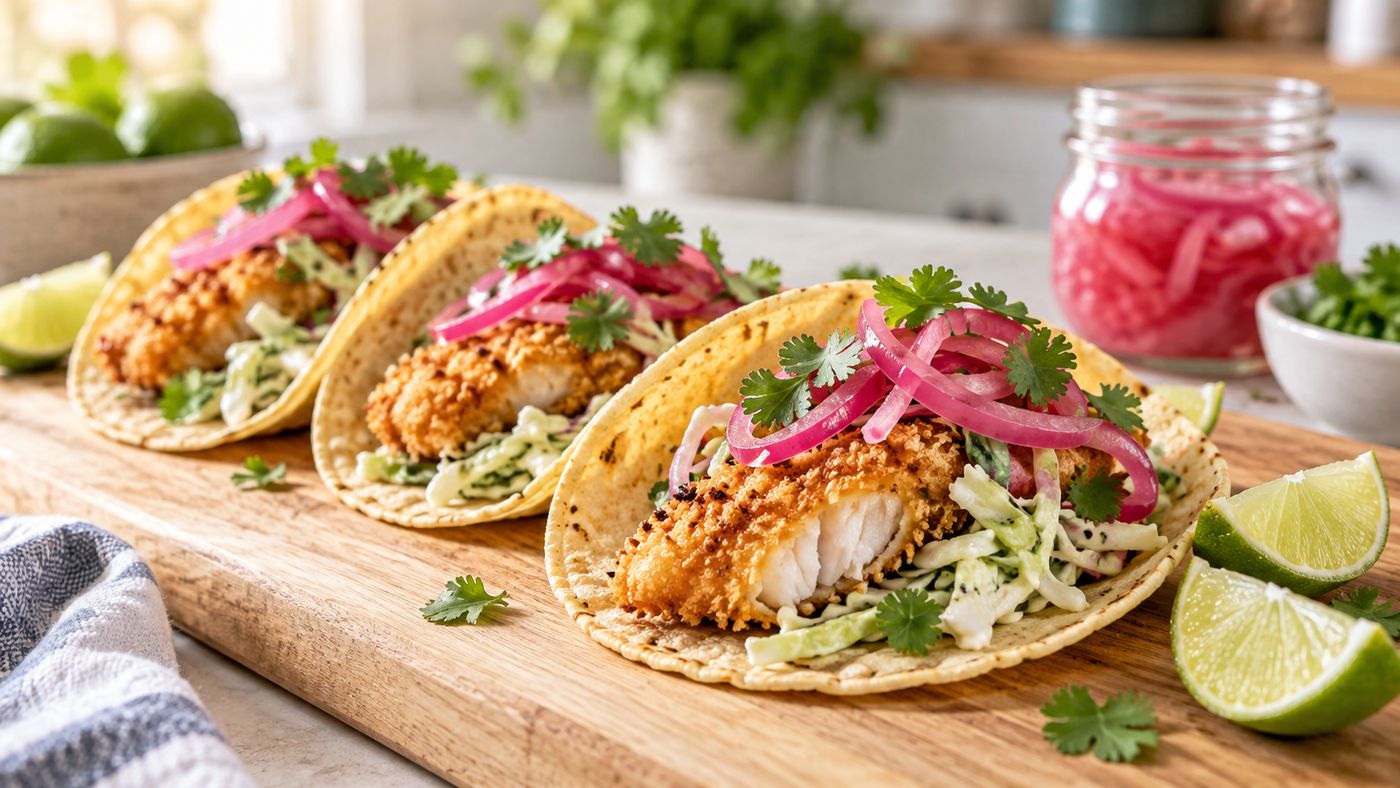

The case for air fryer fish tacos comes down to a single practical reality: the three-stage breading system that produces genuinely crispy fish in a conventional deep fryer works almost as well in an air fryer, takes a fraction of the cleanup, and eliminates the temperature management that makes frying intimidating on a weeknight. Understanding why the coating crisps without submersion in oil — and why this particular recipe is specifically designed to maximize that effect — makes the difference between fish tacos that are merely convenient and fish tacos that are actually excellent.
The panko breadcrumb choice is the technical foundation. Unlike conventional breadcrumbs, panko is produced by baking bread with an electric current rather than conventional heat, creating a flaky, low-moisture crumb with significantly more surface area per gram. That surface area is what crisps in the air fryer's circulating heat. Each irregular flake becomes individually golden and crunchy rather than fusing into a dense, uniform crust. The smoked paprika, garlic powder, and chili powder in the coating aren't just seasoning — they contain compounds that brown more readily than plain breadcrumbs, helping the coating develop color and flavor at air fryer temperatures that are lower than deep-frying oil. The light coating spray before cooking provides just enough surface fat to trigger the Maillard reaction across the full surface of each strip.
The quick-pickled onions deserve as much attention as the fish. Twenty minutes in apple cider vinegar, water, sugar, and salt is sufficient to transform raw red onion's harsh, aggressive bite into something bright, tangy, and genuinely vibrant. The acidity penetrates the onion cells rapidly, mellowing the sulfur compounds responsible for raw onion's sharpness while preserving the crisp texture. The result is an onion that provides the acidic contrast birria and battered fish both need without overwhelming the other components. Make them first — they improve with every additional minute they sit.
The spicy slaw rounds out the architecture with creaminess and heat. Mayo provides the emulsified fat base, lime juice adds acidity that prevents the slaw from tasting flat, and hot sauce introduces a forward heat that complements rather than duplicates the chili powder in the fish coating. Refrigerating the slaw while the fish cooks allows the cabbage to soften slightly and the flavors to integrate — a brief rest that makes a noticeable difference in how cohesive the slaw tastes versus freshly tossed.
The Inspiration Behind This Recipe
This recipe builds directly on the Baja California fish taco tradition, where fresh-caught white fish, simple seasoning, crunchy coating, creamy sauce, and shredded cabbage have defined the format for generations. The air fryer is the contemporary adaptation — the same flavor principles and structural logic as the original, made accessible for home kitchens without commercial fryers or the commitment to deep frying. The pickled onions represent a modern addition to the traditional template, borrowing from broader Mexican culinary tradition where pickled vegetables have long been used to add acidity and brightness to rich, fried preparations. Together, the three components — crispy fish, spicy slaw, pickled onions — create a taco that's more complete and better balanced than any single element would suggest.
A Brief History of Baja Fish Tacos
Fish tacos emerged from the coastal cities of Baja California — particularly Ensenada — where the Pacific fishing industry brought abundant fresh catches and street food culture provided the format. The traditional preparation is straightforward: white fish dipped in a simple beer batter, fried, and served in a corn tortilla with shredded cabbage, crema, and salsa. The dish gained broader American exposure in the 1980s when surfers traveling through Baja brought the concept north to California, and Ralph Rubio's 1983 opening of Rubio's Coastal Grill in San Diego introduced it to mainstream American audiences. From there, fish tacos spread nationally and became one of the most adapted and elaborated formats in American casual dining. The panko-breaded, air-fried version represents the latest evolution — a home cook's answer to achieving comparable crispiness without the infrastructure of restaurant frying, designed for the reality of weeknight cooking rather than beachside street food stalls.
Why This Cooking Method Works
Panko's irregular structure maximizes crispiness in circulating air. The flaky, low-density crumb contains significantly more surface area than conventional breadcrumbs, allowing each piece to crisp individually under the air fryer's heat rather than fusing into a dense, uniform coating.
The three-stage breading system creates layered adhesion. Flour provides a dry surface for the egg to grip. Egg acts as the binding agent that holds the panko in place. Without all three stages in sequence, the coating separates from the fish during cooking and loses its structural integrity.
Cooking spray bridges the gap between frying and air frying. A light coating of oil on the breaded fish provides the surface fat necessary to trigger the Maillard reaction — the browning process that creates flavor and color. Without it, the panko dries rather than crisps, producing a pale, chalky coating instead of a golden, flavorful crust.
Flipping halfway through ensures even browning. The air fryer heats from above in most configurations. The flip exposes the bottom surface directly to the heating element for the second half of cooking, creating uniform crispiness rather than a golden top and pale underside.
Quick pickling works through osmosis and acid penetration. Salt draws moisture from the onion cells, temporarily softening their structure. Acid penetrates those cells and denatures the enzyme responsible for raw onion's harshness while retaining crunch. Twenty minutes is the minimum; longer produces progressively more pickled character.
Flavor Profile: What to Expect
These tacos deliver layered contrast across every component. The fish brings golden, seasoned crunch from the panko crust with smoky paprika warmth and mild chili heat, giving way to tender, flaky white fish with clean, oceanic sweetness. The spicy slaw contributes creamy richness from the mayo base, bright lime acidity, and forward heat from the hot sauce that builds gradually rather than hitting all at once. The pickled onions land with sharp, tangy brightness and a slight sweetness from the sugar in the pickling liquid. Fresh cilantro adds herbal top notes, and lime wedges at the table allow final acidity adjustment to individual preference. The warm tortilla holds everything together with its soft, slightly sweet foundation. It's a taco built on deliberate contrasts — crispy against creamy, hot against cool, rich against bright — that resolve into something genuinely cohesive and satisfying.
Tips for Making the Best Air Fryer Fish Tacos
Start the pickled onions first, every time. They need the full 20 minutes minimum, and more time only improves them. Starting them before you do anything else means they're ready — and better — by the time the fish comes out of the air fryer.
Pat the fish completely dry before breading. Surface moisture prevents the flour from adhering cleanly, which compromises every subsequent stage of the breading system. Thorough drying with paper towels before the flour dredge is the single most important prep step for coating integrity.
Press the panko into the fish rather than rolling it. Active pressing forces the panko into contact with the egg layer and creates better adhesion than a passive roll. Spend a few seconds on each strip pressing the coating firmly into place from all sides.
Don't skip the cooking spray. Even a light, even coat makes the difference between pale and golden. Hold the can 8 to 10 inches from the fish and use a sweeping motion to coat without saturating.
Work in batches if your air fryer is small. Overlapping fish strips block airflow and create steam rather than crispiness on the covered surfaces. A single layer with space between each strip is non-negotiable for the coating to function correctly.
Use cold fish straight from the refrigerator. Cold fish holds its shape better during breading and cooks more predictably than fish that has warmed to room temperature — the opposite of the advice for thicker meat cuts.
Taste and adjust the slaw before refrigerating. Hot sauces vary significantly in heat and salt levels between brands. Taste after combining and adjust — a few more drops of hot sauce, an extra squeeze of lime, a pinch more salt — before the rest period that develops the flavor.
Serving Suggestions and Side Pairings
These tacos are built for fresh, light accompaniments that complement rather than compete with the fish's delicate flavor. Corn Salsa adds sweet, vibrant crunch alongside the slaw. Cilantro Lime Slaw works as an alternative or additional slaw component for those who want the vinaigrette style alongside the creamy version. Black Bean Dip with chips makes a satisfying starter that bridges the gap between guests arriving and the fish coming out of the air fryer. Cilantro Lime Rice rounds out the plate with complementary citrus notes. Guacamole adds creamy richness that pairs naturally with the spicy slaw's heat. Keep the sides fresh and relatively light — this is a taco where the fish and its toppings are doing the work, and heavy sides compete rather than complete.
Storage, Reheating, and Make-Ahead Tips
Storage: Store the breaded fish, slaw, and pickled onions in separate airtight containers. Fish keeps refrigerated for up to 2 days; slaw for up to 3 days; pickled onions for up to 2 weeks, improving in flavor throughout.
Reheating: Return fish to the air fryer at 375°F for 3 to 4 minutes to restore crispiness. Oven reheating at 400°F on a wire rack for 5 minutes also works well. Avoid microwaving — the panko coating becomes soft and loses all textural appeal.
Make-Ahead: The pickled onions are the ideal make-ahead component — prepare them up to two weeks in advance and store refrigerated. The slaw can be made up to 4 hours ahead. Bread the fish up to 2 hours before cooking and refrigerate uncovered on a parchment-lined plate — the brief drying time in the refrigerator actually improves coating adhesion during cooking.
Freezing: Freeze breaded, uncooked fish strips in a single layer until solid, then transfer to freezer bags for up to 2 months. Cook directly from frozen at 400°F for 14 to 16 minutes, flipping halfway through. Do not freeze cooked fish, assembled tacos, or the slaw.
Why This Recipe Deserves a Spot in Your Taco Tuesday Rotation
Because this is the recipe that proves air fryer fish tacos don't have to be a compromise. The panko crust crisps genuinely. The quick-pickled onions add complexity that takes 20 minutes of passive time to produce. The spicy slaw is cohesive and purposeful rather than a simple afterthought. And the whole thing comes together in 30 minutes with minimal cleanup — no oil splatter, no temperature monitoring, no dedicated equipment beyond an appliance most home cooks already own. These tacos also fill a specific rotation role that's hard to duplicate: the lighter weeknight option that still feels exciting and complete, the fish taco that satisfies the craving without requiring a beach or a deep fryer. For those weeks when Taco Tuesday needs to be quick, healthy, and genuinely good rather than just convenient, this is exactly the recipe to reach for.
Recommended Drink Pairing
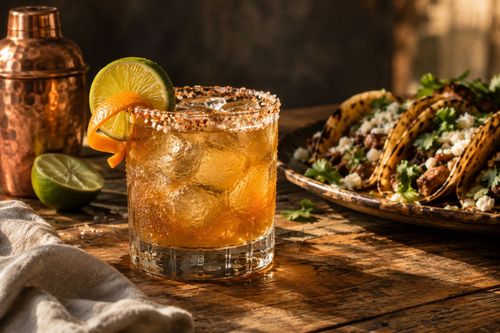
The Classic Lime Margarita is the natural pairing — bright citrus and tequila complement the fish's seasoning while cutting through the slaw's creaminess. Beergaritas provide the same refreshing quality with a more casual, session-friendly character that suits the weeknight nature of this recipe. A cold Mexican lager with lime — Pacifico, Corona, or Modelo — is the quintessential Baja pairing, crisp and clean enough to let the fish's flavor remain the focus. For non-alcoholic options, sparkling water with lime and a splash of hot sauce mirrors the slaw's flavor profile in the glass, or a simple Agua de Jamaica provides tart, floral contrast that refreshes between bites.