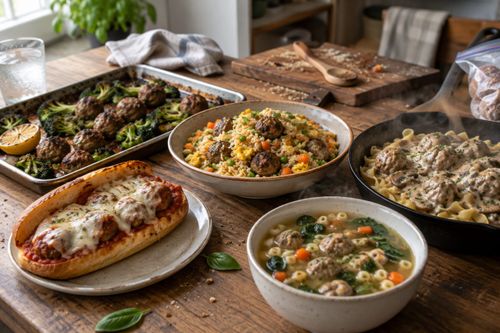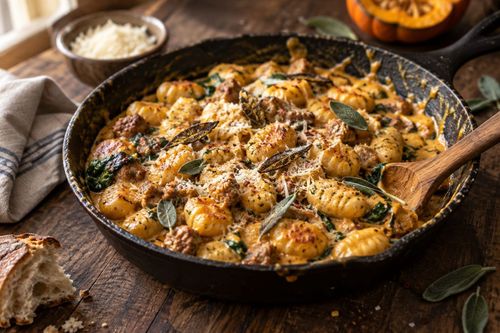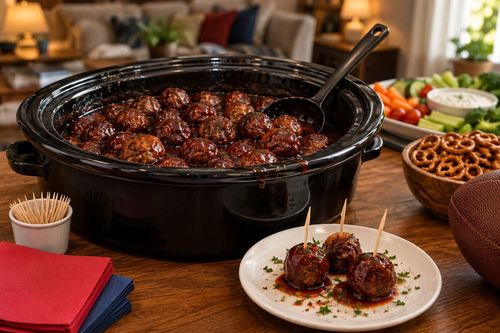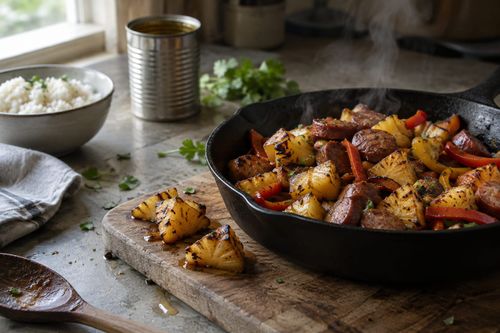

There is a test that serious cooks give themselves that no culinary school administers and no cookbook enables.
No recipe. No reference. No measuring cups pulled from the drawer or timers set on the phone. Just the ingredients, the heat, and whatever has accumulated in the cook’s hands and senses and memory over years of standing at a stove.
Cooking from memory — cooking from genuine internalized knowledge rather than from instructions — is the standard by which professional cooks privately measure themselves. Not the Michelin star or the critical review or the Instagram following. The moment when a cook stands in front of a pan and knows, without consulting anything, exactly what to do.
Most home cooks have never experienced this. Most home cooks have never tried.
The Recipe as Crutch and the Recipe as Teacher
Recipes are one of the most valuable tools in cooking and one of the most significant obstacles to becoming a genuinely capable cook.
This is not a contradiction. It is a developmental sequence.
In the beginning, a recipe is everything. It is the map, the instruction, the safety net. It tells the developing cook not just what to do but what to expect — what the onions should look like when they’re ready, what the sauce should smell like when it’s reduced enough, what the dough should feel like when the gluten has developed properly. For a cook without experience, the recipe provides the reference points that experience hasn’t yet supplied.
But there is a moment — a transition that the best cooks make deliberately and many home cooks never make at all — when the recipe stops being the teacher and starts being the crutch.
The cook who has made a dish ten times following a recipe knows, at some level, what the dish requires. But as long as the recipe is present, that knowledge never has to become independent. The cook never has to reach for it internally because it’s always available externally. The recipe prevents the knowledge from becoming the cook’s own.
Professional cooks make this transition by design — cooking dishes without recipes until the knowledge is theirs, not borrowed. The dish becomes internal. The cook can produce it anywhere, with any equipment, adjusting instinctively for the variables of each situation.
What It Means to Own a Dish
There is a specific experience that every cook who has internalized a dish will recognize.
It begins with someone asking for the recipe.
The cook pauses. They think. And then they realize, sometimes with genuine surprise, that they can’t fully articulate it. Not because they’ve forgotten, but because the knowledge they have isn’t in the form of a recipe anymore. It’s in the form of a sensory memory — a sequence of observations and adjustments and decisions that doesn’t translate cleanly into tablespoons and minutes.
“Cook the onions until they smell sweet.” “Add the tomatoes when the soffritto looks dark enough.” “Season until it tastes like it needs nothing.”
This is owned knowledge. It is the difference between a cook who has memorized a recipe and a cook who understands a dish. The memorizer can reproduce. The understander can adapt — to a different pan, a different heat source, an ingredient that isn’t quite right, a technique that needs modification for a different context.
Professional cooks own their dishes. They have earned them through repetition, through variation, through enough iterations that the dish has become a conversation rather than an instruction — something they can respond to in the moment rather than execute from a script.
The Variables That Recipes Can’t Anticipate
Here is why owned knowledge matters in ways that recipe-following never can: the variables of any given cooking session are never identical to the variables under which a recipe was written.
Your stove runs hot. The tomatoes you bought this week are more acidic than the ones used last week. The pan you’re using is heavier than the recipe assumed. The onions are larger, the garlic is stronger, the humidity in the kitchen is different.
A recipe is a snapshot — the result of one cook’s experience with one set of variables on one occasion. It cannot account for every variation that the next cook will encounter. The instructions say “cook for twenty minutes” but twenty minutes on a commercial range at a culinary testing kitchen is not twenty minutes on a home burner at half the BTUs.
The cook following a recipe adjusts imperfectly, because adjustment requires understanding what the twenty minutes was supposed to produce, and that understanding — sensory, experiential, built through repetition — is exactly what recipe-following doesn’t build.
The cook who owns a dish doesn’t cook for twenty minutes. They cook until the soffritto is dark enough, the sauce has reduced to the right consistency, the protein has reached the texture that the dish requires. Time is a reference, not a target. The outcome is the target.
The Dishes Worth Memorizing
Not every dish is worth the investment of internalization. Some dishes are complex enough, infrequently cooked enough, or technical enough that a recipe remains the right tool indefinitely.
But there is a category of dishes — the ones that form the backbone of regular cooking, the ones that appear on the table week after week — that repay the investment of full internalization many times over.
A vinaigrette. A simple pasta sauce. A braise built on whatever is in the refrigerator. Scrambled eggs. A pan sauce made from whatever fat and fond are in the pan after a protein is seared. Roasted vegetables with whatever is in season.
These are the dishes that, once owned, transform the experience of daily cooking. Because when these dishes are internal — when the cook knows them the way they know how to drive, without thinking about the mechanics — the act of cooking them becomes something different. Less effortful. More present. More responsive to what’s actually happening in the pan rather than what the recipe says should be happening.
This is where cooking becomes creative rather than reproductive. Where the cook stops executing someone else’s thinking and starts doing their own.
The Confidence That Only Internalization Builds
There is a kind of cooking confidence that recipes cannot produce, regardless of how faithfully they are followed.
It is the confidence that comes from knowing — not believing, not hoping, but knowing — that you can walk into a kitchen with whatever is available and produce something good. That the equipment doesn’t have to be perfect. That the ingredients don’t have to be exactly right. That the process will unfold not because a recipe is guiding it but because you are.
This confidence changes the experience of cooking at a fundamental level. The cook who has it is present in a way that recipe-following doesn’t allow — because they’re not managing the anxiety of executing instructions correctly, they’re simply cooking. Responding to what they see and smell and taste. Making decisions based on what the food needs rather than what the recipe says.
Professional cooks develop this confidence through the sheer volume of repetition that a kitchen demands. Home cooks can develop it too — more slowly, but through the same mechanism. Make the same dish without a recipe. Make it again. Notice what changes. Notice what stays the same. Notice what the dish tells you when there’s no instruction telling you what to hear.
The recipe is the beginning of the journey. Cooking from memory is the destination.
The Takeaway
The real test of a cook is not the ability to follow a recipe faithfully. It is the ability to cook without one — to produce food from internalized knowledge, from sensory memory, from the understanding of what a dish requires that only comes from having made it enough times that it belongs to you.
Start with the dishes you cook most often. Cook them without the recipe. Cook them again. Let the failures teach you what the recipe never could — what the dish actually needs, in your kitchen, with your equipment, on this particular evening.
The recipe will always be there if you need it.
The goal is the day you don’t.