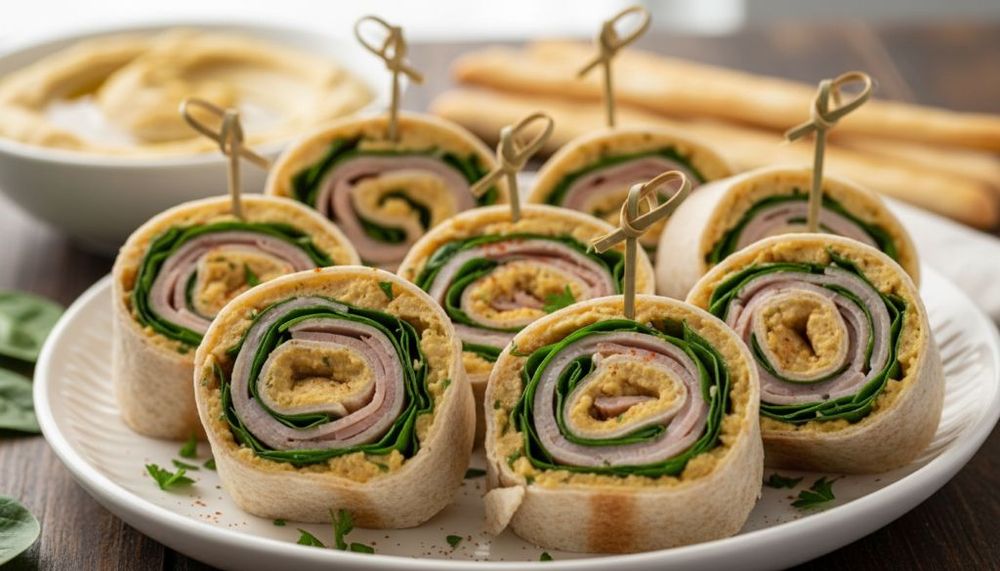



No-cook assembly recipes represent peak meal prep efficiency: minimal time investment, zero cooking skills required, maximum yield of prepared food relative to effort expended. However, most no-cook preparations fail within 48 hours due to moisture migration, ingredient separation, or textural degradation. These turkey and hummus pinwheels solve those problems through strategic ingredient selection and assembly methodology that respects the physical properties of each component.
The pinwheel format offers distinct advantages over traditional sandwich or wrap construction for meal prep purposes. The spiral structure creates multiple layers of each ingredient in every bite, ensuring flavor consistency throughout rather than the uneven distribution common in linearly assembled wraps. The slicing process exposes the layered interior, creating visual appeal that makes these suitable for both casual snacking and more formal serving contexts. Most importantly, the compact circular format means higher ingredient density per volume, creating more satisfying portions from the same amount of filling.
What makes this specific combination particularly effective is the synergy between ingredients chosen for complementary moisture levels and structural characteristics. Hummus serves as both flavor component and functional moisture barrier—its oil and protein content creates a hydrophobic layer that prevents the tortilla from absorbing water from vegetables. Turkey breast, being relatively dry on its surface, doesn’t contribute moisture that would compromise tortilla integrity. Spinach and bell peppers, while containing water, have protective cell walls that release moisture slowly rather than immediately saturating adjacent ingredients.
The assembly sequence matters more than most people realize. Each ingredient occupies its optimal position based on moisture content, structural stability, and how it interacts with adjacent layers. This isn’t arbitrary—it’s deliberate engineering designed to maximize storage duration while maintaining textural quality and food safety.
─────────
The Inspiration Behind This Recipe
This recipe emerged from analyzing why commercial pinwheel products maintain quality during refrigerated distribution while home-prepared versions often fail by day two. The key difference: commercial operations understand moisture management and use specific assembly sequences designed for extended shelf life rather than immediate consumption. I needed to reverse-engineer those principles for home meal prep using readily available ingredients.
The hummus-as-barrier concept came from observing how oil-based spreads interact with bread products. Traditional mayonnaise creates moisture barriers in sandwiches through fat content—the lipids prevent water migration from wet ingredients to bread. Hummus functions similarly: the tahini (sesame paste) provides oils, while the chickpea protein creates viscosity and adhesion. This combination spreads evenly, adheres to the tortilla, and creates a hydrophobic layer more effectively than alternatives like mustard (too thin) or cream cheese (too temperature-sensitive).
Turkey breast selection reflects both nutritional objectives and practical storage considerations. Deli turkey provides lean protein (approximately 95% lean) without excessive fat that might become greasy or develop off-flavors during storage. The thin slicing allows for easy rolling without creating bulk that would make pinwheels difficult to cut cleanly. Pre-sliced deli meat also eliminates preparation time—no cooking, no cooling, just assembly.
The vegetable choices—spinach and red bell pepper specifically—were determined through systematic testing of moisture content and structural stability. Lettuce wilts too quickly. Cucumbers release excessive moisture. Tomatoes are too wet and create sogginess. Spinach maintains structure while contributing nutritional density (iron, vitamins A and K) without excess moisture. Red bell peppers provide crunch, color, and vitamin C while their waxy skin contains interior moisture effectively.
─────────
A Brief History of Pinwheels and Roll-Up Preparations
The pinwheel or spiral sandwich format has multicultural origins—from Japanese maki rolls that pioneered the concept of sliced spiral foods to Middle Eastern wraps that demonstrated flatbread’s rolling potential. The specifically American “pinwheel” emerged in mid-20th century entertaining culture, when home cooks sought visually impressive appetizers that didn’t require advanced culinary skills. The format solved multiple problems: uniform portions, attractive presentation, and the ability to prepare in advance.
Commercial pinwheel products gained mainstream distribution in the 1990s and 2000s as grab-and-go lunch options expanded beyond traditional sandwiches. Food service operations recognized that pinwheels offered portion control advantages—each piece contains predictable calories and macronutrients—while creating perceived value through their more elaborate appearance compared to simple sandwiches. The format also travels well, resists sogginess better than traditional sandwiches, and provides textural interest through multiple thin layers.
What distinguishes contemporary pinwheels from their party-appetizer ancestors is the emphasis on nutritional density and meal prep functionality rather than merely creating attractive food for entertaining. Modern consumers understand that appearance and nutrition aren’t mutually exclusive—these pinwheels can be both visually appealing and genuinely nourishing, both convenient and satisfying. The format has evolved from decorative appetizer into strategic meal prep architecture optimized for advance preparation, extended storage, and portable consumption.
─────────
Why This Assembly Method Works for Meal Prep
The success of these pinwheels for multi-day storage hinges on understanding moisture migration patterns and creating strategic barriers that prevent tortilla saturation. When wet ingredients contact absorbent materials like tortillas, capillary action and osmosis drive moisture from high-concentration areas (vegetables) toward low-concentration areas (dry tortilla). This migration creates soggy, unpalatable results within hours unless prevented through barrier creation.
Hummus functions as that barrier through multiple mechanisms. The fat content from tahini and olive oil creates a hydrophobic (water-repelling) layer—water molecules preferentially remain in vegetable tissues rather than crossing through the lipid barrier to reach the tortilla. The protein and fiber from chickpeas provide viscosity that prevents the hummus itself from being absorbed into the tortilla immediately, maintaining a stable barrier layer. The slightly acidic pH (from lemon juice in most hummus) also contributes preservation benefits by creating an environment less hospitable to bacterial growth.
The turkey layer serves dual purposes beyond protein delivery. Positioned directly on the hummus, the meat creates an additional barrier between higher-moisture vegetables and the tortilla. Deli turkey’s relatively dry surface (compared to freshly cooked turkey which retains more moisture) means it doesn’t contribute to tortilla saturation. The protein also benefits from proximity to hummus—over storage time, some flavors migrate between layers, with the turkey absorbing some of hummus’s garlic and lemon notes, creating more integrated flavor.
Spinach and bell pepper placement follows moisture management logic. Spinach goes directly on turkey because whole baby spinach leaves have waxy cuticles that slow moisture release. The leaves also create a textured surface that prevents bell peppers from sliding during rolling. Red bell peppers occupy the outermost position before rolling because their high water content makes them the most likely moisture contributors—positioning them farthest from the tortilla base maximizes the protective barrier layers between pepper moisture and tortilla structure.
The rolling technique creates compression that expels excess air and presses layers together into a cohesive unit. This compression serves multiple functions: it prevents layers from separating during storage and slicing, it creates structural integrity that makes clean cutting possible, and it reduces air pockets where bacteria might proliferate. The tight roll also creates a more compact cylinder that’s easier to portion consistently and pack efficiently.
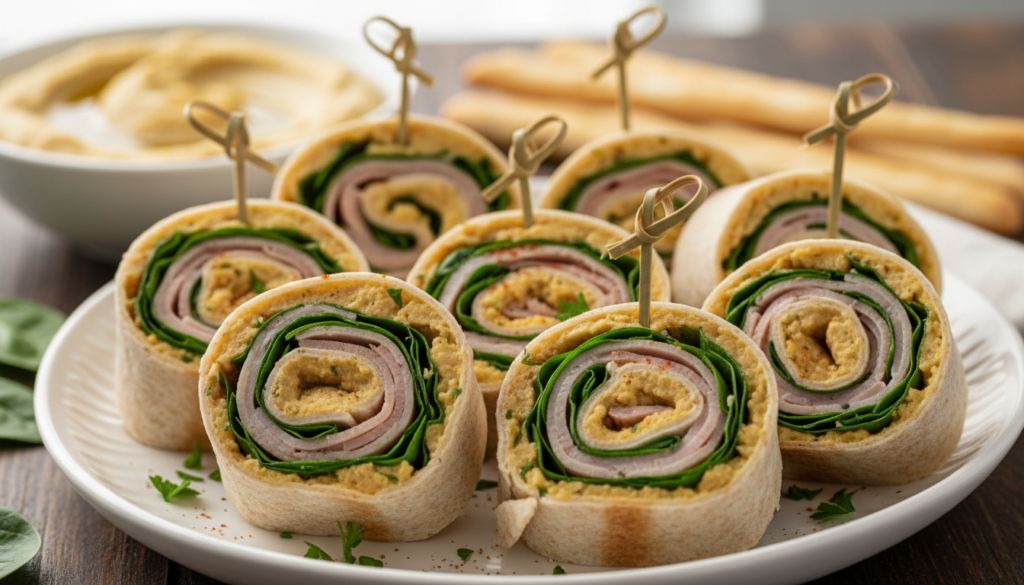
The slicing process requires specific technique to maintain quality. Using a sharp knife with a single clean cut (rather than sawing motions) prevents ingredients from smearing or tearing. The 1-inch width creates optimal balance—thick enough to maintain structural integrity but thin enough to eat comfortably in one or two bites. Each pinwheel exposes the spiral interior, creating visual appeal while also allowing any moisture that does accumulate to evaporate rather than remaining trapped within a sealed roll.
─────────
Flavor Profile: What to Expect
These turkey and hummus pinwheels deliver fresh, balanced flavors with Mediterranean influences:
- Creamy and nutty from hummus that provides rich, garlicky base notes with subtle tahini earthiness
- Mild and savory from turkey breast that contributes lean protein without dominating other flavors
- Fresh and slightly mineral from baby spinach that adds green vegetable notes and nutritional density
- Sweet and crisp from red bell pepper that provides fresh vegetable crunch and subtle natural sweetness
- Wholesome and nutty from whole wheat tortilla that adds fiber and earthy grain flavor
The overall composition creates light, refreshing eating experience—these taste fresh and clean rather than heavy or rich. The hummus provides enough flavor interest to prevent blandness while the vegetables contribute textural variety and brightness. The turkey adds substance and protein satisfaction without the heaviness that comes from cheese or mayonnaise-based preparations.
Over 2-3 days of storage, flavors integrate as ingredients exchange aromatic compounds. The tortilla absorbs subtle garlic notes from the hummus. The turkey becomes more flavorful as it marinates in proximity to the hummus’s lemon and spice components. The spinach maintains its fresh character while the bell pepper’s sweetness becomes slightly more pronounced. This gradual flavor development is generally positive—day-three pinwheels often taste more complex and integrated than freshly made ones where flavors exist as more distinct layers.
─────────
Tips for Making the Best Turkey & Hummus Pinwheels
Precision in assembly creates significantly better results despite apparent simplicity:
- Choose quality ingredients: Use freshly sliced deli turkey (not pre-packaged which has shorter shelf life), quality hummus with good consistency, and fresh vegetables without blemishes or wilting.
- Bring tortillas to room temperature: Cold tortillas crack when rolled tightly. Let them sit at room temperature for 10-15 minutes before assembly, or microwave briefly (10 seconds) to make them more pliable.
- Spread hummus edge-to-edge: Complete coverage creates moisture barrier across entire tortilla surface. Leave no gaps where vegetables might contact tortilla directly.
- Use thin, even hummus layer: Approximately 2-3 tablespoons per tortilla creates adequate barrier without excessive thickness that would make rolling difficult or create squishing during slicing.
- Layer turkey with slight overlap: Cover the hummus completely but avoid double-layering excessively. Too much turkey creates bulk that makes rolling difficult and cutting messy.
- Pat vegetables dry: Use paper towels to remove surface moisture from spinach and bell peppers. This small step significantly extends freshness.
- Don’t overfill: Restraint in ingredient quantity creates cleaner rolls and easier slicing. Overstuffed pinwheels fall apart and create messy cuts.
- Roll tightly and evenly: Maintain consistent pressure while rolling to create uniform density throughout. Loose rolling creates gaps where layers separate during storage.
- Use very sharp knife: A sharp chef’s knife or serrated knife creates clean cuts without squishing ingredients. Dull knives compress pinwheels and create ragged edges.
- Wipe knife between cuts: Hummus and vegetables accumulate on the blade. Wiping after each cut maintains clean edges and prevents cross-contamination between pieces.
- Refrigerate before slicing: Rolling and then chilling for 15-20 minutes firms everything up, making slicing significantly easier and creating cleaner cuts.
The most critical factor is hummus distribution and rolling tightness. These two elements determine whether pinwheels maintain structural integrity for days or fall apart by tomorrow.
─────────
Portioning and Container Suggestions
This recipe yields approximately 24-32 pinwheels when using 4 large (10-inch) tortillas and slicing into 1-inch pieces. This quantity divides conveniently into 4-6 servings depending on appetite—4-6 pinwheels typically constitute a light lunch or substantial snack for most people, providing approximately 15-20 grams of protein per serving.
For storage, shallow containers that allow single-layer arrangements maintain optimal quality. Stacking pinwheels creates pressure that can cause ingredients to squeeze out or layers to compress unevenly. Rectangular glass or plastic containers (approximately 9×13 inches) accommodate a full batch in a single layer. If using multiple smaller containers, maintain single-layer organization for best results.
For grab-and-go convenience, portion pinwheels into individual serving containers—4-6 pieces per container creates perfectly sized snacks or light lunches. This pre-portioning eliminates decision-making when you’re hungry and improves portion control by creating defined servings rather than allowing unlimited access to the full batch. Small 2-cup containers work ideally for individual portions.
The visual presentation benefits from thoughtful arrangement. Orient pinwheels with spiral facing up so the colorful layers are visible. Alternate positioning if needed to maximize space efficiency, but always showcase the interior spiral—it’s the visual appeal that makes these feel special rather than just functional meal prep. Consider using clear containers that allow you to see the contents at a glance when opening the refrigerator.
─────────
Storage, Reheating, and Shelf Life Tips
- Refrigerator storage: Store in airtight containers for 3-4 days. Properly assembled pinwheels maintain excellent quality throughout, with minimal textural changes.
- Wrap entire rolls before slicing: For maximum freshness, roll tortillas, wrap tightly in plastic wrap, refrigerate overnight, then slice the next day. This creates firmer rolls that slice more cleanly and may extend shelf life slightly.
- Layer separation: Place parchment paper between layers if stacking is unavoidable. This prevents pinwheels from sticking together and maintains better appearance.
- Room temperature storage limited: These can sit at room temperature for 2-3 hours maximum (ideal for packed lunches), but refrigeration is essential for food safety with protein and vegetables.
- Freezing not recommended: The high moisture content vegetables become mushy when thawed, and tortillas become soggy. These are refrigerator-only preparations.
- No reheating necessary: These are designed to be eaten cold. The cold temperature actually enhances the refreshing quality and maintains textural contrast.
- Moisture management: If condensation accumulates in storage container, pour it off and pat pinwheels dry with paper towel. Excessive moisture indicates vegetables weren’t dried properly before assembly.
- Prevent drying: Ensure containers seal tightly. Exposure to refrigerator air dries tortilla edges and makes them tough and chewy rather than tender and pliable.
- Best eating window: While safe for 3-4 days, optimal quality occurs within first 2-3 days. By day 4, tortillas may be slightly drier and vegetables less crisp, though still perfectly edible.
- Quality indicators: Fresh pinwheels smell clean with subtle garlic notes from hummus. Any sour or off odors indicate spoilage—discard immediately. Slimy texture on turkey or visible mold means spoilage.
- Transport considerations: Pack with small ice pack in insulated lunch bag for food safety. Turkey and hummus both require cold temperatures to remain safe beyond 2-hour window.
─────────
Why This Recipe Deserves a Spot in Your Meal Prep Rotation
From an efficiency analysis perspective, these pinwheels represent optimal time-to-yield ratio in meal prep. Total active time—laying out tortillas, spreading hummus, layering ingredients, rolling, slicing—runs approximately 10-15 minutes for a full batch. This generates 24-32 pieces providing 4-6 complete servings, working out to roughly 2-3 minutes per serving. Compare this to preparing fresh snacks or lunches daily (10-15 minutes minimum) or purchasing pre-made options (requiring shopping time and significantly higher costs), and the efficiency advantage becomes irrefutable.
The economic calculation strengthens the case further. Twenty-four pinwheels cost approximately $8-10 to prepare—roughly $0.35-0.42 per piece or $1.40-2.50 per 4-6 piece serving. Comparable prepared pinwheels from grocery stores cost $5-8 per package of 8-10 pieces. Restaurant or deli pinwheel appetizers run $8-12 per comparable portion. Annual savings from regular preparation could reach $500-800 simply by assembling these at home rather than purchasing prepared versions.
The nutritional architecture delivers balanced macronutrients suitable for multiple dietary contexts. Each serving provides lean protein from turkey, complex carbohydrates from whole wheat tortilla, healthy fats from hummus’s tahini and olive oil, plus fiber from both tortilla and chickpeas. The vegetables contribute vitamins, minerals, and additional fiber while adding virtually no calories. This combination creates satiety lasting 2-3 hours—genuine hunger satisfaction rather than temporary fullness followed by cravings.
But perhaps most valuable is the versatility these pinwheels provide. They function equally well as afternoon desk snacks, packed lunches, pre-dinner appetizers when guests arrive, post-workout protein refueling, or late-evening light meals when you’re hungry but don’t want anything heavy. This multi-context functionality means you’re getting maximum use from a single meal prep session—one recipe serving multiple purposes throughout your week rather than having highly specific applications that limit when and how you can eat what you’ve prepared.
─────────
Meal Prep Pairing Suggestions
Turkey and hummus pinwheels function optimally within a comprehensive snack and light meal strategy that provides variety across different hunger levels and contexts. Pair them with Dark Chocolate Energy Bites or Almond Butter Balls for sweet-and-savory rotation—some afternoons call for protein-forward savory pinwheels, other times something sweet sounds more appealing. Having both categories prepped ensures you’re never stuck eating something that doesn’t match your current craving.
For those requiring more substantial lunches, these pinwheels pair excellently with Greek Yogurt Parfaits or Egg & Veggie Muffin Cups as complementary components. Add 4-5 pinwheels to a container alongside a parfait or 2 egg cups, and suddenly you have a complete lunch providing balanced macronutrients and genuine satiety without preparing entirely different meals. This modular approach—base items plus variable sides—provides flexibility to adjust daily caloric intake based on morning hunger and afternoon activity plans.
From a complete weekly meal prep perspective covering all eating occasions, combine these pinwheels (snacks/light lunch) with Baked Oatmeal Cups or Greek Yogurt Parfaits (breakfast), Greek Chicken Wraps or Mason Jar Salads (full lunch), and Sheet Pan Chicken with Vegetables (dinner). This comprehensive system means Sunday preparation covers every meal and snack Monday through Friday—no decisions, no emergency convenience store stops, no skipped meals because you lack prepared options.
The strategic advantage of having multiple no-cook options (pinwheels, energy bites, cucumber bites, parfaits) in your rotation deserves emphasis. On weeks when you’re particularly busy, time-constrained, or simply not interested in cooking, you can still execute complete meal prep using only assembly-based recipes. Make pinwheels, energy bites, parfaits, and mason jar salads—four complete meal prep recipes requiring zero cooking, zero oven time, minimal cleanup. This flexibility means meal prep remains accessible even during your most demanding weeks, preventing the all-or-nothing thinking that often leads to complete abandonment of healthy eating habits when life gets overwhelming. Meal prep should adapt to your schedule rather than requiring you to adapt to rigid preparation demands, and these pinwheels exemplify that sustainable, flexible approach.helming. Meal prep should adapt to your schedule rather than requiring you to adapt to rigid preparation demands, and these pinwheels exemplify that sustainable, flexible approach.