
There is a category of cooking that is frequently promised and rarely delivered.
The weeknight meal that is genuinely excellent — not excellent in the qualified sense of being good considering how quickly it was made, not excellent in the relative sense of being better than what was available from takeout — but genuinely, specifically, uncomplicatedly excellent in the way that a carefully made dish is excellent, with the depth and the satisfaction that most people associate with food that took significantly longer to produce.
The pasta is the best available demonstration that this category is not a myth.
Not all pasta. The pasta that achieves genuine excellence in twenty minutes is a specific type — the pasta that understands what the twenty minutes can and cannot do, that works with the constraints of quick cooking rather than against them, that uses the specific techniques available in a short time to produce depth from the ingredients rather than simply assembling them.
This is the pasta that professional cooks make for themselves after service — the pasta of the midnight kitchen, the pasta of the staff meal, the pasta that emerges from the specific combination of good technique and excellent pantry ingredients and the specific knowledge of what works quickly that years of cooking from scratch produce.
It is available to any home cook who understands the principles behind it.
What Twenty Minutes Can and Cannot Do
The first step in producing genuinely excellent quick pasta is understanding the realistic limits of twenty minutes — what depth of flavor is achievable and what is not, and how to work within those limits rather than against them.
Twenty minutes cannot develop the flavor that long-cooked preparations produce. It cannot create the depth of a proper Bolognese, the richness of a long-simmered amatriciana, the complexity of a ragù that has been cooking for three hours. These are preparations that require time — that depend on the slow rendering of fat, the gradual development of the fond, the progressive concentration of flavor that only extended heat produces.
What twenty minutes can do is produce extraordinary intensity from high-quality pantry ingredients applied with specific technique. The fresh garlic that is cooked carefully in good olive oil until golden and fragrant, infusing the fat with its character, produces a flavor foundation in four minutes that anchors everything added afterward. The high-quality anchovies melted into that garlic oil add a depth of umami that no quick-cooked alternative can replicate. The pasta water — the starchy, salty liquid in which the pasta has cooked — brought to the sauce pan and reduced briefly, provides the body and the emulsification that tie the components together.
These techniques — available in twenty minutes — produce depth through quality and application of pantry ingredients rather than through cooking time. The twenty-minute pasta that achieves genuine excellence is the pasta that has been designed specifically for these techniques.
The Pantry That Makes It Possible
The genuinely excellent twenty-minute pasta depends, more than any other preparation, on the specific quality of the pantry ingredients it uses — because there is no long cooking time to compensate for mediocre starting materials.
The olive oil. The pasta. The garlic. The anchovies. The capers. The good tinned or jarred tuna. The preserved tomatoes. The dried chili. The cheese.
Each of these is doing work in the twenty-minute pasta that it cannot be doing if it is mediocre. The olive oil that is flat and old produces a flat sauce. The garlic that has been sitting in a plastic bag since who knows when produces bitterness rather than sweetness. The anchovies that are poor quality produce fishiness rather than depth. The pasta that is from an inferior producer cooks unevenly and sticks.
The investment in genuinely excellent pantry ingredients — in the best olive oil available, in dried pasta from a producer who uses good durum wheat and proper bronze die extrusion, in salt-packed anchovies from a quality producer, in the good tinned tuna packed in olive oil rather than water — is an investment that pays its highest dividends in the twenty-minute pasta preparation, where those ingredients are what the dish consists of rather than what it is built on top of.
This is the paradox of quick cooking at its most specific: the preparation that takes the least time is the one where the quality of the starting materials matters most. The long braise can recover from mediocre ingredients. The twenty-minute pasta cannot.
The Technique That Produces the Sauce
The specific technique that transforms a collection of pantry ingredients into a genuine pasta sauce rather than a dressed pasta — the technique that produces the glossy, cohesive coating rather than the oily, separated result — is the emulsification of fat and pasta water.
This technique has been described in these pages before, in the context of professional pasta finishing. It is worth revisiting in the context of the quick weeknight pasta because it is the single technique that most reliably elevates quick pasta from adequate to excellent — and it is the technique most consistently absent from home pasta cooking.
The pasta water — the starchy liquid in which the pasta has been cooking — contains dissolved starch that acts as an emulsifier. When pasta water is added to the pan containing the fat-based sauce components and the pan is shaken vigorously or the pasta is tossed actively, the starch binds the fat and the water into a cohesive emulsion. The result is a sauce that coats each strand of pasta in a thin, unified film rather than pooling separately in the bowl.
The specific execution: before draining the pasta, reserve at least a cup of the cooking water — more is better. Add the pasta to the sauce pan while still slightly underdone, adding a generous splash of pasta water simultaneously. Toss vigorously over medium heat, adding more pasta water in small additions until the sauce reaches the right consistency — glossy and just barely flowing, coating the pasta completely without being watery.
The pasta water is the ingredient most often discarded and most specifically needed. Once the habit of reserving it is established, it becomes automatic — and the pasta that results from using it consistently is categorically different from the pasta made without it.
The Five Quick Pastas Worth Knowing
Within the broad category of excellent twenty-minute pasta, there are five specific preparations that deserve to be known — not as recipes to be followed exactly but as models that demonstrate the principles and that can be adapted to whatever is in the pantry on any given evening.
Aglio e olio — the Roman preparation of garlic, olive oil, and pasta water — is the foundational quick pasta, the one that most directly demonstrates what the technique can produce from the fewest ingredients. The garlic cooked slowly in olive oil until golden and fragrant, the pasta water added to create the emulsion, the whole thing finished with good olive oil and optionally dried chili and parsley. It takes fifteen minutes and requires nothing from the refrigerator. Its excellence is entirely a function of the quality of the olive oil and the garlic and the technique of the cook.
Pasta al tonno — the pasta with tuna — is the quick pasta that uses the pantry ingredient most consistently underestimated in terms of what it can contribute. Good tuna, packed in olive oil, broken into pieces and warmed briefly in olive oil with garlic and capers and perhaps a handful of cherry tomatoes — the result is a pasta with a specific depth that the tuna’s umami provides and that no other quick addition replicates.
Pasta alla puttanesca — the pasta of olives and capers and anchovies and tomato — is the quick pasta that most completely demonstrates what the pantry alone can produce. Every component is shelf-stable. The combination of the anchovy’s umami and the olive’s bitterness and the caper’s acid and the tomato’s sweetness produces a sauce of surprising complexity from ingredients that require no more than ten minutes of cooking.
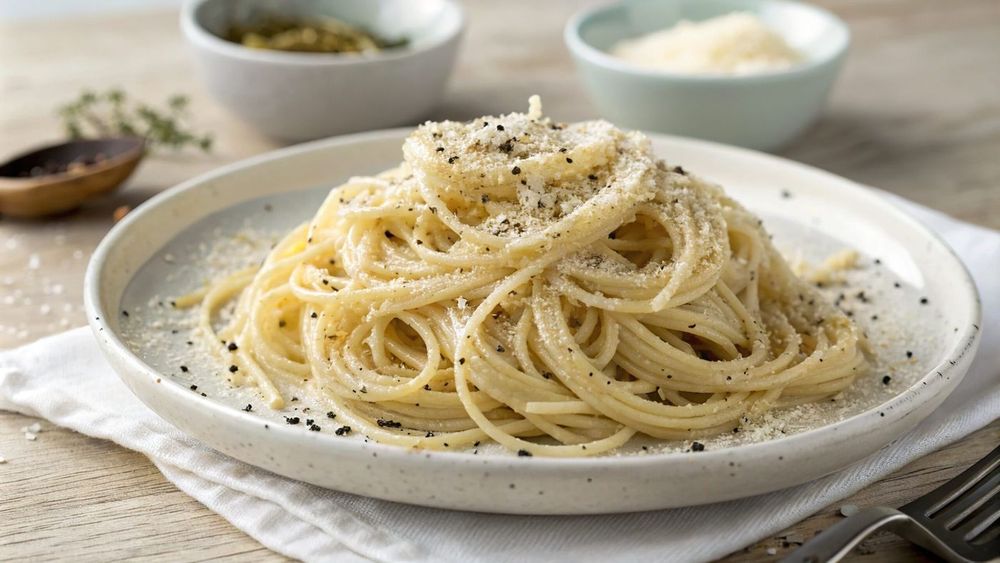
Cacio e pepe — the Roman pasta of Pecorino Romano, black pepper, and pasta water — is the quick pasta that most directly depends on technique rather than ingredients. Its three components — pasta, cheese, pepper — are the most minimal of any pasta sauce. Its execution is the most demanding, because the emulsification of the cheese into the pasta water without clumping or breaking requires a specific temperature and a specific ratio that only practice produces. But the pasta that results from a properly executed cacio e pepe is one of the most satisfying quick preparations available from any kitchen.
And pasta al limone — the pasta with lemon, butter, and Parmigiano — is the quick pasta that most completely captures the specific quality of a summer evening: bright, rich, fresh, finished with herbs, requiring nothing more than the pasta’s cooking water, a lemon, butter, and good cheese to produce something that tastes luxurious without being heavy.
The Pasta Shape and Why It Matters
The pasta shape is not a neutral variable in quick pasta cooking — and the cook who uses whatever shape is available without considering how the shape interacts with the sauce is leaving quality on the table.
The principle governing the relationship between pasta shape and sauce is straightforward: the sauce should cling to the pasta rather than pooling at the bottom of the bowl, and different shapes provide different mechanisms for this clinging.
Long, thin pasta — spaghetti, linguine, tonnarelli — works with sauces that coat rather than cling: the oil-based sauces of aglio e olio and puttanesca coat the strands in a uniform film. The ridged and tubular shapes — rigatoni, penne, spaghetti rigati — work with slightly thicker sauces that can enter the ridges and tubes, providing more surface area and more clinging. The wider, flatter shapes — pappardelle, tagliatelle — work with sauces that have texture — the tuna or the puttanesca with its olives — because their width accommodates the sauce’s components alongside the pasta.
The cacio e pepe is specifically made with thick spaghetti or tonnarelli — because the thickness of the pasta provides enough surface and enough structural integrity to be tossed vigorously through the cheese emulsification process without breaking.
These are not rigid rules. They are principles that, once understood, allow the cook to work with whatever pasta shape is available while knowing how to adjust the sauce accordingly.
The Timing That Makes Everything Work
The specific timing of the twenty-minute pasta — the coordination of the pasta cooking and the sauce preparation that ensures both are ready simultaneously — is worth understanding explicitly because it is the timing most often mismanaged.
The pasta and the sauce must finish at the same time. The pasta that finishes cooking and waits in a colander while the sauce is still developing continues to cook from its own residual heat, absorbs moisture from the steam, and sticks to itself — arriving at the sauce pan already past its ideal texture. The sauce that finishes before the pasta loses heat, concentrates too much, and loses the specific consistency that makes it coat properly.
The sequence that most reliably produces simultaneous readiness: start the sauce components first, building the aromatics in the pan while the pasta water is coming to a boil. Add the pasta to the boiling water when the sauce is halfway complete. Taste the pasta for doneness frequently in the final minutes, and transfer it to the sauce pan when it is two minutes short of fully cooked — bringing pasta water with it to finish the cooking in the sauce.
This sequence — sauce started first, pasta transferred before fully cooked — is the professional kitchen’s standard approach to pasta finishing and the approach that most reliably produces the unified result that distinguishes excellent pasta from adequate pasta.
The Takeaway
The twenty-minute pasta that achieves genuine excellence is not a compromise or a convenience. It is a specific category of cooking — one that uses the constraints of quick cooking as design parameters rather than obstacles, that extracts maximum flavor from high-quality pantry ingredients through specific technique, and that produces results that are genuinely excellent rather than excellent-for-a-weeknight.
Invest in the pantry ingredients that quick pasta depends on. Master the technique of pasta water emulsification. Learn the five preparations. Understand the shape-sauce relationship. Coordinate the timing.
The pasta that takes twenty minutes and tastes like it took all day is available in any kitchen that has the pantry and the technique it requires.
It is waiting to be made tonight.