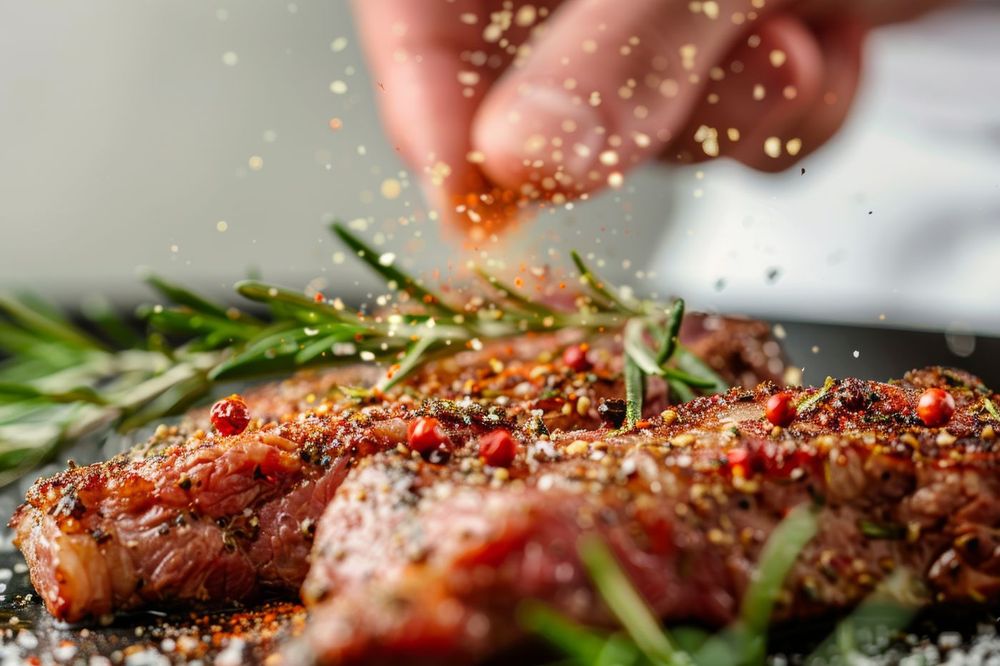

You season meat before cooking it.
Salt and pepper on both sides. Maybe some other spices. You’re generous with it—you know meat needs proper seasoning.
Then you cook it. The seasoning mostly falls off into the pan or grill. What’s left on the meat tastes underseasoned.
You used plenty of salt. But somehow it didn’t stick. It didn’t penetrate. It’s sitting in the pan instead of flavoring the meat.
Restaurant meat is always properly seasoned throughout. Every bite has flavor. The seasoning isn’t just on the surface—it’s integrated into the meat itself.
The difference isn’t that they use more salt. It’s when they add it, how they add it, and what they do after seasoning that determines whether it stays on the meat or ends up wasted.
Most people season at the wrong time in the wrong way—guaranteeing that much of it will be lost.
You’re Seasoning Right Before Cooking
This is the most common mistake and the easiest to fix.
Salt added immediately before cooking sits on the surface. It doesn’t have time to dissolve or penetrate. Much of it falls off when you move the meat or place it in the pan.
What does stick creates a salty crust without seasoning the interior. You get intense salt in some bites and bland meat underneath.
Chefs season meat well in advance—30 minutes to 24 hours before cooking, depending on the cut and thickness.
This gives salt time to dissolve in the meat’s surface moisture, then gradually penetrate deeper through diffusion.
The salt seasons from the inside out, not just the surface.
Home cooks season right before cooking because that’s what most recipes say. The salt never has time to work properly.
Season steaks and chops at least 30 to 40 minutes before cooking. For roasts, season several hours ahead or the night before.
The meat will be evenly seasoned throughout instead of salty on the outside and bland inside.
The Meat Is Wet When You Season
Salt doesn’t stick well to wet surfaces.
Meat fresh from packaging often has surface moisture. Salt sprinkled on that moisture dissolves into the liquid, which then drips off—taking the salt with it.
Chefs pat meat completely dry before seasoning. They want salt to make direct contact with the meat, not dissolve in surface moisture that will drip away.
Home cooks often season meat straight from the package without drying it. The seasoning effectiveness is cut in half before cooking even starts.
Pat meat dry with paper towels before seasoning. Use multiple towels if necessary. The dryer the surface, the better salt adheres.
You’re Using the Wrong Salt
Fine table salt doesn’t adhere to meat well. The tiny grains bounce off or blow away. They also concentrate in spots, creating uneven seasoning.
Coarse salt—kosher salt or sea salt—has larger crystals that stick better to meat surfaces. They’re easier to distribute evenly and they dissolve at the right rate during cooking.
Chefs use kosher salt almost exclusively for seasoning meat. The crystal size is ideal for coverage and adhesion.
Home cooks often use whatever salt they have—frequently fine table salt. It doesn’t stick as well and it’s harder to judge how much you’re using.
Switch to kosher salt for seasoning meat. Use Diamond Crystal or Morton Kosher—they’re the professional standards.
The salt will stick better and season more evenly.
You’re Sprinkling from Too Close
Seasoning meat from six inches away concentrates salt in the center. The edges stay underseasoned.
Salt needs to fall from height to distribute evenly across the surface.
Chefs season from 12 inches or higher. They let the salt rain down across the meat, coating evenly.
This technique—made famous by Salt Bae but used by chefs forever—isn’t showmanship. It’s functional. Height creates even distribution.
Home cooks usually season from just above the meat. The salt lands in clumps. Coverage is uneven.
Season from high above the meat. Let salt fall like rain. You’ll use less salt total but achieve better, more even coverage.
The Surface Isn’t Ready to Accept Salt
Meat straight from the refrigerator is cold and firm. The surface is tight.
Salt sits on top rather than beginning to penetrate.
Meat at room temperature has a slightly softer, more open surface. Salt begins adhering and penetrating immediately.
Chefs bring meat to room temperature before seasoning—or at minimum, take the chill off.
The warmer surface accepts seasoning better. More salt stays where you put it instead of falling off.
Home cooks often season cold meat straight from the refrigerator. The salt doesn’t adhere as well.
Let meat sit out for 20 to 30 minutes before seasoning. The temperature change improves salt adhesion significantly.
You’re Touching the Meat Too Much After Seasoning
Every time you flip, move, or adjust seasoned meat, you risk knocking salt off the surface.
This is especially true if the salt hasn’t had time to dissolve and adhere.
Chefs season meat, then leave it alone. They minimize handling. When they do move it, they’re careful not to brush off the seasoning.
Home cooks often season meat, then immediately flip it multiple times to season both sides, adjust positioning, check if it’s sticking.
Each movement dislodges salt that hasn’t yet adhered.
Season both sides, then leave the meat alone. Don’t keep flipping or adjusting it. Let the salt work undisturbed.
Pepper Burns Before Salt Penetrates
Black pepper chars quickly under high heat. If you season with pepper right before cooking, it often burns before the meat is done.
Burnt pepper tastes acrid and bitter, not pleasantly spicy.
Chefs often add pepper after cooking or late in the cooking process. They want pepper flavor without burnt bitterness.
Or they season with pepper along with salt well in advance, knowing that some will burn but enough will remain to flavor the meat.
Home cooks usually add salt and pepper together right before cooking. Much of the pepper burns, creating bitter spots.
Consider adding pepper after cooking. Or if you prefer it cooked on, add it early with the salt so it has time to adhere properly before heat hits it.
The Cut Determines Timing
Thin cuts don’t need long salting times. The salt penetrates quickly. Thirty minutes is plenty.
Thick cuts benefit from longer salting—several hours or overnight. The salt needs time to work its way deep into the meat.
Very large roasts can be salted days in advance. The extended time allows complete penetration and even seasoning throughout.
Chefs adjust salting time based on thickness. They know that one-size-fits-all timing doesn’t work.
Home cooks often use the same timing regardless of what they’re cooking. Thin cuts get oversalted. Thick cuts stay underseasoned in the middle.
Match your salting time to thickness: 30 to 40 minutes for steaks and chops, several hours for roasts, 24 hours or more for very large cuts.
You’re Not Using Enough Salt
Even when salt is applied correctly, insufficient amount means underseasoned meat.
People are often timid with salt, worried about over-salting. But meat can handle more salt than you think.
The guideline is roughly 3/4 to 1 teaspoon of kosher salt per pound of meat. That sounds like a lot. It’s the right amount.
Chefs are generous with salt. They know that underseasoned meat is worse than slightly overseasoned meat.
Home cooks often use half the salt they should, then wonder why meat tastes bland.
Be bold with salt. If you’re seasoning in advance and the salt has time to penetrate, it’s hard to oversalt. The meat has time to equalize and balance.
The Meat Gets Rinsed or Wiped
Some people season meat, let it sit, then rinse or wipe it before cooking—thinking they’re removing excess salt.
This removes all the salt that’s still on the surface. Only the salt that’s penetrated remains.
While some penetration has occurred, you’ve just removed a significant portion of your seasoning.
Chefs never rinse seasoned meat. If they’ve oversalted, they accept it and learn for next time. Rinsing doesn’t fix oversalting—it just creates unevenly seasoned meat.
Home cooks sometimes rinse out of anxiety or because old recipes suggest it. Don’t.
If you’ve salted meat in advance, leave it alone. Don’t rinse, don’t wipe. Cook it as-is.
You’re Using Pre-Seasoned Meat
Some packaged meat comes pre-seasoned or “enhanced” with salt solutions.
Additional seasoning on top of this creates oversalting in spots while other areas stay bland.
The pre-added salt isn’t distributed like salt you apply yourself. It creates unpredictable results.
Chefs buy unseasoned meat and control the seasoning themselves. They know exactly how much salt is on every piece.
Home cooks sometimes buy pre-seasoned meat for convenience, then season it again. The results are inconsistent.
Read labels. Buy unseasoned meat when possible. Control the seasoning yourself for consistent results.
What You Should Do Tonight
Buy unseasoned steaks or chops. Pat them completely dry with paper towels.
Season generously with kosher salt from 12 inches above the meat. Let the salt fall evenly across both sides.
Leave the meat on a plate at room temperature for 40 minutes to an hour. Don’t touch it. Don’t rinse it.
Cook as usual. Don’t add more salt during cooking.
The meat will be evenly seasoned throughout—not just a salty crust with bland interior. Every bite will have flavor.
That’s proper seasoning. Not salt wasted in the pan, but salt that actually flavors the meat.
The Takeaway
Underseasoned meat isn’t about using too little salt. It’s about applying salt at the wrong time in the wrong way so most of it falls off or never penetrates.
Restaurants serve properly seasoned meat because they salt well in advance, use the right salt, apply it from height, and let it work undisturbed.
Home cooks season right before cooking with fine salt applied up close. The meat goes in the pan before salt has time to do anything. Much of it falls off.
But now you know how to season properly.
Dry the meat. Use kosher salt. Season from height. Do it 40 minutes to 24 hours in advance depending on thickness. Leave it alone.
Do that and your seasoning finally stays on the meat instead of ending up wasted in the pan.
Every bite properly flavored. Every grain of salt doing its job.
The way it should be.