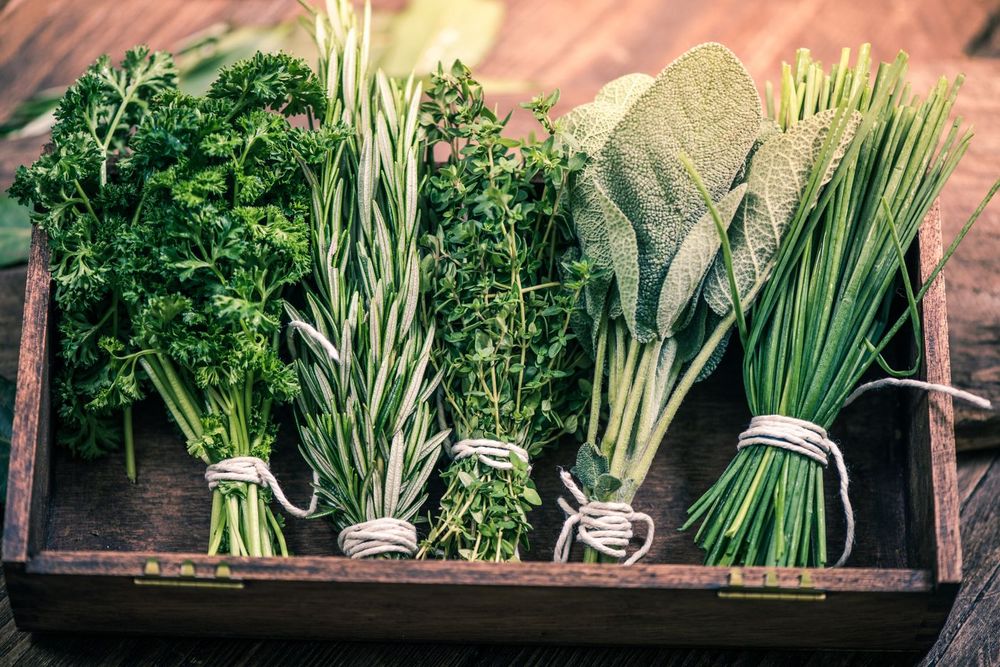

There is a transformation that happens to a cook’s relationship with fresh herbs when the herbs are growing three feet from the kitchen door rather than purchased in plastic clamshells from the produce section.
It is not primarily a flavor transformation — though the flavor of an herb cut from a living plant minutes before it is used is different from the flavor of an herb that was cut days ago and has been sitting in refrigerated transport and retail display since then. The transformation is behavioral. It is about what the cook reaches for and how often and with what quality of attention.
The cook who has to purchase herbs uses them deliberately — planning which herb is needed for which recipe, buying the specific quantity required, using what was purchased and discarding what wasn’t. Herbs are an ingredient that must be justified by the recipe.
The cook with a herb garden uses herbs differently. They walk outside before finishing a dish and cut what seems right. They add herbs that weren’t in the recipe because the plant is there and the dish seems like it could use them. They taste as they add, responding to the specific quality of what was just cut — how pungent the basil is today, how the thyme smells this week — rather than to a measurement written down by someone else.
This is cooking with herbs rather than cooking from a recipe that includes herbs. The difference is significant.
What a Herb Garden Actually Requires
The herb garden has a reputation for difficulty that is largely undeserved.
The most useful cooking herbs — basil, thyme, rosemary, oregano, chives, parsley, mint — are not demanding plants. They do not require specialized knowledge, elaborate soil preparation, or extensive maintenance. Most of them require sun, water, and the periodic cutting that encourages new growth and prevents them from going to seed prematurely.
The minimal viable herb garden — the collection of plants that produces the most cooking utility for the least investment — can be grown in containers on a balcony, in a window box on a south-facing sill, in a small raised bed in a corner of a patio, or directly in the ground in whatever space is available. It does not require a dedicated garden or significant outdoor space.
The specific plants worth starting with are the ones that appear most frequently in the cook’s regular cooking — which means the selection should reflect the actual cooking rather than the aspirational cooking. The cook who regularly makes Italian-influenced dishes benefits most from basil, oregano, and thyme. The cook whose cooking leans toward Middle Eastern and North African flavors benefits most from mint, parsley, and cilantro. The cook who makes a lot of French-influenced preparations benefits most from tarragon, chervil, and chives.
The herb garden that is planted to reflect actual cooking habits gets used. The herb garden planted with aspirational herbs that the cook rarely reaches for becomes a maintenance burden rather than a resource.
The Perennials That Require Nothing
The most practical foundation of any cooking herb garden is the perennial herbs — the plants that, once established, return year after year without replanting, that require minimal maintenance, and that provide a continuous supply of fresh herbs through most of the growing season and sometimes beyond.
Thyme is perhaps the most broadly useful perennial herb in the cooking garden. It is nearly indestructible — tolerant of drought, tolerant of poor soil, tolerant of the occasional neglect that is inevitable in any garden maintained by someone who is primarily a cook rather than a gardener. It grows low and spreading, with woody stems and tiny leaves that carry an intense, earthy, slightly floral flavor that works in an extraordinary range of preparations.
Rosemary, in climates where it can overwinter, is similarly tough — a woody shrub that grows vigorously once established, produces more herb than most cooks can use, and requires nothing more than occasional trimming to maintain its shape and encourage new growth. The flavor of fresh rosemary — piney, resinous, intensely aromatic — is different in character from dried rosemary in ways that make it worth growing specifically.
Chives — the thin, grass-like member of the allium family — are among the easiest perennial herbs to grow, tolerating partial shade and moist conditions that many other herbs don’t accept. They die back in winter and return vigorously in spring, producing fresh growth from April through October in most temperate climates. Their mild onion flavor — more delicate than scallion, less aggressive than any other allium — makes them one of the most broadly applicable finishing herbs available.
Mint, though perennial and enthusiastic in its growth, should be planted in a container rather than in the ground — because its enthusiasm for spreading vegetatively, through underground runners, will take over whatever space it is given if not physically contained. Mint in a pot is a convenient and productive herb. Mint in a garden bed is a territorial takeover in progress.
The Annuals Worth Replanting Every Year
The annual herbs — the ones that must be replanted each season — require more commitment than the perennials but offer flavors that are worth the annual investment.
Basil is the most important annual in the summer cooking garden and the one whose quality gap between fresh and purchased is widest. The basil available in grocery stores — cut, packaged, refrigerated, often wilted — is a pale version of fresh basil at its peak. The basil cut from a plant that is growing vigorously in full summer heat, with leaves that are fully hydrated and aromatic oils at their most concentrated, is one of the most vivid flavors available in any kitchen.
Basil requires warmth — it dies at temperatures below 50°F and sulks at temperatures below 60°F. It requires full sun, consistent moisture, and the regular pinching of flower buds that prevents the plant from going to seed and losing its flavor. In exchange for this attention, it produces abundantly throughout the summer — more than most cooks can use in the moment, which creates the opportunity for the end-of-season pesto batch that captures the summer’s production for use through the winter.
Cilantro is the most temperamental of the commonly used cooking herbs — prone to bolting (going to seed quickly) in warm weather, preferring cool conditions that most summer herbs don’t. The cook who plants cilantro in full summer sun in July will have flowers in two weeks and finished leaves in three. The same cilantro planted in partial shade, watered consistently, and harvested regularly can produce for several months. Succession planting — small plantings every few weeks rather than a single large planting — ensures a continuous supply through the growing season.
Dill requires similar management — it bolts quickly in heat and requires successive plantings for continuous supply. But the dill that is available fresh in the garden, cut in the moment it is needed for a cucumber salad or a piece of poached fish, has a freshness and an anise-like brightness that dried dill doesn’t approach.
How the Herb Garden Changes the Cooking
The behavioral transformation that a herb garden produces in a cook is worth examining in some detail — because it is more profound than simply having fresh herbs available.
The cook with a herb garden develops the habit of going outside before finishing a dish — of treating the final addition of fresh herbs not as a recipe step but as an act of tasting and responding. They walk out, smell what is growing, cut a handful of what seems right, and taste it against what is in the pan. This is a form of cooking from intuition rather than instruction, and the herb garden is what makes it possible.
The spontaneous herb addition — the basil torn over a finished pasta because it is there, the chives scattered over a finished soup because they are growing by the door — is the kind of cooking that produces memorable food from ordinary preparations. It is the kind of addition that a recipe cannot specify because it depends entirely on what is growing, what is at its best, and what the cook’s instinct says the dish needs.
The herb garden also changes the way abundance is handled — which is one of the more practically important transformations it produces. The herb plant that has produced more than can be used in the moment forces the cook to think about preservation — about the pesto that captures the basil before it goes to seed, the herb butter that freezes the summer’s chive and tarragon production for winter use, the dried thyme and oregano that preserves the harvest of the perennials for the months when they are dormant.
This preservation instinct — the seasonal thinking that says this abundance is temporary and worth capturing — is one of the most valuable cooking habits a herb garden develops. It connects the cook to the rhythm of the season in a way that purchased herbs, available year-round in identical quantities, never produces.
The Herbs Worth Drying and the Ones That Aren’t
Not every herb dries well. Understanding which herbs are worth preserving through drying — and which are better preserved in other forms or simply enjoyed fresh and replaced when the season ends — is one of the practical skills the herb garden teaches over time.
The herbs that dry well are those whose flavor compounds are stable enough to survive the drying process — the woody, resinous herbs that have evolved to concentrate their aromatics in relatively heat-stable compounds. Thyme, rosemary, oregano, and sage all dry beautifully, their flavor concentrated by drying in a way that makes the dried versions genuinely useful in long-cooked preparations.
The herbs that do not dry well are those whose flavor compounds are primarily volatile — the delicate, fresh herbs whose character evaporates with the water during drying, leaving behind a brown, dusty approximation of the original. Basil dried at home loses almost everything that makes it worth using. Parsley dried at home retains almost nothing of its fresh character. Cilantro dried at home is barely recognizable as the herb it was.
These herbs are better preserved in other forms. Basil becomes pesto, which freezes for months. Parsley and cilantro can be blended into herb oil, frozen in ice cube trays, and used through the winter as flavor additions to cooked dishes. Chives, which also dry poorly, are best frozen — packed loosely into a container and frozen, they retain enough character to be useful in cooked preparations even if they lose the fresh crispness that makes them valuable as a garnish.
The Garden as a Kitchen Philosophy
The herb garden, maintained over years, develops in the cook who tends it something that goes beyond the practical benefits of having fresh herbs available.
It develops a relationship with the season — the specific awareness of what is at its best now, what is coming into its peak, what is finishing and needs to be harvested before it is gone. The basil that is about to flower and must be made into pesto this weekend. The tarragon that is most fragrant in early summer before the heat of July diminishes it. The first chives of April that signal the beginning of the growing season.
This seasonal awareness — cultivated literally, through the tending of plants rather than through the abstraction of reading about seasonal cooking — produces a cook who cooks differently from the cook who buys everything from the same produce aisle year-round. Not because the herb garden is the only source of seasonal awareness, but because it is the most immediate and most personal one. The plant growing outside the kitchen door is the most direct possible connection between the cook and the season they are cooking in.
The herb garden is a small thing. A pot of thyme on a balcony. A window box of chives and parsley. Three plants in a container by the kitchen door.
But the cooking it produces is different. And the difference, experienced over a season of cooking from what is growing rather than from what was purchased, is one that changes the relationship with the kitchen in ways that outlast the season.
The Takeaway
The herb garden is not a project or a commitment or a system. It is a small, living kitchen resource that changes how the cook cooks by changing what is available at the moment of finishing a dish.
Start with what is used most often. Grow it in whatever space is available. Cut it fresh and use it without measuring. Let the garden teach what grows well in the specific conditions of the specific kitchen it is attached to.
The cooking that follows from having fresh herbs three feet from the stove is different from the cooking that doesn’t.
Better? Yes, in the specific ways that freshness and spontaneity and the small act of walking outside and cutting what is needed produce better food than the purchased alternative.
But more than better: more alive. More connected to the season and the place and the specific moment in the year when this particular herb is at its peak.
That connection is worth cultivating.