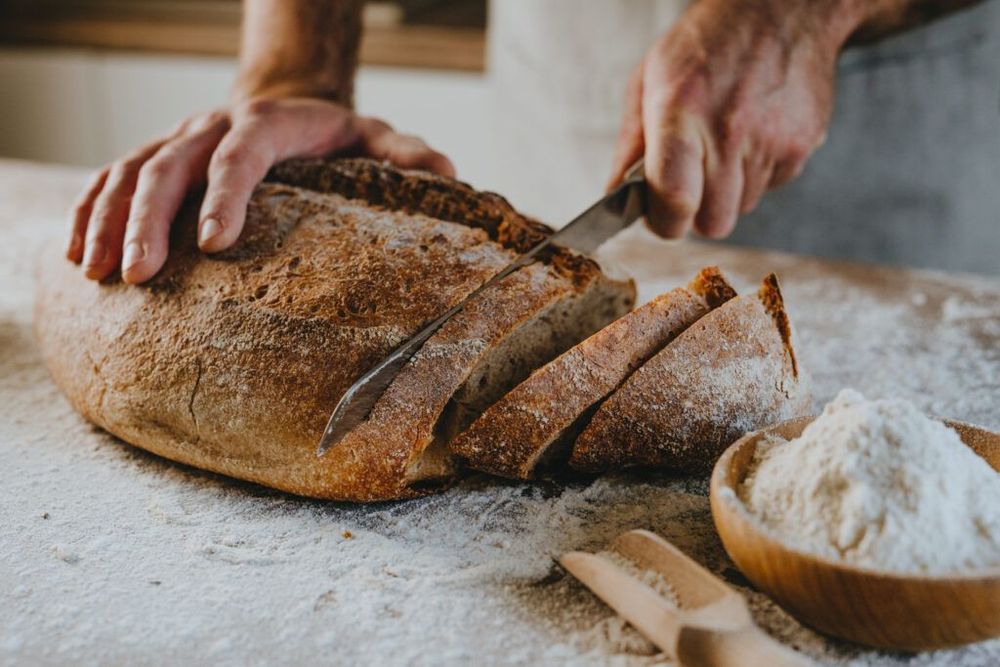

There is a practice that a growing number of home cooks have adopted that is unlike almost any other in the kitchen.
Not because it is technically demanding — though it requires attention and developing skill. Not because it is time-consuming — though it requires planning and patience that quick cooking doesn’t. But because it changes, over time, in a way that almost no other kitchen practice does.
Baking bread every week is not the same activity in year three as it was in week one. The dough that was mysterious and unmanageable becomes familiar and then intimate. The starter that was temperamental and unpredictable becomes a living thing that the baker knows — whose rhythms and moods and responses to temperature and feeding schedule become as legible as the behavior of a plant tended over years. The loaf that was an achievement becomes a baseline, and the baseline keeps rising.
This is the quality that distinguishes bread baking from most other cooking: it is a practice in the deepest sense of the word. Not a technique that is learned and then applied, but an ongoing relationship with a living process that never stops teaching.
The First Loaf and What It Actually Teaches
The first loaf a home baker makes is almost never the loaf they imagined.
The crumb is denser than expected, or the crust is pale, or the loaf spread sideways rather than rising upward, or the scoring — the artistic cuts made in the surface of the dough before baking — didn’t open the way the photographs in the tutorial suggested they would. Something is different from the ideal. Usually several things.
What the first loaf teaches — if the baker pays attention to it rather than simply being disappointed by it — is that bread is responsive. It is not a recipe executed with precision that produces a predetermined result. It is a set of variables — flour, water, salt, time, temperature, fermentation activity, shaping technique, oven environment — that interact in ways the baker learns to manage over time rather than control with certainty.
The first loaf is the beginning of a conversation. The baker made a set of decisions and the dough responded. The specific ways in which the dough responded carry information about which decisions to make differently next time. The dense crumb suggests underproofing or insufficient gluten development. The pale crust suggests insufficient oven temperature or steam. The sideways spread suggests insufficient tension in the shaping or an overproofed loaf.
The baker who reads the loaf — who looks at the result and asks what it is telling them about the process that produced it — is already doing the most important thing in bread baking: treating each loaf as feedback and each week’s bake as an opportunity to improve on the previous one.
The Starter as a Living Relationship
For bakers who work with sourdough — the naturally leavened bread produced by wild yeast and bacteria rather than commercial yeast — the relationship with the starter is one of the most distinctive aspects of the practice.
A sourdough starter is a living culture — a population of wild yeast and lactic acid bacteria that the baker maintains by feeding it flour and water on a regular schedule. It is, in a genuine sense, alive — responsive to temperature, to feeding schedule, to the type of flour it receives, to the specific microbiological environment of the kitchen it lives in.
A new starter is unpredictable. Its population of yeast and bacteria is still establishing itself, still finding its balance, still developing the specific character that will eventually define the flavor of the bread it produces. The baker in the early weeks of maintaining a starter is working with something whose behavior they don’t yet understand — feeding it on a schedule that seems right, watching for the signs of activity that indicate healthy fermentation, and often waiting longer than expected for the starter to do what they hoped.
The starter that has been maintained for months or years is a different relationship. The baker knows when it is ready to use — the specific look of the surface, the way it smells when it is at peak activity, the rise and fall pattern that indicates the population is healthy and the yeast is active. They know how it responds to a warmer or cooler kitchen, how it recovers from a missed feeding, what the color and consistency should look like.
This knowledge is not written down. It is accumulated through repeated observation, through the specific experience of working with this particular culture in this particular kitchen over time. It is embodied knowledge — knowledge in the hands and the nose and the eyes rather than in the head — and it is the most reliable guide to the starter’s state at any given moment.
What a Year of Weekly Baking Produces
The baker who bakes every week for a year — who makes fifty or more loaves in the course of twelve months — develops something that cannot be acquired any other way.
They develop a physical relationship with dough. The feel of properly developed gluten under the hands — the specific elasticity and extensibility that indicates the dough is ready to shape — becomes familiar enough to be recognized without thinking. The texture of a dough that has proofed correctly versus one that has overproofed or underproofed becomes distinguishable by touch alone.
They develop an instinct for fermentation timing. The variables that affect how fast or slow the dough ferments — the temperature of the kitchen, the activity level of the starter, the hydration of the dough — become part of an ongoing calculation that the experienced baker makes naturally, adjusting timing based on what they observe rather than what the recipe specifies.
They develop a relationship with their oven. Every oven has specific characteristics — hot spots, temperature inaccuracies, the specific way it distributes heat — that affect how bread bakes. The baker who has made dozens of loaves in the same oven has learned its character and makes adjustments for it automatically.
And they develop confidence — the specific confidence that comes from having made enough loaves that the process feels familiar rather than foreign, from having encountered enough problems and found enough solutions that the next problem feels manageable rather than catastrophic.
This confidence is not complacency. The experienced bread baker is still learning — still discovering new things about the process, still encountering loaves that don’t behave as expected. But the foundation of experience beneath the continued learning is what makes the practice sustainable and satisfying rather than frustrating.
The Variables That Never Stop Mattering
One of the things that makes bread baking a lifelong practice rather than a technique to be mastered and set aside is the number of variables that affect the result and the fact that those variables are never completely controlled.
Flour is the most significant variable — and the one that home bakers often underestimate. Different brands of flour have different protein contents, different milling characteristics, and different absorption rates. The same recipe made with two different brands of flour produces two different doughs and potentially two different breads. Even the same brand of flour can vary between bags, between seasons, between the specific wheat crop from which it was milled.
Water quality affects the starter and the dough in ways that are subtle but real. Highly chlorinated tap water can slow starter activity. Hard water with high mineral content behaves differently from soft water. Some serious bakers filter their water or use mineral-adjusted water specifically for bread baking.
Temperature is perhaps the most significant variable in fermentation timing. A kitchen at 65°F ferments dough at a dramatically different rate than a kitchen at 78°F. The baker who develops a recipe in summer and bakes it through winter without adjusting timing will find that the winter loaves behave very differently from the summer ones — not because the recipe is wrong but because the fermentation is proceeding at a different pace in the cooler environment.
These variables are not problems to be eliminated. They are the living character of the process — the reason that each loaf is slightly different from the one before it, the reason that the practice continues to be interesting after years of experience. The baker who is frustrated by the variability of bread baking is in a different relationship with the practice than the baker who finds the variability engaging.
The Bread That Changes the Baker
There is something that happens to a person who bakes bread every week for an extended period that goes beyond the improvement in the bread itself.
The practice of bread baking — with its requirement for attention, its responsiveness to environmental conditions, its living starter that must be tended and fed — has a quality that most other domestic practices don’t. It requires the baker to be present in a specific way. Not the focused attention of an active cooking technique — the watching of a pan, the management of a sauce — but a more ambient attention. The starter needs to be checked. The dough needs to be observed at intervals. The timing needs to be tracked.
This ambient attention produces a specific quality of presence in the kitchen and in the home that the baker who doesn’t bake bread may never have developed. The awareness of time passing that bread requires — the knowledge that the dough is doing something while the baker is doing other things — connects the baker to the pace of biological processes in a way that most contemporary activities don’t.
The bread baker has a different relationship with their kitchen than the person who doesn’t bake bread. The kitchen contains something living — the starter — that requires attention and care. The kitchen is the site of a process that unfolds over hours and days rather than minutes. The kitchen is connected to the seasons in ways that most cooking isn’t — because the fermentation rates that determine the rhythm of the baking are affected by the temperature of the air, which changes with the year.
The Community of Bakers
There is a community — distributed across cities and countries and online forums and farmers markets — of people who bake bread regularly and who share in the particular combination of obsession, humility, and ongoing fascination that the practice produces.
This community has its own vocabulary — the hydration percentages and crumb structures and scoring patterns and starter feeding schedules that constitute the technical language of serious home bread baking. It has its own celebrities — the bakers whose loaves circulate on social media, whose books have introduced the practice to hundreds of thousands of home bakers, whose specific techniques and aesthetic choices have influenced the way a generation bakes.
But what the community shares most fundamentally is the experience of a practice that never stops being interesting. The baker with thirty years of experience and the baker with six months share the specific pleasure of a loaf that came out better than expected and the specific frustration of a loaf that didn’t behave as it should have. They share the curiosity about what variable to adjust next time and the satisfaction of the improvement that follows the adjustment.
Bread baking is one of the few domestic practices that produces a community of genuine peers — people at different levels of experience and skill who are all engaged with the same ongoing learning, all finding it genuinely absorbing, all discovering that the practice rewards continued engagement rather than diminishing as it becomes familiar.
The Takeaway
Baking bread every week is not a commitment to a specific recipe or a specific technique. It is a commitment to a practice — to the ongoing relationship with a living process that changes as the baker changes, that teaches new things as the skill develops, that never becomes so familiar that there is nothing left to learn.
Start with a simple loaf. Make it again. Read what the bread is telling you about the process that produced it. Adjust one variable at a time. Let the starter teach you its rhythms.
The bread gets better. And in getting better, it makes the baker better — more attentive, more patient, more curious about the living processes that produce the most fundamental of all foods.
That is what a practice does.
And bread is one of the best practices there is.