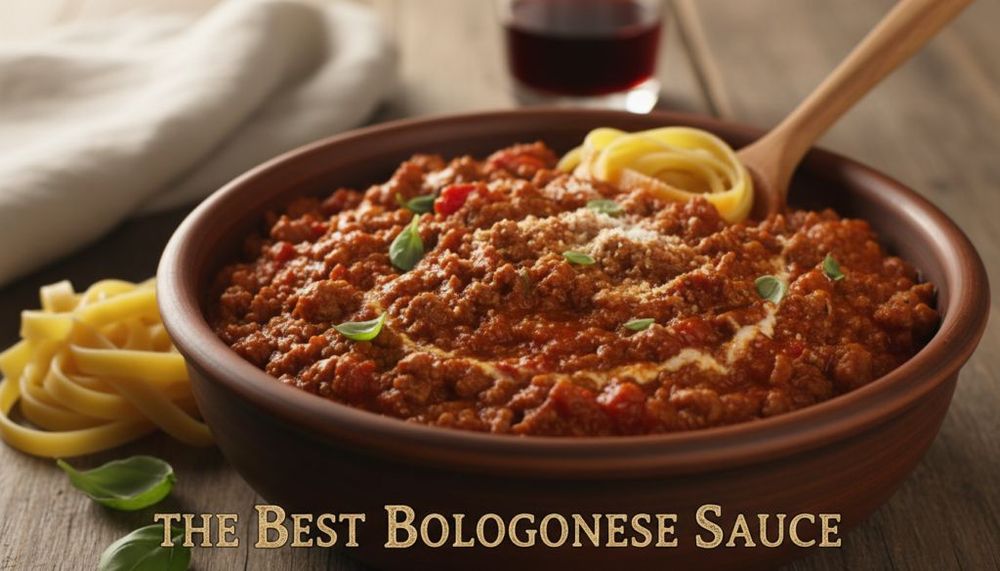

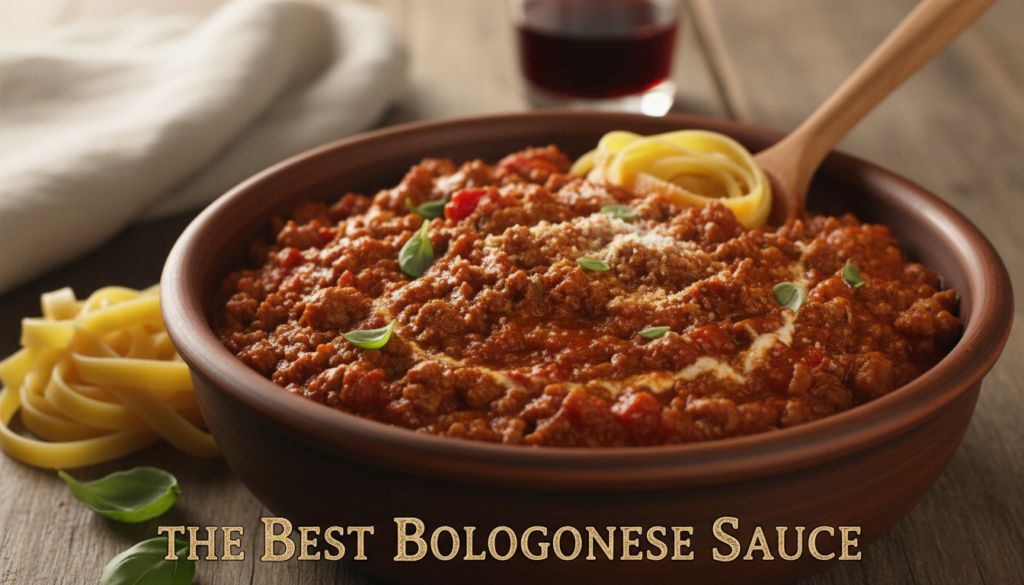


There are a handful of recipes in the culinary canon that deserve to be made properly, without shortcuts, without substitutions, and without impatience—and Bolognese sauce is unquestionably one of them. This is a recipe I approach with genuine reverence every time I make it. Not because it’s technically demanding, but because it rewards the kind of patient, attentive cooking that has become increasingly rare in a world of thirty-minute meals and instant everything. Give this sauce three hours and it will give you something extraordinary in return.
What draws me to Bolognese as a recipe developer is the way it demonstrates one of the most fundamental principles in cooking: time is an ingredient. The milk, the wine, the combination of beef and pork, the slow reduction of tomatoes over hours of gentle heat—none of these elements produce their full potential quickly. But given the time they need, they transform into a sauce of remarkable depth, richness, and complexity that no quick version can honestly replicate. This is cooking as an investment, and the return is more than worth it.
This recipe has become my personal benchmark for what a great Bolognese should be—deeply savory, subtly sweet, rich without being heavy, and built on a foundation of technique and patience that you can taste in every single bite.
The Inspiration Behind This Recipe
My inspiration for this recipe came from years of studying and cooking Italian regional cuisine and a deep respect for the traditions of Bologna—the northern Italian city that gave this sauce its name and its identity. Bolognese is not a quick weeknight tomato meat sauce. It is a slow-cooked ragù with a specific character, a specific technique, and a specific set of ingredients that have been refined over generations of Italian home and restaurant cooking.
The addition of whole milk is the detail that most surprises people the first time they encounter an authentic Bolognese recipe, and it’s the detail I find most fascinating from a culinary science perspective. The milk tenderizes the meat and adds a subtle creaminess that rounds out the acidity of the tomatoes and wine in a way that no other ingredient quite replicates. It’s a technique rooted in the culinary traditions of Emilia-Romagna, and once you understand what it does, you’ll never make Bolognese without it again.
This recipe is my attempt to honor that tradition faithfully while making it accessible and achievable for any home cook willing to give it the time it deserves.
A Brief History of Bolognese Sauce
Ragù alla Bolognese originates from Bologna, the capital of the Emilia-Romagna region in northern Italy—a city widely regarded as the culinary capital of a country already famous for its food. The earliest documented recipe for what we might recognize as Bolognese dates to the late eighteenth century, though the tradition of slow-cooked meat sauces in the region is significantly older.
In 1982, the Italian Academy of Cuisine registered an official recipe for authentic Bolognese with the Bologna Chamber of Commerce, specifying ingredients that include beef, pancetta, onion, carrot, celery, tomato paste, whole milk, white wine, and tagliatelle—notably different from many international interpretations that use red wine, more tomato, and spaghetti as the pasta of choice. The registered recipe reflects the restraint and specificity that defines authentic northern Italian cooking, where meat and dairy play a more prominent role than in the tomato-forward cooking of the south.
The version enjoyed around the world today is largely an Italian-American evolution of that original—richer in tomato, bolder in wine, and served over a wider variety of pasta shapes—but no less delicious for its adaptations.
Why This Cooking Method Works
Every step in this recipe exists for a specific and important reason. Sautéing the soffritto—the classic Italian base of onion, carrot, celery, and garlic—until completely soft before adding the meat ensures that the aromatic foundation of the sauce is fully developed before anything else happens. These vegetables don’t just add flavor; they dissolve slowly into the sauce over the long cook, contributing body and sweetness that you’ll never be able to identify as vegetable but would absolutely notice if they weren’t there.
Browning the meat on high heat develops the Maillard reaction—the same caramelization process responsible for the crust on a great steak—creating hundreds of complex flavor compounds that form the savory backbone of the finished sauce. Adding the milk before the wine is a deliberate sequencing choice that allows the dairy to tenderize the meat proteins before the acidity of the wine contracts them, resulting in a noticeably more tender final texture.
The three-hour simmer at the end is where everything comes together—where individual ingredients dissolve into a unified, deeply complex sauce that tastes like the sum of far more than its parts.
Flavor Profile: What to Expect
A properly made Bolognese delivers one of the most complex and satisfying flavor profiles in all of Italian cooking:
Deep, meaty richness from the combination of beef and pork that creates a more nuanced, layered flavor than either meat produces alone
Subtle dairy creaminess from the whole milk that rounds out the sauce and softens the acidity without making it taste creamy in the conventional sense
Wine-forward depth that adds backbone, complexity, and a slight tannic structure that keeps the sauce from feeling flat
Sweet, concentrated tomato that provides body and acidity in careful balance, present but never dominant
Aromatic soffritto sweetness from the long-cooked vegetables that dissolves invisibly into the sauce but contributes immeasurably to its depth
Herbal warmth from the oregano and basil that adds a subtle Italian character without overwhelming the meat-forward profile
The result is a sauce that’s simultaneously bold and nuanced, rich and balanced—the kind of flavor that deepens with every hour it spends on the stove.
Tips for Making the Best Bolognese Sauce
Patience and technique are the two non-negotiable requirements for a truly great Bolognese:
Use a combination of beef and pork: The fat content and flavor profile of ground pork adds richness and complexity that ground beef alone simply cannot provide. Don’t substitute one for the other.
Don’t rush the soffritto: The onion, carrot, celery, and garlic should be genuinely soft and translucent before the meat goes in—this takes a full eight to ten minutes and cannot be shortcut without sacrificing flavor.
Brown the meat properly: Cook on high heat and resist stirring too frequently. Real browning, not steaming, is what develops the deep savory flavor that defines great Bolognese.
Let the milk reduce completely: Don’t move on to the wine until the milk has reduced by half and been fully absorbed into the meat. This step is short but critical.
Simmer as low as possible: Once the tomatoes are in, the sauce should barely bubble—just an occasional lazy blip at the surface. Aggressive simmering toughens the meat and evaporates the sauce too quickly.
Make it a day ahead: Bolognese is one of those rare sauces that is genuinely, noticeably better the next day after the flavors have had overnight to meld and deepen. Plan accordingly whenever possible.
Serving Suggestions and Side Pairings
Bolognese deserves pasta with enough surface area and texture to carry its weight. Some ideal pairings include:
Tagliatelle or pappardelle—the traditional northern Italian choice and the most authentic pairing for this sauce
Rigatoni or penne for a more casual, equally delicious presentation where the sauce fills every tube and ridge
Creamy polenta as a stunning, unexpected alternative that showcases the sauce in a completely different but equally satisfying way
A simple green salad dressed with lemon and olive oil to refresh the palate between bites of the rich, meaty sauce
Crusty Italian bread for mopping every last bit of sauce from the plate—an absolute requirement, not a suggestion
Storage, Reheating, and Make-Ahead Tips
Bolognese is one of the great make-ahead recipes in Italian cooking and one of the most freezer-friendly sauces in existence.
Refrigerate in an airtight container for up to 5 days—the flavor improves significantly by day two.
Freeze in portioned containers for up to 4 months—Bolognese freezes beautifully and reheats to full flavor with minimal effort.
Reheat gently on the stovetop over low heat with a splash of beef broth or pasta water to restore the sauce to the right consistency.
Making a double batch and freezing half is one of the smartest investments a home cook can make—future you will be genuinely grateful.
Why This Recipe Deserves a Spot in Your Rotation
The Best Bolognese Sauce deserves a permanent place in your cooking repertoire not despite the time it takes, but because of it. This is a recipe that teaches patience, rewards attention, and produces something so deeply satisfying that it recalibrates your expectations for what a meat sauce can be. It’s a Sunday cooking project that pays dividends all week, a freezer staple that transforms any pasta night into something special, and a recipe that, once mastered, becomes one of the most reliable and impressive dishes in your entire collection.
Make it once properly, and you’ll understand immediately why generations of Italian home cooks have been making it the same way for centuries.
Recommended Drink Pairing
A sauce this rich, this meaty, and this rooted in northern Italian tradition calls for a wine with genuine structure and depth. A Sangiovese-based red from Emilia-Romagna or Tuscany is the obvious and excellent choice—Chianti Classico, Morellino di Scansano, or a Rosso di Montalcino all have the acidity, tannin, and earthy character to stand up to the Bolognese and complement it beautifully. For something more robust, a Barolo or Barbaresco from Piedmont brings the full weight of northern Italian red wine tradition to the table alongside this sauce.
For non-alcoholic options, a rich sparkling grape juice, a dark cherry and pomegranate spritzer, or a warm Italian herb tea with rosemary and thyme all complement the deep, savory character of this sauce without competing with its complexity.rces. That’s the promise of meal prep mastery, and it’s now yours to keep.