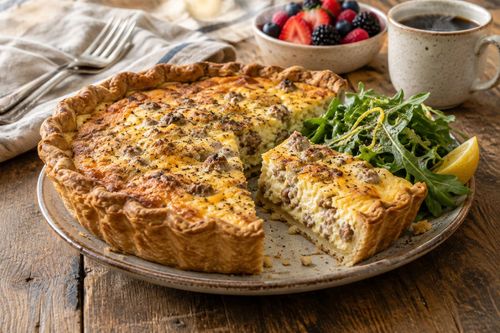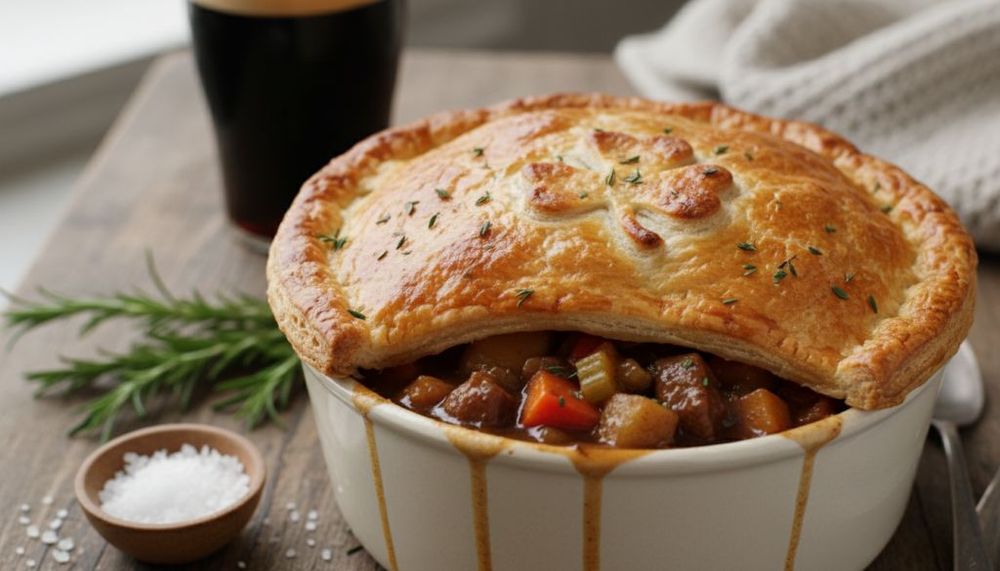

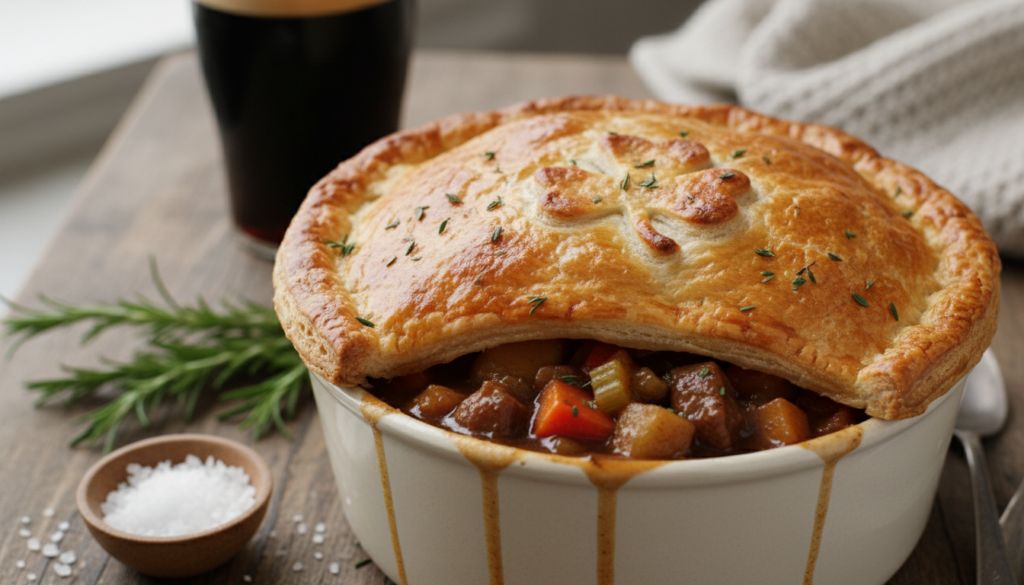


There’s something profoundly satisfying about taking a beloved classic and elevating it into something that feels both familiar and special, and this Irish Stew Pie achieves exactly that transformation. Traditional Irish stew—lamb, potatoes, carrots, onions simmered in savory broth—is comfort food at its finest, but topping it with golden, flaky puff pastry creates an entirely new experience. The rich, meaty stew becomes the filling for what is essentially an upscale pot pie, where breaking through that crispy pastry reveals steaming, fragrant stew underneath. It’s the kind of meal that makes you understand why pies have been celebrated across cultures for centuries—they’re practical, impressive, and absolutely delicious.
I developed this recipe while exploring how traditional Irish dishes could be adapted for modern entertaining without losing their essential character. Irish stew is fundamentally simple—quality lamb, root vegetables, herbs, and time to simmer until everything is tender and flavorful. By treating it as a pie filling rather than serving it in bowls, I created something that works beautifully for dinner parties or special occasions while honoring the humble, honest roots of the original. The lamb becomes incredibly tender during the long simmer, the vegetables absorb the rich, meaty broth, and that thyme-rosemary combination provides aromatic depth that defines Irish cooking.
What makes this particularly successful is the contrast of textures—the crispy, buttery puff pastry against the tender meat and vegetables, the way the pastry soaks up some of the rich gravy at the edges while staying crisp on top. When you serve this, cutting through that golden crust to reveal the hearty stew underneath creates a moment of anticipation that makes the meal feel like an event. It’s comfort food dressed up for company, but the soul of it remains pure Irish home cooking.
The Inspiration Behind This Recipe
This dish emerged from studying how traditional stews across cultures are often transformed into pies—British steak and kidney pie, French tourtière, American chicken pot pie. The Irish stew, with its rich, flavorful gravy and tender meat and vegetables, is a natural candidate for this treatment. The pie format doesn’t fundamentally change the dish; it enhances presentation and adds the textural element of pastry.
I wanted to create a version that respected Irish stew traditions while making it feel appropriate for occasions when you want something that looks as impressive as it tastes. The technique of browning lamb first, building a proper roux for the gravy, and simmering until everything is tender ensures you’re starting with excellent stew. The puff pastry isn’t just a lid—it’s an integral component that adds richness and creates that satisfying contrast between crispy exterior and tender filling.
The choice of lamb shoulder is deliberate—it’s a forgiving cut that becomes incredibly tender with long cooking, and its natural richness creates the kind of deep, savory gravy that makes Irish stew so beloved. The flour incorporated into the stew thickens the liquid just enough that it coats the ingredients without being gloppy, creating proper pie filling consistency rather than soup.
A Brief History of Irish Stew and Savory Pies
Irish stew has been a staple of Irish cooking since the early 19th century when it emerged as an economical way to feed families using mutton or lamb, potatoes, and onions—ingredients that were readily available. Over time, carrots were added, and various regional variations developed, but the essential character remained: simple ingredients simmered slowly until tender.
Savory pies have even more ancient roots, dating back to medieval times when pastry served as both cooking vessel and food preservative. The British tradition of meat pies spread to Ireland, where dishes like Shepherd’s Pie (originally made with lamb, though often confused with Cottage Pie made with beef) became beloved classics.
This Irish Stew Pie represents the natural evolution of both traditions—taking the humble Irish stew and presenting it in the elevated pie format that makes it feel special enough for celebration while maintaining the soul of traditional Irish home cooking.
Why This Cooking Method Works
Browning lamb first develops crucial flavor through the Maillard reaction while rendering some fat. The caramelized bits left in the pan (fond) dissolve into the stew, adding depth and complexity that you can’t achieve by just simmering raw meat.
Making a roux by coating vegetables in flour before adding liquid creates a thickened gravy that’s silky rather than thin or gloppy. The flour needs time to cook (that one-minute stirring) to eliminate raw flour taste before liquid is added.
Gradual addition of stock while stirring prevents lumps, ensuring smooth gravy. Dumping all liquid at once makes achieving lump-free consistency difficult.
The 45-minute simmer allows lamb to become tender while flavors meld. Lamb shoulder has connective tissue that needs time to break down—rushing this step results in tough meat and underdeveloped flavor.
Cooling stew slightly before adding pastry prevents the bottom from becoming soggy from excess steam. Hot stew would make the pastry steam rather than bake, ruining its texture.
Egg wash creates that signature golden-brown, glossy finish on puff pastry. Without it, the pastry would be pale and dull rather than appealingly golden.
Flavor Profile: What to Expect
This pie delivers rich, satisfying Irish flavors:
- Tender, flavorful lamb with deep, meaty richness
- Sweet carrots and earthy potatoes providing substance
- Aromatic thyme and rosemary adding herbal complexity
- Rich, savory gravy that coats everything perfectly
- Buttery, flaky puff pastry adding textural contrast
- Golden, crispy top that’s visually impressive
The result is comfort food that feels elevated—special occasion worthy while remaining fundamentally honest and satisfying.
Tips for Making the Best Irish Stew Pie
Technical precision ensures consistently excellent results:
- Use lamb shoulder: It has the right fat content and texture for long simmering—lean lamb becomes dry.
- Brown thoroughly: Good browning equals better flavor—don’t rush this step.
- Cook flour properly: That minute of cooking eliminates raw flour taste that would ruin the gravy.
- Simmer, don’t boil: Gentle simmering keeps lamb tender; aggressive boiling makes it tough.
- Cool stew before topping: Hot stew under pastry creates steam that makes everything soggy.
- Create steam vents: Those slits are essential for escaping steam—without them, pastry becomes soggy.
For make-ahead convenience, prepare the stew completely, cool, and refrigerate. Top with pastry and bake when ready to serve. For individual portions, use ramekins and cut pastry circles to fit each one.
Serving Suggestions and Side Pairings
This substantial pie pairs with simple, traditional accompaniments:
- Simple green salad with vinaigrette
- Steamed green beans or peas
- Crusty bread for soaking up extra gravy
- Mashed turnips (traditional Irish side)
- Irish soda bread
The pie is rich and filling, so sides should be relatively light and provide contrast rather than adding more richness.
Storage, Reheating, and Make-Ahead Tips
This pie is excellent for prep-ahead entertaining:
- Refrigerate baked pie for up to 3 days
- Freeze assembled unbaked pie for up to 3 months—bake from frozen, adding 15-20 minutes
- Reheat in 350°F oven until warmed through—microwave makes pastry soggy
- Make stew ahead completely, refrigerate, then top with pastry and bake when ready
The stew actually improves overnight as flavors meld, making this ideal for preparing the day before serving. Just add the pastry and bake before dinner.
Why This Recipe Deserves a Spot in Your Rotation
This Irish Stew Pie proves that traditional comfort food can be elevated without losing its soul. It delivers the rich, satisfying flavors of classic Irish stew in a format that’s impressive enough for special occasions while remaining fundamentally honest and nourishing. The make-ahead friendliness makes it practical for entertaining, while the crowd-pleasing nature ensures broad appeal.
Once you’ve experienced how satisfying this combination is—the crispy pastry giving way to rich, tender stew underneath—you’ll find yourself making it for holidays, dinner parties, or anytime you want to turn an ordinary dinner into something that feels like a celebration.
Recommended Drink Pairing
The rich, hearty flavors of this pie pair wonderfully with traditional beverages. Irish stout or ale provides malty richness that complements the lamb beautifully. For wine, try a full-bodied red like Côtes du Rhône, Shiraz, or Malbec that can stand up to the robust flavors.
For non-alcoholic options, strong Irish breakfast tea works beautifully with this meal, as does apple cider (hot or cold depending on season). The richness of the pie benefits from beverages with some body and character.