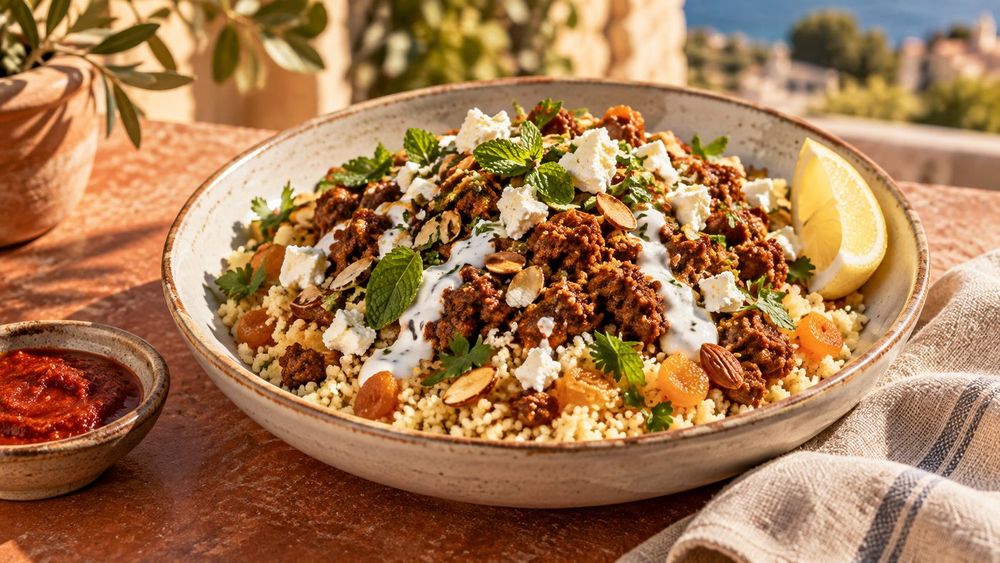
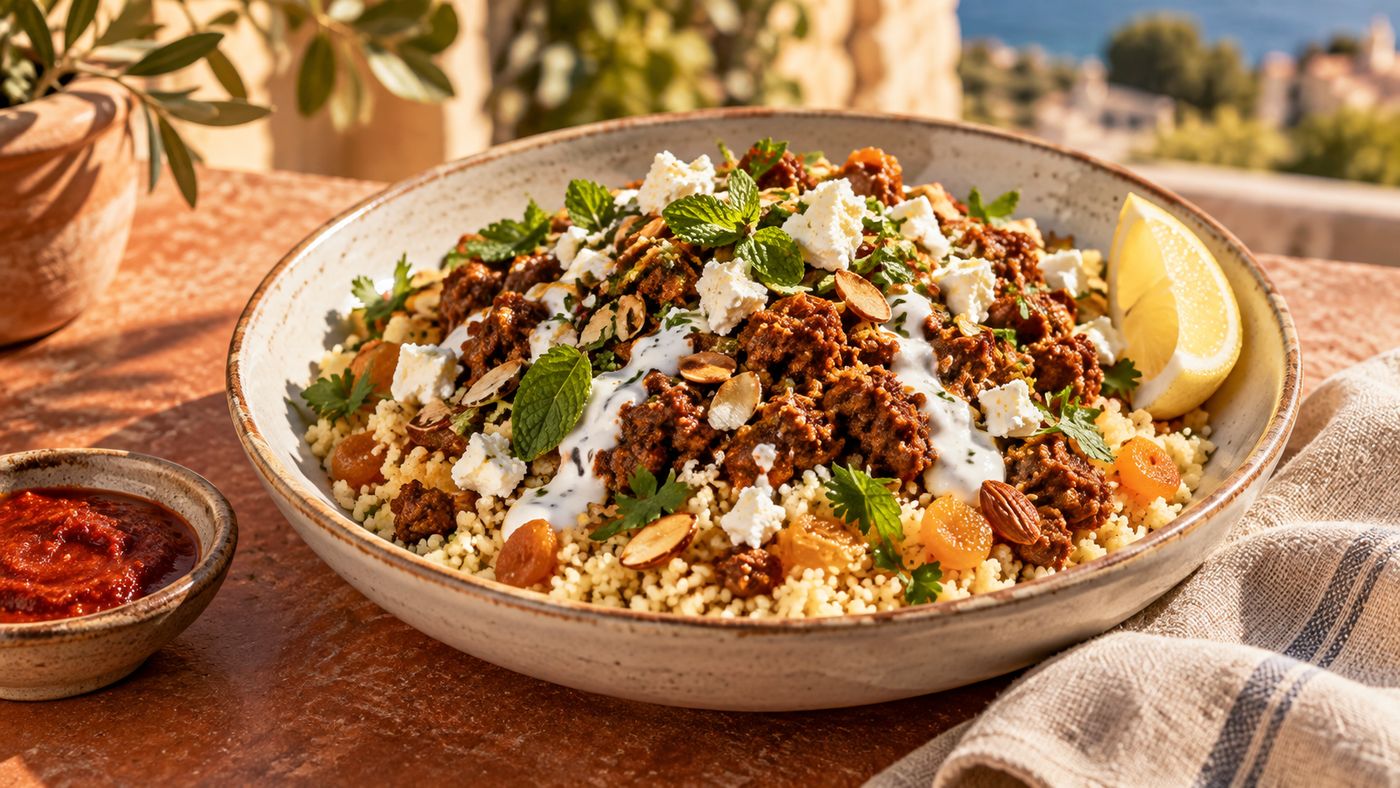

Ground lamb gets a bad reputation for being a "special occasion" protein, but it's actually one of the most meal-prep-efficient options in the game — it browns fast, it holds spice beautifully, and it doesn't dry out the way leaner meats can over a week of reheats. This recipe puts all of that to work, building a smoky, warmly spiced harissa lamb that sits on a bed of fluffy, apricot-studded couscous.
What I like about this build is the deliberate contrast baked into every component. The lamb is rich and spiced; the couscous is light and slightly sweet from the dried apricots; the yogurt sauce is cool and tangy. None of that balance is accidental — it's engineered so that a five-day-old container tastes just as layered as a fresh-off-the-stove plate.
From a batch-cooking standpoint, this is also a study in efficient sequencing. The couscous rehydrates in the time it takes to brown the lamb, which means two components finish at nearly the same moment with almost no idle time. That kind of overlap is what separates a 20-minute prep session from a 40-minute one.
The Inspiration Behind This Recipe
Harissa is one of those ingredients that does a disproportionate amount of flavor work for the effort involved — a couple of tablespoons stirred into browned lamb delivers smoke, heat, and depth without requiring a long ingredient list. That efficiency is exactly what a good meal prep recipe needs: maximum flavor return on minimum active cooking time.
The couscous component was designed to solve a common meal prep complaint — that grain-based sides can taste flat by day three. Toasted almonds and chopped dried apricots keep the texture and sweetness interesting even after refrigeration, so the base doesn't become an afterthought to the protein.
The yogurt-lemon sauce rounds out the engineering: it's added at serving time rather than during cooking, which means it never breaks down the texture of the couscous and always tastes freshly made, even on a Thursday reheat.
A Brief History of Harissa and North African Spice Blends
Harissa originated in North Africa, most closely associated with Tunisian cuisine, where it's made from a blend of roasted red chilies, garlic, and warming spices like cumin and caraway. It's traditionally used both as a cooking ingredient and a finishing condiment, which is part of why it adapts so well to a dish like this one — it can season the meat during cooking and still show up again as a flavor accent.
Pairing spiced meat with couscous and dried fruit reflects a broader North African and Middle Eastern culinary tradition of combining savory, sweet, and warmly spiced elements in a single dish. Apricots, in particular, are a common pairing with lamb across the region, prized for the way their sweetness cuts through rich, fatty cuts of meat.
The cooling yogurt sauce nods to a technique used across many spice-forward cuisines: pairing high-heat dishes with a dairy-based element to modulate intensity. It's a structural choice, not just a flavor one — it's what keeps a harissa-forward dish approachable rather than overwhelming.
Why This Cooking Method Works for Meal Prep
Browning the lamb thoroughly before adding the spices matters more than it might seem. That initial sear develops fond on the bottom of the pan, and when the harissa, cumin, and paprika hit that surface, they bloom in the residual fat and browned bits rather than just sitting on raw meat. This is what gives the finished lamb a deeper, more rounded flavor that intensifies — rather than fades — over several days in the fridge.
Ground lamb also reheats more reliably than whole cuts because its higher fat content protects it from drying out in the microwave. That fat renders slowly and keeps redistributing moisture through the meat with each reheat cycle, which is exactly the quality you want in a protein meant to survive five days of storage.
The couscous benefits from a similar logic: it's cooked just until tender and immediately fluffed with a fork, which prevents it from clumping into a dense mass in the fridge. Stored properly, it reheats back to a light, separate-grained texture rather than a solid brick.
Flavor Profile: What to Expect
This bowl operates on contrast — smoky heat balanced against cooling, sweet, and herbal notes. Here's the breakdown:
- Smoky and warm: Harissa and smoked paprika give the lamb a deep, slightly fiery backbone.
- Earthy and aromatic: Cumin and cinnamon add warmth without tipping into sweetness.
- Subtly sweet: Chopped dried apricots woven through the couscous offset the spice.
- Cooling and tangy: The lemon-yogurt drizzle tempers the heat and brightens the whole bowl.
- Fresh and herbal: Mint and parsley add a green, aromatic lift right before serving.
The spice level actually mellows slightly as it sits, since the harissa's heat integrates more fully into the fat of the lamb over time — meaning day-three leftovers read as rounded and developed rather than sharp.
Tips for Making the Best Harissa Spiced Lamb & Couscous Bowls
A few technique notes worth locking in:
- Let the spices bloom: Cook the harissa and dry spices in the pan for a couple of minutes after adding them — this deepens the flavor significantly compared to stirring them in off-heat.
- Toast your almonds: A few minutes in a dry skillet before adding them to the couscous makes a noticeable difference in aroma and crunch.
- Fluff couscous immediately: Use a fork right after the resting period to keep the grains separate rather than gummy.
- Hold the yogurt sauce separately: Store and add it fresh at serving time so it never waters down the couscous.
- Reheat gently: A quick microwave reheat with a splash of water or broth over the lamb and couscous keeps everything moist.
Portioning and Container Suggestions
Divide the couscous and lamb evenly into four containers, keeping them side by side rather than mixed — this preserves the couscous's texture and prevents it from soaking up excess moisture from the meat over several days. Compartmentalized containers work especially well here, giving each component its own space.
Store the yogurt-lemon sauce, feta, and fresh herbs in small separate containers or condiment cups. Adding these fresh at the moment of eating is what keeps the dish tasting vibrant rather than muted by day four.
If freezing, portion the lamb and couscous separately from the yogurt sauce and fresh herbs, since dairy and fresh greens don't hold up well to freezing and thawing.
Storage, Reheating, and Shelf Life Tips
- Refrigerator: Store lamb and couscous in airtight containers for up to 4 days.
- Freezer: The cooked lamb and couscous freeze well for up to 3 months; thaw overnight in the fridge before reheating.
- Reheating: Microwave in 60-second intervals, stirring between, or warm gently in a skillet with a splash of broth to prevent drying out.
- Yogurt sauce: Keep refrigerated separately and use within 3-4 days for best flavor and texture.
- Fresh herbs and feta: Add just before serving; they don't hold up to extended storage once mixed in.
Why This Recipe Deserves a Spot in Your Meal Prep Rotation
This is a bowl that proves bold flavor and practical meal prep aren't mutually exclusive. The spice blend does the heavy lifting on flavor, the couscous holds its texture through multiple reheats, and the finishing components keep every bowl tasting freshly assembled rather than like a reheated leftover.
It's also a cost-efficient way to stretch a pound of ground lamb into four substantial dinners, without sacrificing the complexity you'd expect from a restaurant-style bowl.
Meal Prep Pairing Suggestions
Round out your weekly rotation by pairing this with a lighter, vegetable-forward lunch option to balance the richness of the lamb — a Mediterranean chopped salad or a roasted vegetable grain bowl works well alongside it. If you want to keep the North African and Middle Eastern flavors going throughout the week, a chickpea and tomato stew makes a natural complement in the same spice family.