


There is a moment when butter goes from melted to browned, and the whole kitchen suddenly smells like toasted hazelnuts. That moment is the reason these rolls exist. I have baked a lot of dinner rolls over the years, and nothing gets a reaction at the table like a basket of warm, golden rolls with sage in the air.
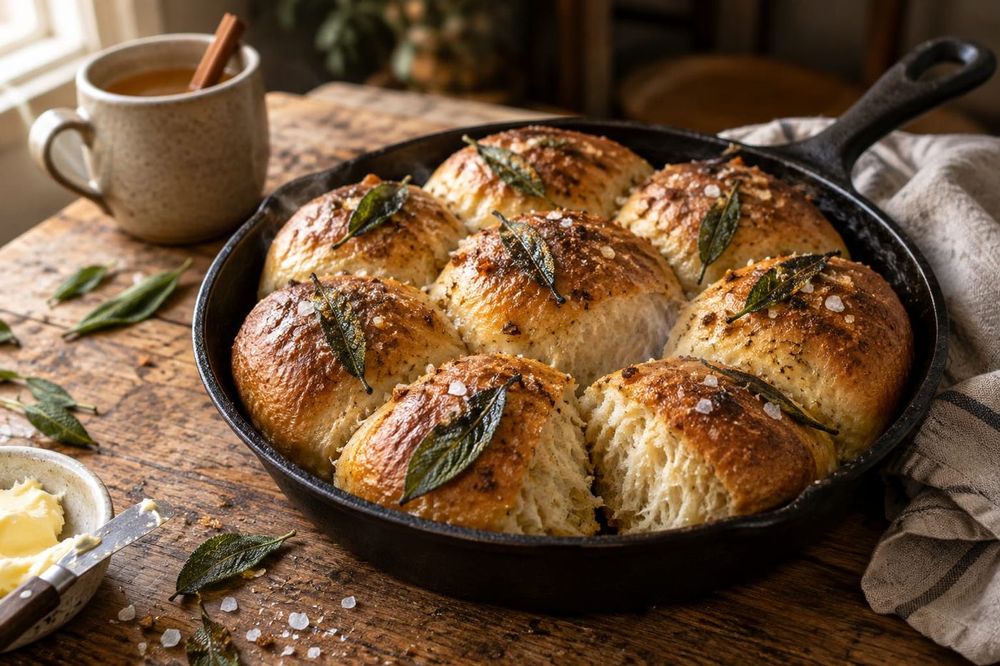
This recipe started as a way to make a plain soft roll feel like part of the main event. Butter, browned until nutty and fragrant, goes into the dough. Fresh sage is folded in and brushed over the tops at the end. The rolls stay tender and fluffy, but every bite has a deeper, toastier flavor.
They are easier than they look, too. There is no fancy shaping and no overnight proofing. If you can stir, knead, and be patient while the dough rises, you can pull a pan of these out of the oven. The reward is a tray of pillowy rolls with glossy, herby tops.
The Inspiration Behind This RecipeBrown butter and sage is a classic pairing, usually found tossed with gnocchi or ravioli. One fall, I wondered why that flavor combination should stay in the pasta aisle. Bread dough loves fat, and browned butter adds a warm, almost caramel richness that plain melted butter cannot match.
Sage felt right for the season. It is earthy and slightly peppery, and it fits beside turkey, roasted vegetables, and anything with gravy. After a few test batches, I settled on this version, which is soft, savory, and a little bit special.
Why This Cooking Method WorksBrowning the butter first cooks off its water and toasts the milk solids, which concentrates the flavor. Cooling it slightly before adding it to the dough keeps it from killing the yeast. An enriched dough made with milk, egg, and butter bakes up tender and plush, with a fine crumb.
Frying a few sage leaves in the butter infuses it with flavor and turns them crisp, so some go into the dough and some on top. Baking the rolls snug in one pan lets them rise up and touch, which gives you those soft, pull-apart sides.
Flavor Profile: What to ExpectExpect a gently sweet, buttery roll with a savory finish. The brown butter brings nutty, toasty notes, while the sage adds a woodsy, herbal lift. A sprinkle of flaky salt on top makes everything pop.
The texture is the soft, springy kind that tears apart with no effort and soaks up gravy beautifully.
Tips for Making the Best Brown Butter Sage Dinner RollsWatch the butter closely. Once it foams, stay at the stove and swirl until you see golden-brown specks and smell a nutty aroma. Pull it off the heat right away, because it can go from brown to burnt quickly.
Make sure the milk is warm, not hot. About 110°F is perfect. Anything hotter can damage the yeast. Knead until the dough is smooth and slightly tacky, and resist adding too much extra flour, which makes rolls dense.
Let the dough double in size in a warm spot, and give the shaped rolls a second rise until puffy. Brush them with the sage butter while they are still hot so it soaks in.
Serving SuggestionsThese rolls are made for a holiday table alongside roasted turkey, mashed potatoes, and gravy. They are just as good with a bowl of soup or a weeknight roast chicken. Leftovers make wonderful mini sandwiches with turkey and cranberry sauce.
Set out extra softened butter with a pinch of flaky salt if you want to go all in.
Storage, Reheating, and Make-Ahead TipsStore cooled rolls in an airtight container at room temperature for up to two days. Warm them in a 300°F oven, wrapped in foil, for about 10 minutes to bring back that fresh-baked softness.
To make them ahead, freeze the baked rolls for up to two months and thaw at room temperature. You can also shape the rolls, cover them tightly, and refrigerate overnight, then let them come to room temperature before baking.
Why This Recipe Deserves a Spot in Your RotationIt is a simple dough that delivers big flavor, and it makes any meal feel like an occasion. Once you taste brown butter in bread, plain rolls will never feel quite the same. Make a double batch, because they disappear fast.
Recommended Drink PairingFor an alcoholic option, pour a glass of lightly oaked Chardonnay. Its buttery notes echo the brown butter, and its acidity keeps the richness in check.
For a non-alcoholic option, try warm spiced apple cider. Its gentle sweetness and cozy spice play nicely with the sage and toasted butter.