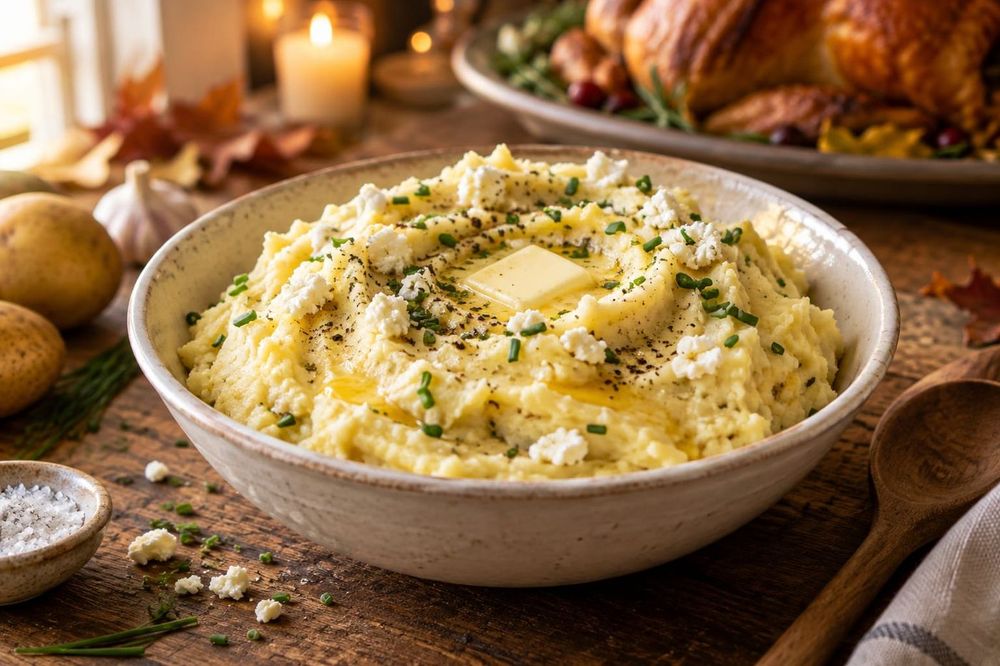



I have strong opinions about mashed potatoes, and most of them come from years of working the sides station in professional kitchens. Mashed potatoes are the dish everyone expects, which means they are also the dish everyone notices when it's off. Gluey, bland, or watery mash can sink a holiday plate faster than a dry turkey. This version is the one I now make without a second thought.
The idea came from a cheese board. I had a log of goat cheese left over and some warm, buttery potatoes on the stove, and I stirred the two together on a whim. The tang cut through the richness in a way that plain cream and butter never quite manage. It tasted like something I would have paid extra for at a restaurant.
What you get is a silky, spoonable mash with a gentle tang, a little garlic, and a flecking of fresh chives. It's elegant enough for the holiday table and easy enough for a Tuesday. Even beginners can get it right.
The Inspiration Behind This RecipeClassic mashed potatoes lean entirely on butter and cream. That's lovely, but it's one-note. In restaurant kitchens we often brighten rich dishes with something acidic or tangy, and goat cheese does that job beautifully while adding its own creaminess.
I wanted a side that could sit next to a rich main like roast turkey, braised beef, or pork chops and still hold its own. This one doesn't just soak up gravy. It adds a flavor of its own.
Why This Cooking Method WorksYukon Gold potatoes are the foundation here. They have a naturally buttery flavor and a medium starch level, so they mash up creamy without turning gummy the way russets sometimes can. Starting them in cold salted water means they cook evenly from the outside in, and the salt seasons them all the way through.
Warming the cream and milk before adding them matters more than most people think. Cold liquid cools the potatoes and keeps them from absorbing the dairy properly. Folding in the goat cheese off the heat lets it melt smoothly without turning grainy or breaking.
Flavor Profile: What to ExpectExpect a velvety texture with a little tang up front, followed by the mellow richness of butter and cream. The garlic is soft and sweet rather than sharp, because it simmers in the butter first. The chives add a fresh, oniony finish.
The goat cheese doesn't taste overpowering. People who say they don't like goat cheese usually go back for seconds here, because it reads as creamy and bright rather than funky.
Tips for Making the Best Goat Cheese Mashed PotatoesCut the potatoes into even, 1½-inch chunks so they finish at the same time. Drain them well and let them steam dry in the hot pot for a minute or two. Extra moisture is the enemy of good mash.
Use a potato masher or ricer, not a food processor or hand mixer. Overworking the potatoes releases excess starch and makes them gluey. Add the liquid gradually, and stop when the texture looks right to you. Let the goat cheese soften at room temperature first, and taste before you add more salt, since goat cheese is naturally salty.
Serving SuggestionsThese are made for Thanksgiving and holiday spreads next to herb roasted turkey, rolls, and a good gravy. They're also wonderful under braised short ribs, roasted chicken, seared pork chops, or a simple steak.
For a nice finish, make a small well in the center, add a pat of butter, and sprinkle on extra chives and cracked black pepper.
Storage, Reheating, and Make-Ahead TipsStore leftovers in an airtight container in the refrigerator for up to 4 days. Reheat gently on the stove over low heat with a splash of milk, stirring often, or in the microwave in short bursts, stirring in between.
For make-ahead holiday cooking, prepare the potatoes a day in advance, then reheat them in a slow cooker on low or in a covered dish in the oven with a little extra cream. They hold beautifully, which frees up your stovetop on the big day.
Why This Recipe Deserves a Spot in Your RotationIt takes a familiar favorite and makes it feel special without adding stress. The ingredient list is short, the technique is forgiving, and the results are reliably creamy. Once you've made it, plain mash may feel a little ordinary.
Cooking is part science, part soul, and this recipe has both. The science is in the starch and the temperature of your dairy. The soul is in that tangy, buttery spoonful.
Recommended Drink PairingFor an alcoholic option, pour a crisp Sauvignon Blanc. Its bright acidity and citrusy edge echo the tang of the goat cheese and keep a rich holiday plate feeling balanced. A lightly oaked Chardonnay also works well.
For a non-alcoholic option, try sparkling apple cider over ice with a squeeze of lemon. It's crisp and festive, and the gentle sweetness and bubbles refresh your palate between bites.
