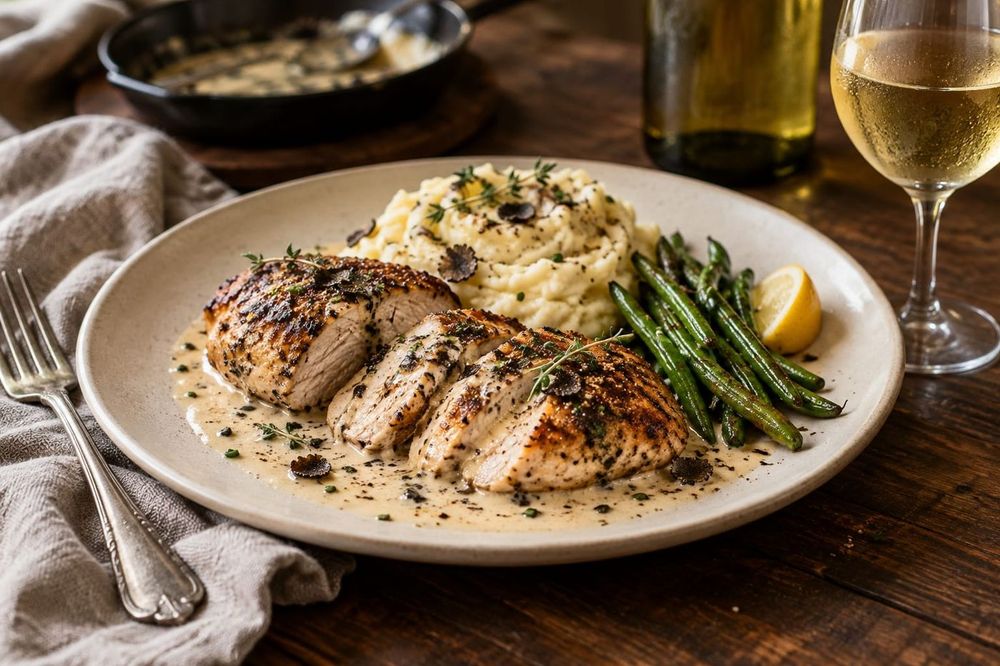



Truffle has a reputation for being untouchable, reserved for white-tablecloth restaurants and special occasions. The reality is more practical: truffle is an aromatic compound delivery system, and a small amount, handled correctly, transforms an ordinary pan sauce into something remarkable. This Creamy Truffle Chicken is built on that principle, using a modest amount of truffle product to flavor a sauce made from pantry-friendly ingredients.
The architecture of the dish is simple. Chicken breasts are seared to develop a deeply browned crust, then finished in a sauce of shallot, garlic, white wine, chicken stock, and cream. Truffle is added at the end, off the heat, because its volatile aromatics are fragile and dissipate quickly under sustained heat.
The result is a dish with a clear structure: savory depth from the Maillard crust, acidity from the wine reduction, richness from the cream, and an earthy, musky top note from the truffle. Each element has a job, and none of them is complicated.
It is also an ideal midweek recipe. The entire dish comes together in about 40 minutes in one skillet, yet it tastes like something that took far longer. That is the kind of accessible luxury Wine Wednesday is about.
The Inspiration Behind This Recipe
The inspiration here was a question: how do you get the most flavor from the least truffle? Fresh truffles are prohibitively expensive, but truffle butter, truffle paste, and good truffle oil are affordable and widely available. The challenge is that they behave differently from fresh truffle, and they are easy to overuse or to cook away.
The answer is to build a flavorful base first, so the sauce already tastes complete, and then use the truffle as a finishing aromatic. Think of it the way you would think of fresh herbs: added at the end, they provide a bright, high-register note that cooking would otherwise destroy.
Cream is the natural partner. Truffle's aromatic compounds are fat-soluble, so a cream sauce captures and carries them across the palate far better than a thin broth would. The fat acts as a vehicle, extending the aroma from the first bite to the finish.
A Brief History of Truffle Cookery and Cream Sauces
Truffles have been prized since antiquity. The ancient Romans and Greeks wrote about them, and by the Renaissance they were fixtures of Italian and French courts. The black Périgord truffle of southwestern France and the white Alba truffle of Piedmont became the benchmarks of luxury ingredients, and they remain so today.
French cuisine formalized the cream sauce as part of its classical repertoire. Techniques such as deglazing a pan with wine, reducing it, and finishing with cream became foundational. The combination of poultry, wine, cream, and an earthy ingredient like mushrooms or truffle is a classic across French regional cooking, and it is the lineage this recipe follows.
What has changed in recent decades is access. Preserved truffle products brought the flavor into home kitchens, and cooks learned that a spoonful of truffle butter could do much of the work once reserved for shaved fresh truffle.
Why This Cooking Method Works
Searing the chicken first is about the Maillard reaction. Proteins and sugars on the surface brown at high heat, creating hundreds of savory flavor compounds. Patting the chicken dry matters, because surface moisture must evaporate before browning can begin. Skipping that step steams the chicken instead.
The browned bits left in the pan, called fond, are concentrated flavor. Deglazing with white wine dissolves them into the sauce, and the wine's acidity brightens the whole dish while its alcohol helps extract flavor compounds from the shallot and garlic.
Reducing the wine before adding stock and cream concentrates flavor and prevents a raw, sharp edge. Cream then simmers gently to thicken. Keeping it at a low simmer rather than a boil prevents the sauce from breaking. Finally, stirring in the truffle off the heat preserves its delicate volatile aromatics.
Flavor Profile: What to Expect
Expect a layered sauce with several distinct notes:
- Earthy: the truffle delivers a musky, forest-floor depth.
- Savory: the seared chicken crust and fond provide roasted richness.
- Creamy: cream rounds the sauce into a silky, coating texture.
- Bright: white wine and a touch of lemon lift the richness.
- Aromatic: shallot and garlic form a sweet, mellow base.
The balance is the point. The truffle is prominent without being overwhelming, and the acidity keeps the richness from feeling heavy.
Tips for Making the Best Creamy Truffle Chicken
- Pound the chicken to even thickness. Uniform breasts cook at the same rate and stay juicy.
- Dry the surface thoroughly. This ensures a proper sear.
- Add truffle off the heat. Heat destroys the aroma you paid for.
- Start with less truffle. Taste, then add more; potency varies by brand.
- Use real cream. Higher fat content resists curdling and carries aroma.
- Rest the chicken. Five minutes lets juices redistribute.
Wine Pairing Guide
- ★ Oaked Chardonnay (Burgundy or California): the best match. Its creamy texture and subtle toast mirror the sauce, while its acidity cuts through the richness.
- Pinot Noir: light tannins and earthy notes echo the truffle without overpowering the chicken.
- Viognier: floral, full-bodied, and low in acid, it complements the sauce's silkiness.
- Chablis: a lean, mineral-driven Chardonnay that provides sharp contrast to the cream.
- Champagne or Brut Sparkling: bubbles and acidity cleanse the palate between rich bites.
Serving Suggestions and Side Pairings
The sauce wants something to catch it. Creamy mashed potatoes, buttered egg noodles, or a simple risotto are natural choices. For a lighter plate, roasted asparagus or haricots verts with lemon add freshness and color.
If you are building a full Wine Wednesday menu, the Slow Roasted Prime Rib makes a good companion for a larger gathering, and the Rosemary Citrus Roast Chicken works well if you want a lighter option on the following week. A green salad with a sharp vinaigrette provides contrast to the richness.
Storage, Reheating, and Make-Ahead Tips
Store leftover chicken and sauce together in an airtight container in the refrigerator for up to three days. Reheat gently in a skillet over low heat with a splash of stock or cream to loosen the sauce. Avoid the microwave at high power, which can break the emulsion and dull the truffle aroma.
For make-ahead, sear the chicken and prepare the sauce base through the cream step, then refrigerate. Reheat gently, stir in the truffle off the heat just before serving, and the result will taste freshly made. Freezing is not recommended, as cream sauces can separate.
Why This Recipe Deserves a Spot in Your Wine Wednesday Rotation
This dish proves that luxury does not require complexity. One skillet, a handful of ingredients, and a thoughtful finishing touch produce a meal that feels special on an ordinary midweek night.
Pour a glass of Chardonnay, plate the chicken with plenty of sauce, and treat yourself. Midweek deserves a little elegance, and this recipe makes it entirely achievable.