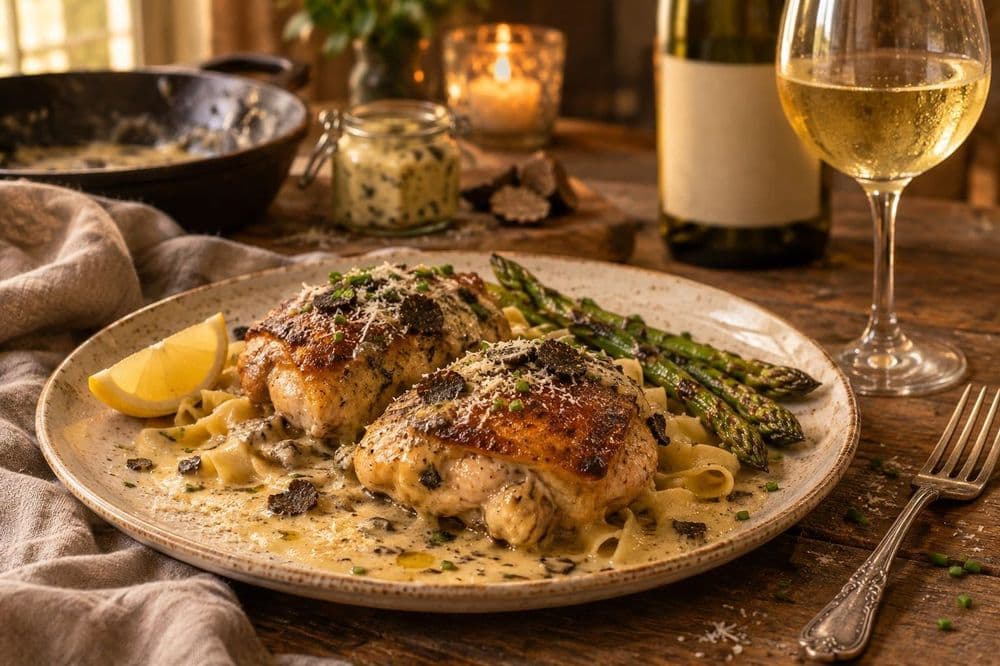



Truffle is an aromatic that rewards restraint and precision. The compounds responsible for its scent are volatile, which means heat can strip them away in seconds. Creamy Truffle Chicken is built around that fact: a hard sear for savory depth, a gentle cream sauce for body, and truffle added at the very end so its perfume survives to the table.
The result is a dish that reads as restaurant-level but follows a simple structure. Chicken thighs or breasts develop a browned crust, shallots and garlic soften in the rendered fat, white wine lifts the fond, and cream plus Parmesan bring everything together. Truffle butter or truffle oil finishes it.
What makes this a strong midweek candidate is the balance of fat, acid, and aroma. Cream supplies richness, wine and a squeeze of lemon supply lift, and truffle supplies the earthy, almost musky top note. Each element has a job, and understanding those jobs makes the dish easy to repeat.
Below, we cover the reasoning behind each step, how to choose a wine that complements the sauce, and how to store and reheat leftovers without breaking the cream.
The Inspiration Behind This RecipeThis recipe comes from a classic bistro idea: pair a humble protein with one luxurious ingredient and let technique do the rest. Chicken is neutral and forgiving, so it carries truffle well without competing with it.
The goal is accessible luxury. A small jar of truffle butter or a bottle of good truffle oil goes a long way, and the rest of the ingredients are pantry staples. You get the feel of a special-occasion meal without special-occasion effort.
A Brief History of Truffles and Cream SaucesTruffles have been prized since antiquity, with records from Roman and earlier Mediterranean cultures. French and Italian cooking later made them central to refined cuisine, with Périgord black truffles and Alba white truffles becoming the benchmarks. Because fresh truffles are expensive and seasonal, truffle butters, oils, and pastes became the practical way to bring the flavor into everyday cooking.
Cream-based pan sauces come from the French tradition of deglazing: dissolving the browned bits left in a pan with liquid, then enriching with cream or butter. Combining the two gives a sauce that is simple in method and layered in flavor.
Why This Cooking Method WorksSearing triggers the Maillard reaction, creating hundreds of flavor compounds on the chicken surface. Patting the meat dry matters because surface moisture must evaporate before browning can begin. A hot, uncrowded pan keeps the temperature high enough for a proper crust.
Deglazing with white wine dissolves the fond, which is concentrated flavor, and the acid balances the cream later. Simmering the cream briefly reduces water and thickens the sauce through concentration and the starch and protein in the Parmesan. Holding the heat moderate prevents the dairy from separating.
Truffle goes in off the heat. Its aroma compounds are fragile, so adding them last preserves the character that makes the dish distinctive.
Flavor Profile: What to ExpectExpect a savory, earthy, creamy dish with a bright finish. The sauce is rich but not heavy, thanks to the wine and lemon. The chicken is juicy under a golden crust, and the truffle lingers on the finish with a nutty, musky depth.
Tips for Making the Best Creamy Truffle Chicken- Dry the chicken thoroughly. Dry surfaces brown; wet ones steam.
- Use a heavy skillet. Even heat gives a consistent crust.
- Add truffle last. Stir it in after removing the pan from the heat.
- Keep the simmer gentle. A hard boil can cause the cream to split.
- Taste before salting. Parmesan and truffle butter both contribute salt.
- Rest the chicken. Five minutes lets the juices redistribute.
Truffle and cream call for wines with enough acidity to cut richness and enough texture to match the sauce.
- ★ Oaked Chardonnay (Burgundy or California): The creamy texture and subtle oak mirror the sauce, while acidity keeps it fresh. The best overall match.
- Pinot Noir: Earthy, light-tannin red that echoes the truffle without overpowering the chicken.
- Chablis: Crisp and mineral, it slices through the cream cleanly.
- Viognier: Floral and full-bodied, it complements the sauce's richness.
- Brut Champagne or Sparkling Wine: Bubbles and acidity refresh the palate between bites.
Serve over buttered egg noodles, creamy polenta, or mashed potatoes to catch the sauce. Roasted asparagus or green beans add color and a bitter edge that balances the richness.
For a fuller midweek spread, a starter of Beef Wellington Bites from an earlier Wine Wednesday pairs well in a more celebratory menu, while a simple arugula salad with lemon keeps things lighter.
Storage, Reheating, and Make-Ahead TipsRefrigerate leftovers in an airtight container for up to three days. Reheat gently in a skillet over low heat with a splash of milk or broth to loosen the sauce. Avoid the microwave at full power, which can separate the cream.
For make-ahead, sear and cook the chicken in advance and prepare the sauce base without the truffle. Reheat, then stir in the truffle just before serving.
Why This Recipe Deserves a Spot in Your Wine Wednesday RotationCreamy Truffle Chicken proves that midweek dinner can feel special without being complicated. It uses a familiar technique, one standout ingredient, and a glass of well-chosen wine to turn an ordinary evening into something worth savoring. Keep a jar of truffle butter on hand and this becomes an easy, repeatable luxury.
