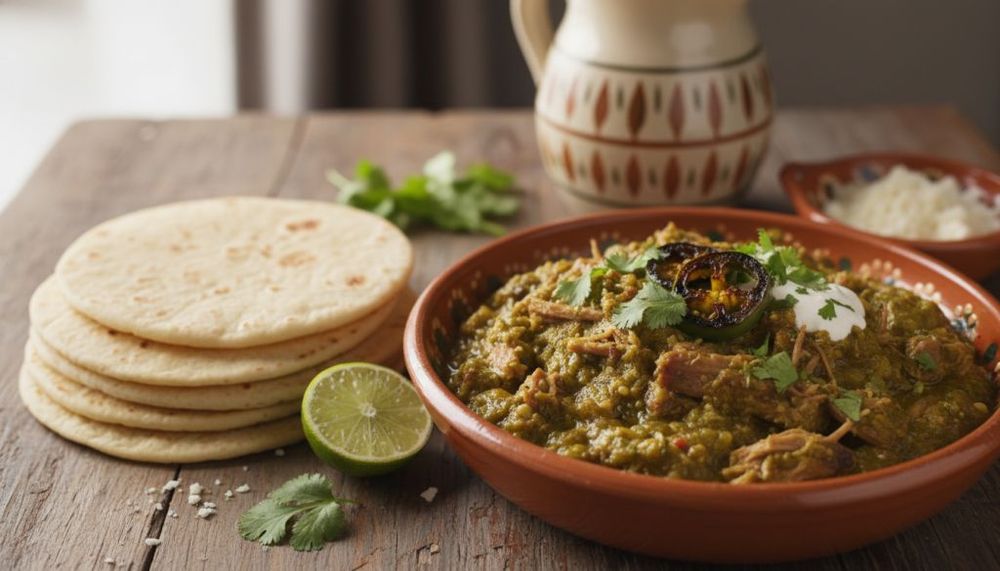

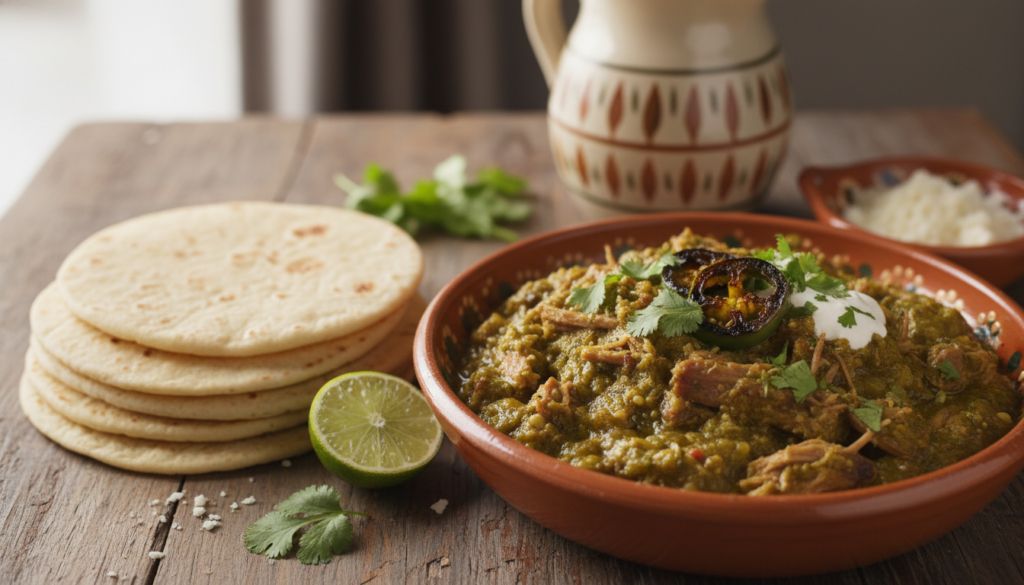


There are dishes that reward patience in a way that feels genuinely transformative—where the investment of time produces something that couldn’t have been achieved any other way. Chile Verde Pork is one of those dishes. Cubed pork shoulder, browned until deeply caramelized, braised in a tomatillo and roasted jalapeño sauce with cumin, oregano, and cilantro until the meat is fall-apart tender and the sauce has reduced into something tangy, spiced, and deeply complex. It is one of the most satisfying braises in Mexican-American cooking, and once you’ve made it properly, it becomes a recipe you return to every time the weather calls for something serious.
The browning is where the depth of this dish is built, and it’s the step that most separates a great chile verde from an adequate one. Pork shoulder, cut into cubes and browned in batches in a hot pot, develops a caramelized crust through the Maillard reaction that dissolves into the braising liquid and gives the finished sauce its savory backbone. Skip this step or rush it—by crowding the pot or not allowing enough contact time—and you end up with a pale, flat sauce that tastes only of the tomatillos and spices rather than the pork. Give it time, and the sauce that results after ninety minutes of simmering is something else entirely.
The tomatillos and jalapeños, roasted before going into the pot, add a dimension that raw additions can’t provide. Roasting concentrates the tomatillo’s tartness, deepens the jalapeño’s heat from sharp to warm, and introduces a subtle smokiness that threads through the entire braise. It’s an extra step that takes fifteen minutes and changes the finished dish measurably.
The Inspiration Behind This Recipe
Chile verde—green chile—is one of the foundational dishes of Mexican and Southwestern American cooking, and it draws from one of the oldest and most important cooking traditions in the region: the use of fresh and roasted green chiles as a primary sauce base. From New Mexico’s green chile stew to Sonoran pork preparations to the Colorado chile verde that has become a staple of Mexican-American restaurant culture across the West, the dish represents the diversity and depth of green chile cooking in North America.
This recipe honors the core principle of that tradition: that tomatillos and green chiles, properly prepared, create a sauce with a brightness, acidity, and complexity that red chile preparations can’t replicate—and that pork shoulder’s fat content and collagen structure make it the ideal protein to carry those flavors through a long, gentle braise.
A Brief History of Chile Verde
Chile verde has roots in the pre-Columbian cooking traditions of central Mexico, where tomatillos—a member of the nightshade family cultivated in Mexico for at least 3,000 years—and various green chile varieties were used to create sauces for meats, tamales, and vegetables long before Spanish colonization introduced pork to the region. The combination of tomatillo, green chile, and braised pork developed as Spanish livestock merged with indigenous sauce traditions to create one of the most enduring dishes in Mexican culinary history.
The dish evolved differently across regions—New Mexico’s chile verde features Hatch green chiles; Colorado’s version tends toward a soupier consistency; Sonoran preparations often include potatoes; California’s Mission-influenced versions favor tomatillo-heavy sauces. All share the fundamental technique of braising pork in a green chile and tomatillo sauce until tender, and all reflect the same principle: that the long, slow braise is what transforms the chile sauce from a condiment into the heart of the dish.
Why Browning and Roasting Both Matter
The two foundational technique choices in this recipe—browning the pork in batches and roasting the tomatillos and jalapeños before adding them—are what separate a deeply flavored chile verde from a merely adequate one, and both operate on the same underlying principle: controlled high heat creates flavor compounds that low, moist heat cannot.
When pork shoulder is browned in batches at medium-high heat, the Maillard reaction produces hundreds of flavor compounds on the meat’s surface that dissolve into the braising liquid during the ninety-minute simmer, enriching the sauce with a savory depth that a raw sear can’t provide. When tomatillos and jalapeños are roasted, the dry heat caramelizes their natural sugars, concentrates their tartness and heat, and introduces a subtle smokiness that raw additions entirely lack. Both steps are skippable in theory; in practice, skipping either produces a noticeably flatter, less complex finished dish.
Flavor Profile: What to Expect
Chile Verde Pork delivers a layered, deeply satisfying flavor profile that builds throughout the eating experience:
- Deeply savory, fall-apart pork with caramelized surfaces that have dissolved their flavor into the surrounding sauce over ninety minutes of gentle simmering
- Tangy, slightly smoky tomatillo that provides the bright, acidic backbone of the sauce and keeps the richness of the pork in check
- Warm, roasted jalapeño heat that is more rounded and complex than raw chile heat—present throughout the sauce without being aggressive
- Earthy cumin and oregano that add herbal depth and the warm, aromatic character that defines Mexican braised preparations
- Fresh cilantro that carries through the braise and brightens every element of the finished dish
- Reduced, concentrated broth that has absorbed every layer of flavor from the browned pork, roasted chiles, and aromatics into a cohesive, deeply flavorful sauce
The overall effect is tangy, savory, warmly spiced, and deeply comforting—a braise with genuine complexity and soul.
Tips for Making the Best Chile Verde Pork
These technique details will produce a consistently exceptional result:
- Brown in batches, never crowded: Crowding the pot causes the pork to steam rather than sear. Work in batches of five to six pieces maximum, with space between them, and resist the urge to move them before a proper crust develops.
- Pat the pork dry before seasoning: Surface moisture prevents proper browning. A thorough pat with paper towels before seasoning ensures genuine caramelization rather than steaming.
- Roast the tomatillos and jalapeños under the broiler: Three to four minutes per side under a high broiler develops char and concentrates flavor more efficiently than oven roasting. Watch closely—they should be charred in spots but not burnt.
- Deglaze after the aromatics: Before adding the broth, let the onion and garlic soften in the pork drippings, then use the broth to scrape every bit of fond from the bottom of the pot. That fond is the concentrated soul of the braise.
- Simmer low and slow: A gentle simmer—occasional bubbles, not a rolling boil—is what breaks down pork shoulder’s collagen into gelatin without toughening the meat fibers. Boiling toughens; simmering tenderizes.
- Taste and adjust at the end: Tomatillos vary in tartness and jalapeños vary in heat. Always taste before serving and adjust with salt, a pinch of cumin, or a squeeze of lime if needed.
Serving Suggestions and Side Pairings
Chile verde is one of the most versatile braises in the collection:
- Served in warm flour tortillas as tacos with diced onion, cilantro, and crema
- Over white or cilantro lime rice with black beans for a complete, hearty plate
- As a burrito filling with rice, beans, and sour cream
- With warm corn tortillas and guacamole for a simple, traditional presentation
- Over scrambled eggs for a deeply satisfying breakfast or brunch application
- With a simple Mexican coleslaw for cool, crunchy contrast to the rich, saucy braise
Storage, Reheating, and Make-Ahead Tips
This is one of the finest make-ahead recipes in the collection:
- Refrigerate in an airtight container for up to 5 days. The flavors deepen significantly overnight—this braise is measurably better the next day.
- Freeze for up to 3 months. Thaw overnight in the refrigerator and reheat gently with a splash of chicken broth.
- Reheat in a covered pot over low heat, stirring occasionally. The sauce may need a small splash of broth to restore consistency.
- Make ahead entirely—chile verde is one of those rare dishes that improves with each reheating as the pork continues to absorb the surrounding sauce.
Why This Recipe Deserves a Spot in Your Rotation
Chile Verde Pork earns its place as the braise that rewards every cook who takes it seriously. It is deeply flavored, genuinely satisfying, and built on a culinary tradition—green chile and braised pork—that has endured for centuries for very good reason. Whether you’re feeding a family on a Sunday afternoon, meal prepping for the week, or setting a pot going before guests arrive, this is the kind of cooking that fills a kitchen with the best possible aromas and a table with the best possible dinner.
Recommended Drink Pairing
The bright tomatillo acidity and warm jalapeño heat call for something equally vibrant and refreshing. A Ginger Grapefruit Paloma is a natural match—the grapefruit echoes the tart tomatillo base while the ginger adds a spiced warmth that plays beautifully against the cumin and roasted chile. A cold Mexican lager with lime is the effortless, crowd-friendly companion that never fails alongside a braise this bold and deeply flavored.
For non-alcoholic options, a sparkling agua fresca—tamarind or hibiscus—or a cold, lightly sweetened horchata provides the cool, sweet contrast that makes a spicy, acidic braise even more enjoyable.refreshing, slightly floral note that complements the herbed goat cheese filling perfectly.