


Carrot cake is built on a precise balance: warm spice, caramelized sweetness, a faint earthiness from the vegetable, and a tangy cream cheese frosting that cuts through the richness. Translating that structure into a glass is an exercise in proportion, and the Carrot Cake Martini is one of the more successful attempts. Each component has a job, and none of them gets to dominate.
The architecture here is straightforward. Spiced rum supplies the cinnamon, clove, and vanilla backbone. Cream liqueur contributes body and the frosting-like sweetness. A small measure of vanilla vodka sharpens the structure and keeps the drink from turning cloying. A touch of cinnamon-sugar on the rim completes the effect.
The result is a cocktail that reads as dessert but drinks with the cold, clean texture of a proper martini. It is ideal for the night before the weekend, when you want something with depth that still comes together in under five minutes.
The Inspiration Behind This Recipe
The concept started with a flavor analysis of the cake itself. When you break carrot cake down, the dominant sensory notes are cinnamon, nutmeg, brown sugar, vanilla, and dairy tang. Almost all of these map neatly onto ingredients already found behind a well-stocked bar, which makes the cake an unusually good candidate for cocktail translation.
The goal was fidelity without gimmicks. Rather than blending actual carrots into the drink, which introduces vegetal notes and a gritty texture, this recipe uses a small amount of carrot-free spice syrup and a cream-based liqueur to evoke the cake. The impression of carrot cake comes from the spice and the frosting, which is where most of the flavor lives anyway.
A Brief History of the Dessert Martini
The dessert martini descends from the broader twentieth-century trend of applying the martini glass to anything served cold and strained. The classic martini was gin and vermouth, but by the 1990s the word had become shorthand for a chilled, stemmed cocktail, and bartenders began building drinks around chocolate, coffee, caramel, and cake flavors.
Cream liqueurs, which became widely available in the 1970s, made these drinks possible. Once a stable, shelf-ready dairy-based spirit existed, mixologists could achieve a dessert-like mouthfeel without fresh cream. Spiced rum, meanwhile, has long been a staple of baking-flavored drinks because its botanicals already echo holiday baking.
Why This Mixing Method Works
Shaking is the correct technique here, and the reason is physical. Drinks containing cream liqueur benefit from vigorous agitation with ice, which chills the liquid rapidly, adds a measured amount of dilution, and incorporates fine air bubbles. Those bubbles give the finished drink a silky, slightly frothy texture instead of a heavy, syrupy one.
Dilution matters as much as temperature. Roughly 20 to 25 percent water from the melting ice softens the alcohol's bite and lets the spice notes come forward. Stirring would chill the drink but fail to emulsify the cream components, leaving it thinner and less cohesive.
Straining through a fine mesh strainer after shaking removes ice shards, which would otherwise continue diluting the drink and spoil the texture in the glass.
Flavor Profile: What to Expect
Each sip moves through a clear sequence of flavors:
- Warm spice: cinnamon and nutmeg lead on the nose and early palate.
- Creamy sweetness: the cream liqueur recalls frosting without heaviness.
- Vanilla: a rounded, bakery-style note ties the layers together.
- Gentle tang: a small splash of lemon juice mimics the cream cheese brightness.
- Smooth finish: lingering brown sugar and a faint rum warmth.
The overall impression is balanced rather than sugary, with the acidity and spirit keeping the sweetness in check.
Tips for Making the Best Carrot Cake Martini
A few technical details make the difference between good and excellent:
- Chill the glass: a frozen martini glass keeps the drink cold longer and preserves texture.
- Use fresh lemon juice: bottled juice lacks the clean acidity needed to mimic cream cheese tang.
- Shake hard for 15 seconds: this ensures proper chilling, dilution, and aeration.
- Double strain: a fine strainer yields a smoother, ice-free pour.
- Rim lightly: only the outer edge, so the sugar does not overpower the first sip.
Serving Suggestions and Garnish Ideas
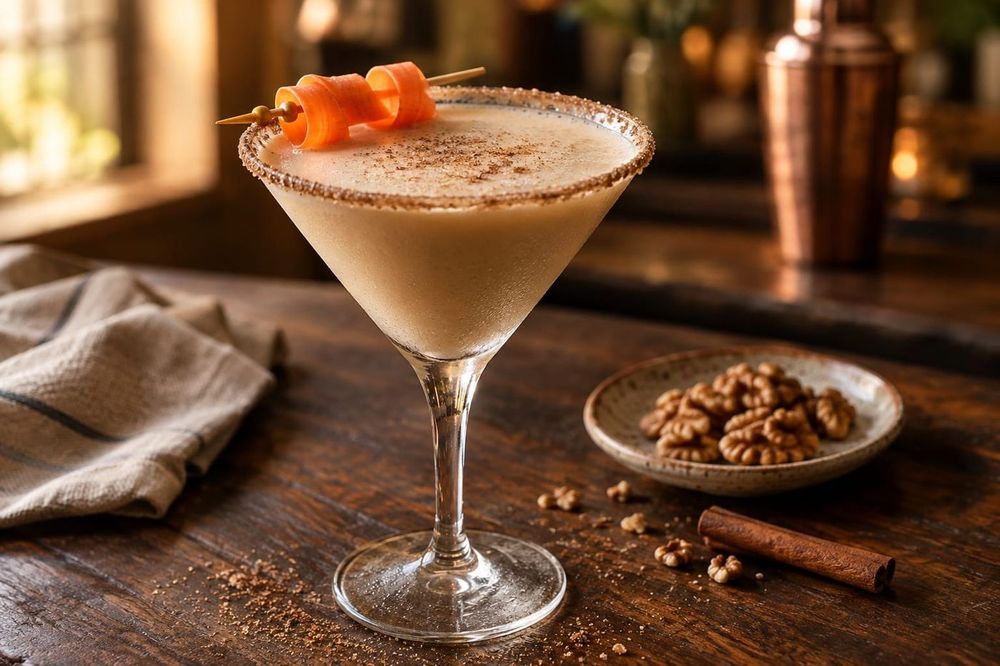
Serve immediately in a chilled coupe or martini glass. A rim of cinnamon sugar is the signature touch, applied by running a lemon wedge around the outer edge and dipping it in a mix of two parts sugar to one part ground cinnamon.
For garnish, a thin ribbon of fresh carrot curled on a pick adds visual cues that echo the cake, while a light dusting of freshly grated nutmeg on the surface delivers aroma with every sip. Toasted walnut pieces on a small plate alongside are an optional but fitting accent.
This drink works best as a finishing cocktail, served after dinner or as the centerpiece of a casual get-together where dessert drinks replace the dessert course.
Storage and Make-Ahead Tips
- Batch the base: combine the rum, vodka, cream liqueur, and lemon in a bottle and refrigerate up to 3 days.
- Shake to order: always add ice and shake just before serving.
- Prep rims ahead: mix cinnamon sugar in advance and store airtight.
- Do not freeze: cream liqueur can separate when frozen.
- Chill glasses early: place them in the freezer 20 minutes before serving.
Why This Recipe Deserves a Spot in Your Rotation
This cocktail delivers the comfort of a familiar dessert with the precision of a well-built drink. It uses a short ingredient list, requires no specialty equipment beyond a shaker, and scales easily for guests.
It also rewards understanding: once you see why each component is there, you can adjust the spice, sweetness, or tang to your own taste and know exactly what the change will do.
Recommended Food Pairing
Pair the Carrot Cake Martini with something salty and crisp to offset its sweetness, such as a cheese board with aged cheddar, toasted pecans, and sharp crackers. The fat and salt reset the palate between sips.
For a lighter option, serve alongside shortbread or plain butter cookies, which echo the baked-good character without competing with the spice.