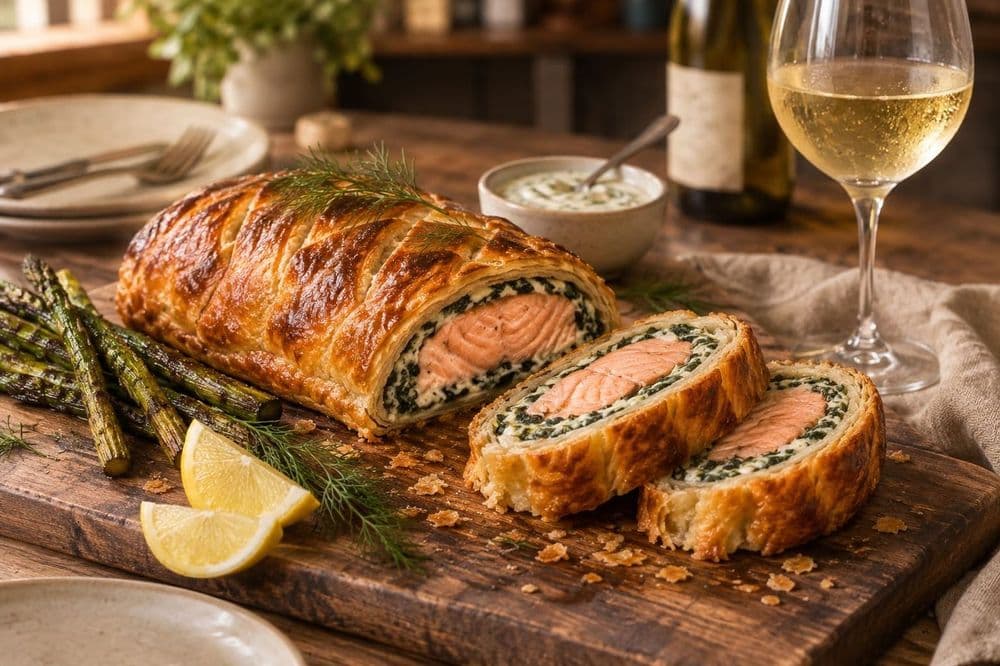



Salmon Wellington is a study in contrast. Crisp, laminated pastry encloses a gently cooked fillet, and the success of the dish depends on managing moisture, temperature, and fat. Get those three right and a midweek dinner takes on the polish of a restaurant entrée.
The classic beef version asks you to protect the meat from a soggy crust with a duxelles layer. Salmon is more forgiving, since it cooks in a fraction of the time, but it is also more delicate. That is why this recipe uses a spinach and cream cheese layer as a moisture barrier and flavor bridge between the fish and the pastry.
The result is a rich, flaky, savory centerpiece that is far less intimidating than it looks. Store-bought puff pastry does the heavy lifting, leaving you free to focus on seasoning and timing.
Think of it as accessible luxury: a few quality ingredients, a clear method, and a glass of something good alongside.
The Inspiration Behind This RecipeThe idea comes from a simple question: what happens when the logic of Beef Wellington is applied to a fish that cooks in minutes? Salmon has the fat content to stay moist, a flavor that welcomes lemon and dill, and a texture that contrasts beautifully with crisp pastry.
The filling is built to solve the main technical problem, which is steam. Wilted, thoroughly squeezed spinach folded into seasoned cream cheese absorbs the juices the salmon releases, protecting the pastry underneath.
A Brief History of Wellington-Style DishesMeat or fish baked in pastry is an old European technique, and it predates the name Wellington by centuries. The pastry acts as an edible cooking vessel, trapping steam and juices so the contents cook gently.
The Beef Wellington is traditionally linked to the Duke of Wellington, though its exact origins are debated. Over time, cooks adapted the format to other proteins, and salmon en croûte became a staple of British and French entertaining because it is elegant, make-ahead friendly, and visually impressive.
Why This Cooking Method WorksPuff pastry gets its flake from hundreds of thin layers of butter and dough. In a hot oven, the water in that butter turns to steam and pushes the layers apart, while the dough sets around the gaps. A 400°F oven delivers the quick, strong burst of heat this requires.
Chilling is the other key variable. Cold pastry holds its butter in discrete layers, so wrapping the assembled roll and chilling it for 15 minutes before baking improves lift. The egg wash adds protein and sugar for browning and gloss.
Salmon is best at an internal temperature of 125 to 130°F. It carries over a few degrees while resting, so pulling the Wellington when the pastry is deep golden yields moist, just-opaque fish.
Flavor Profile: What to ExpectExpect a layered bite: buttery crust, creamy herbed spinach, and rich fish with a bright lemon finish.
Tips for Making the Best Salmon WellingtonSqueeze the spinach until it is truly dry, since leftover water is the main cause of a soggy base. Use skinless, center-cut fillets of even thickness for uniform cooking. Keep the pastry cold, and if it softens while you work, return it to the refrigerator for ten minutes. Seal the seam and ends firmly, and place the roll seam-side down. Vent the top with a few small slits so steam can escape.
Wine Pairing Guide- Chardonnay, lightly oaked ★: Its creamy texture and acidity mirror the pastry and cream cheese while cutting through the salmon's richness. The best overall match.
- Pinot Noir: Low tannin and red fruit complement salmon without overpowering it.
- Champagne or Brut sparkling wine: High acidity and bubbles cleanse the palate between rich, buttery bites.
- Sauvignon Blanc: Herbal, citrusy notes echo the dill and lemon.
- Dry Riesling: Crisp acidity and stone-fruit aromatics lift the creamy filling.
Slice the Wellington into thick portions and serve with lemon wedges and a creamy dill sauce. Roasted asparagus or green beans add freshness, and buttery mashed potatoes round out the plate. For a fuller midweek menu, a starter inspired by another Wine Wednesday favorite, like Shrimp Carbonara in smaller portions, works well.
Storage, Reheating, and Make-Ahead TipsAssemble the Wellington up to 8 hours ahead, wrap tightly, and refrigerate; add the egg wash just before baking. Leftovers keep for up to 2 days in the refrigerator in an airtight container. Reheat on a rack at 350°F for 10 to 12 minutes to re-crisp the pastry, and avoid the microwave, which makes it soft. Baked Wellington does not freeze well, but the unbaked, assembled roll can be frozen for up to a month, then baked from chilled.
Why This Recipe Deserves a Spot in Your Wine Wednesday RotationSalmon Wellington proves that elegant cooking is a matter of technique, not complexity. With a few smart choices, you get a dish that looks special and tastes even better. Pour a glass, slice into that golden crust, and make midweek feel like an occasion.