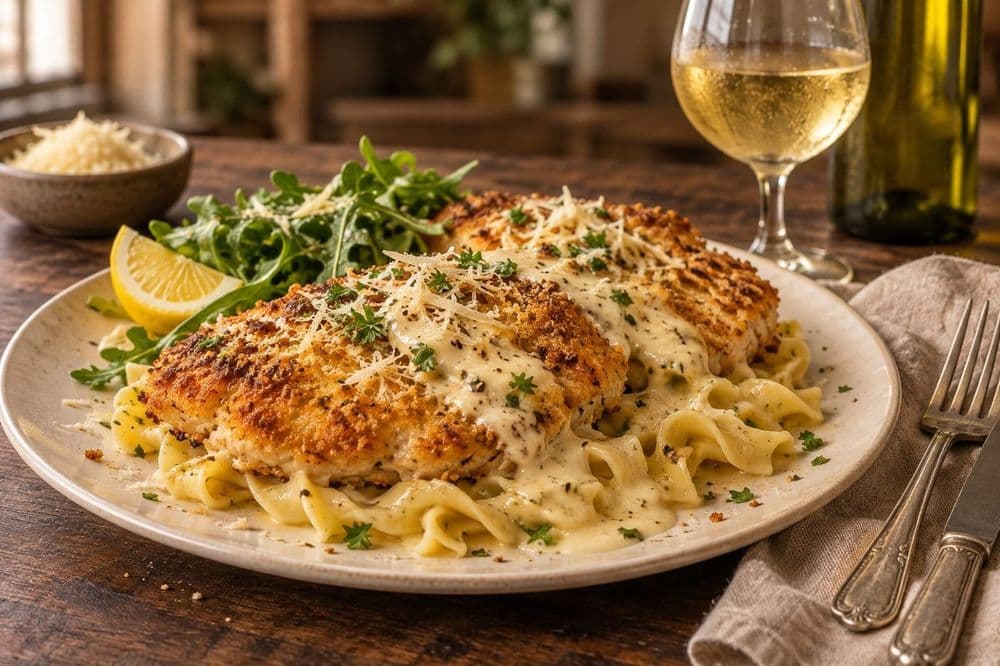



Caesar dressing is a study in emulsion and balance: anchovy-driven umami, lemon acidity, garlic pungency and Parmesan salt, all suspended in fat. Baked Caesar Chicken borrows that architecture and applies it to a midweek entrée, using the dressing's components as both marinade and crust.
The method is simple but deliberate. A Parmesan-breadcrumb coating shields the chicken from direct heat, so the interior stays juicy while the surface browns. A quick cream sauce built from garlic, chicken stock and more Parmesan finishes the plate with a velvety, savory counterpoint.
The result is dinner that reads as restaurant-level without demanding restaurant-level effort. It is the kind of accessible luxury that makes a Wednesday feel considered.
The Inspiration Behind This RecipeThe idea starts with a question: what if the flavors of a Caesar salad were cooked rather than tossed? Romaine is incidental. The real signature is the dressing's savory depth, which translates beautifully to poultry.
Brushing the chicken with Caesar dressing before breading seasons it and acts as a binder. The anchovy and Worcestershire notes in the dressing dissolve into the background and amplify the meatiness of the chicken.
A Brief History of Caesar-Style FlavorsThe Caesar salad is credited to Caesar Cardini, an Italian-born restaurateur in Tijuana in the 1920s. Its core flavors, namely egg yolk, olive oil, lemon, garlic, Parmesan and Worcestershire, spread quickly through American cooking.
Cooks have long applied those same flavors to chicken, since poultry's mild flavor welcomes bold seasoning. Crumb-crusted, baked chicken in a Parmesan sauce descends from the Italian-American tradition of cutlets, and this dish sits where the two lineages meet.
Why This Cooking Method WorksBaking at 400°F cooks the chicken evenly while the crust dehydrates and browns. Parmesan contributes proteins and sugars that undergo Maillard browning at oven temperatures, producing color and a nutty savor that plain breadcrumbs cannot.
Panko matters because its jagged, airy structure crisps without absorbing much moisture. Pounding the breasts to an even thickness ensures the chicken reaches 165°F at the same moment the crust finishes browning.
The sauce is a reduction. Simmering stock and cream concentrates flavor and thickens it as water evaporates, while the Parmesan's proteins lend body without flour.
Flavor Profile: What to ExpectExpect layered savory richness with a bright lift.
Each bite is crunchy, juicy, garlicky and creamy at once, with lemon keeping the richness in check. The sauce rounds everything with gentle salt and umami.
Tips for Making the Best Baked Caesar Chicken- Pound evenly: Aim for about three-quarter-inch thickness so the chicken cooks uniformly.
- Use a thermometer: Pull at 165°F; carryover heat is minimal with thin cutlets.
- Elevate on a rack: A wire rack lets air circulate and keeps the underside crisp.
- Grate your own Parmesan: Pre-grated cheese contains anti-caking agents that hinder melting and browning.
- Don't boil the sauce: Keep it at a gentle simmer so the cream stays smooth.
- ★ Chardonnay (lightly oaked): Its body and subtle butteriness match the cream sauce, while acidity cuts through the crust.
- Sauvignon Blanc: Bright citrus and herbal notes echo the lemon in the Caesar flavors.
- Pinot Grigio: Crisp and clean, it refreshes the palate between rich bites.
- Brut Sparkling Wine: Bubbles and acidity scrub away fat and salt.
- Pinot Noir: A light red with gentle tannin complements the chicken without overpowering it.
Serve the chicken over buttered egg noodles or garlic mashed potatoes to catch the sauce. A simple arugula salad with lemon dressing adds peppery contrast.
For a fuller midweek menu, a starter inspired by another Wine Wednesday favorite, such as the Crab Soup, suits the occasion. Roasted asparagus or green beans round out the plate.
Storage, Reheating, and Make-Ahead TipsRefrigerate leftover chicken and sauce separately in airtight containers for up to three days. Reheat the chicken on a rack at 375°F for about 10 minutes to restore crispness, and warm the sauce gently over low heat with a splash of stock.
You can bread the chicken up to four hours ahead and keep it chilled, then bake just before serving.
Why This Recipe Deserves a Spot in Your Wine Wednesday RotationThis dish delivers crisp texture, savory depth and a silky sauce with ingredients you likely already know. It proves that midweek dinner can feel elevated without being fussy.
Pour a glass, plate it with care, and let a Wednesday feel like a small celebration.