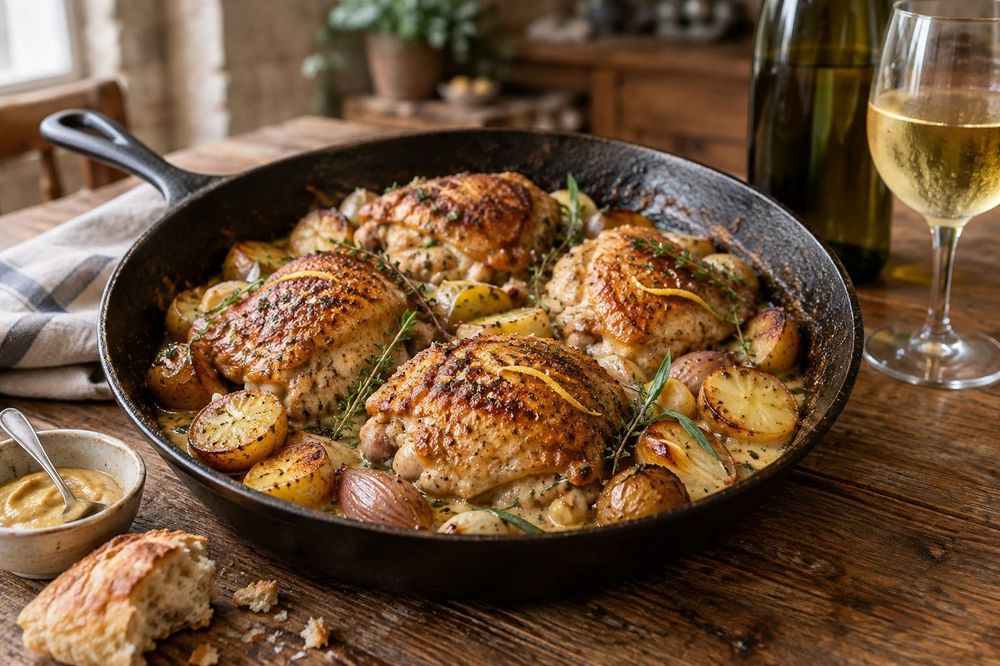



French home cooking runs on a simple principle: a few well-chosen ingredients, handled with precise technique, will outperform a long list of fancy ones. French Style Chicken and Potatoes is a clean example. Bone-in chicken thighs, waxy potatoes, shallots, garlic, Dijon, white wine, and herbs share a single skillet, and each one improves the others as the pan fond builds and the sauce reduces.
What interests me most is how the dish uses one fat and one pan for everything. Chicken skin renders into the fat that browns the potatoes. The browned bits that stick to the pan dissolve in white wine and become the base of the sauce. Nothing is wasted, and every layer of flavor traces back to the same pan.
This is the kind of recipe that makes a midweek dinner feel considered rather than rushed. It takes about an hour, needs no special equipment beyond an oven-safe skillet, and delivers a result that looks and tastes like a bistro plate. Let's look at why it works and which wines suit it best.
If you cook it once with attention to temperature and timing, you will be able to repeat it from memory.
The Inspiration Behind This RecipeThe inspiration is the French poulet rôti tradition and its cousins in the bistro canon: chicken cooked on the bone, served with potatoes that have absorbed the juices, and finished with a sauce built from whatever is in the pan. The goal was to keep that rustic logic but make it dependable on a weeknight.
Dijon mustard is the key adjustment. Beyond its flavor, it acts as an emulsifier, helping the wine, stock, and rendered fat come together into a cohesive, lightly creamy sauce without any cream. Fresh thyme and a little tarragon add the aromatic profile you associate with Provence and the Loire.
A Brief History of French Pan-Roasted ChickenChicken with potatoes has long been a staple of French household cooking. Chicken was historically a Sunday-table bird in rural France, while potatoes, promoted widely in the late eighteenth century, became the dependable starch. Cooking them together in one vessel was practical, since the potatoes could catch the fat and juices as the bird cooked.
The technique of deglazing, loosening the browned residue with wine, is fundamental to classical French sauce making. Escoffier's codification of the mother sauces rests on the same idea: concentrate flavor through reduction and build it from a well-browned base. Our skillet version is the humble, everyday descendant of that tradition.
Why This Cooking Method WorksThe method relies on the Maillard reaction. Patting the chicken completely dry and starting it skin-side down in a hot pan lets the surface dehydrate and brown rather than steam. Browning produces hundreds of flavor compounds and a crisp skin that stays crisp even after finishing in the oven.
Finishing in the oven gives gentle, even heat that cooks thighs through to 175 to 185°F. Unlike breast meat, thighs contain more connective tissue, which needs that higher temperature to convert collagen to gelatin, producing tender, juicy meat. The potatoes, tossed in the rendered fat, brown on the edges while their starch softens inside.
Deglazing with white wine adds acidity that balances the richness of the fat. As the alcohol cooks off and the liquid reduces, sugars and aromatics concentrate. The Dijon and a small knob of cold butter at the end bind the sauce into a glossy finish.
Flavor Profile: What to ExpectExpect a savory, bright, and herbal dish with a clear structure:
- Savory depth: browned chicken skin and caramelized potato edges.
- Bright acidity: dry white wine and a touch of lemon cut through the richness.
- Sharp warmth: Dijon adds a gentle tang without overwhelming heat.
- Herbal lift: thyme, garlic, and tarragon bring aromatic complexity.
The overall impression is balanced: rich but not heavy, with enough acid to keep each bite lively.
Tips for Making the Best French Style Chicken and PotatoesA few details separate good from excellent:
- Dry the chicken thoroughly: moisture is the enemy of browning, so pat it with paper towels and salt it at least 30 minutes ahead if you can.
- Use waxy potatoes: Yukon Gold or baby red potatoes hold their shape and develop creamy interiors.
- Do not move the chicken early: let it release naturally from the pan, which signals a proper sear.
- Deglaze off the heat: add the wine carefully, then return to a simmer to reduce by about half.
- Use an instant-read thermometer: aim for 175°F or higher in the thigh.
- Finish with cold butter: whisk it in off the heat for a silky sauce.
This dish has moderate richness, bright acidity, and herbal notes, so the best pairings are medium-bodied wines with enough acid to match the sauce:
- ★ White Burgundy (Chardonnay): The best match. Its balanced acidity and subtle oak echo the butter and white wine in the sauce, while its body stands up to the roasted skin.
- Sancerre (Sauvignon Blanc): Crisp, mineral, and herbal, it mirrors the thyme and tarragon and refreshes the palate between bites.
- Chenin Blanc from Vouvray: A touch of off-dry fruit tempers the Dijon and complements the caramelized potatoes.
- Pinot Noir: A light-bodied red with earthy notes that suits chicken thighs without overpowering them.
- Dry Rosé from Provence: Light, dry, and herbal, it works especially well if you serve the dish in warmer weather.
Serve the chicken straight from the skillet with the sauce spooned over the potatoes. Add something green and slightly bitter, such as sautéed haricots verts, wilted spinach, or a simple salad of arugula in lemon vinaigrette, to balance the richness.
A crusty baguette is useful for the sauce. If you are planning a multi-course midweek meal, a starter like the Crab Soup from our Wine Wednesday lineup works well, and the Creamy Truffle Chicken is a good companion recipe when you want to lean further into richness on another night.
Storage, Reheating, and Make-Ahead Tips- Refrigerate: store leftovers in an airtight container for up to 3 days.
- Reheat: warm in a 350°F oven for 15 to 20 minutes, uncovered, to revive the skin. Avoid the microwave if crispness matters.
- Make ahead: season the chicken a day in advance and keep it uncovered in the refrigerator for drier skin.
- Prep ahead: halve the potatoes and mince the shallots and garlic the day before.
- Freezing: the chicken freezes acceptably for up to 2 months, but the potatoes lose some texture.
This recipe delivers accessible luxury: familiar ingredients, a single pan, and techniques that teach you something every time you use them. Learn to brown, deglaze, and reduce here, and you can apply those skills to a dozen other dishes.
Pour a glass of something good, let the skillet do the work, and turn an ordinary midweek evening into a dinner worth savoring.
