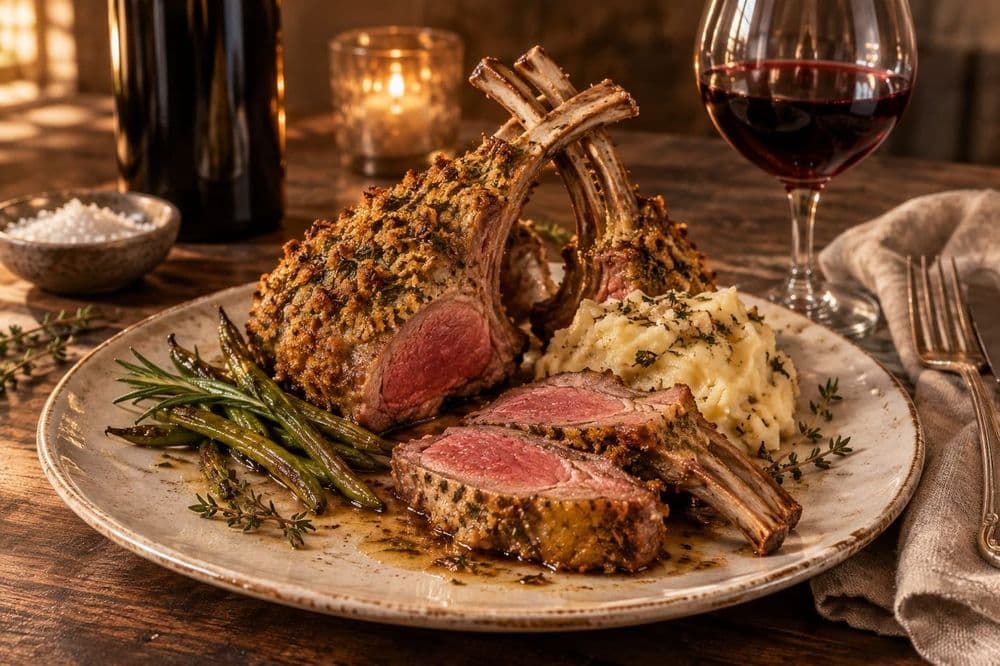



A rack of lamb has a reputation as a restaurant-only extravagance, but it is really an exercise in control: a small cut, a hot pan, a precise internal temperature. This Dijon herb crusted version relies on that precision. A sharp mustard binder and a fragrant breadcrumb crust protect the meat while it roasts to a blushing medium-rare.
The logic is simple. Lamb is rich and gently gamey, so it needs acid, aromatics and texture to balance it. Dijon supplies tang, rosemary and thyme supply resinous lift, and the breadcrumbs add a crisp contrast to the tender, rosy meat.
It is also a surprisingly fast dish. Once the rack is trimmed and seared, the oven does most of the work, which leaves you free to open a bottle and set the table. Midweek, this is accessible luxury at its best.
The Inspiration Behind This RecipeThis dish comes from the classic French-bistro approach to lamb: sear, coat in mustard and herbs, then roast. The goal was to keep the technique faithful while making it manageable on a Wednesday night. Every component does a job: fat renders, mustard adheres, herbs perfume, crumbs crisp.
It is also a natural holiday-week centerpiece. Two racks feed four people comfortably, and the presentation, with the bones crossed or standing in a row, looks far more complicated than it is.
A Brief History of Herb-Crusted LambLamb roasted with herbs is one of the oldest pairings in Mediterranean cooking, where rosemary, thyme and garlic grow wild near the grazing pastures. French cooks refined the idea into the persillade and moutarde crust, a coating of mustard, parsley, garlic and breadcrumbs that became a bistro standard for carré d'agneau.
Dijon mustard, made with verjuice or white wine and brown mustard seeds, is the traditional choice because its acidity and emulsifying properties help the crust cling and cut through the lamb's fat.
Why This Cooking Method WorksSearing first creates Maillard browning on the fat cap, building deep savory flavor that the oven alone cannot. It also renders some of the fat, so the final crust does not sit on a greasy surface.
Brushing on the mustard after searing gives the breadcrumbs something tacky to grip. Roasting at high heat then cooks the lamb quickly, keeping the center tender, while the crumbs toast in the same window. Finally, resting for 10 minutes lets the muscle fibers relax and reabsorb juices, so slicing does not flood the board.
Flavor Profile: What to ExpectExpect a layered bite: crisp, herbal crust first, then sweet, tender lamb.
- Tangy: Dijon brightens and cuts richness.
- Herbal: rosemary and thyme add pine and floral notes.
- Savory: seared lamb fat brings depth.
- Crisp: toasted crumbs contrast the soft interior.
The result is balanced rather than heavy, with acid and aromatics keeping each bite lively.
Tips for Making the Best Dijon Herb Crusted Rack of Lamb- Use a thermometer: pull at 130°F for medium-rare; it rises about 5 degrees while resting.
- Pat the lamb dry: moisture prevents a proper sear.
- Don't overpack the crust: a thin, even layer crisps better.
- Bring to room temperature: 30 minutes out of the fridge cooks more evenly.
- Rest fully: 10 minutes before cutting between the bones.
- ★ Pauillac or Left Bank Bordeaux: the classic match; firm tannins and cassis cut through lamb's fat while echoing the herbs.
- Syrah from the Northern Rhône: peppery, savory notes mirror the herb crust.
- Rioja Reserva: softer tannins and dried-cherry fruit suit medium-rare lamb.
- Pinot Noir from Burgundy: earthy and elegant for those preferring a lighter red.
- Chianti Classico: bright acidity handles the mustard tang.
Garlic mashed potatoes or creamy Parmesan risotto soak up the juices beautifully, and roasted asparagus or green beans add freshness. For a cozy midweek spread, you could follow the Wine Wednesday tradition and serve alongside a pot of creamy risotto, as in our Italian Pot Roast & Parmesan Risotto dinner.
Slice into double chops, fan them on warm plates, and spoon any resting juices over the top.
Storage, Reheating, and Make-Ahead TipsLeftover lamb keeps refrigerated for up to 3 days in an airtight container. Reheat slices gently in a 275°F oven, covered, until just warm to avoid overcooking. You can trim the racks and mix the crust a day ahead; apply the mustard and crumbs just before roasting so the coating stays crisp.
Why This Recipe Deserves a Spot in Your Wine Wednesday RotationIt looks like a celebration and cooks in under an hour, which is exactly the accessible luxury this series is about. Master the sear, the crust and the rest, and you have a dependable showpiece for holidays or any midweek night that deserves a good bottle.