


Stuffed chicken breast is a lesson in controlled contrasts. The lean, mild protein is a blank canvas, and the filling supplies everything else: the tartness of cranberry, the mineral depth of wilted spinach, and the lactic richness of melted Brie. Each component is chosen to counterbalance the others, and the result is a dish that tastes far more complicated than its method suggests.
The technique matters here. A lean breast cooks quickly, and the filling must be hot and molten before the meat dries out. We solve this with a deep pocket, a hard sear for color, and a gentle oven finish, so the interior reaches a safe 165°F while the cheese softens into a glossy, spoonable core.
Brie is an excellent choice for stuffing because its high fat content and soft paste melt smoothly without turning grainy or oily. Combined with the acidity of cranberries, it produces the sweet-tart-creamy interplay that defines great holiday cooking and makes this a midweek dinner that feels like an occasion.
Consider this the accessible-luxury answer to a December Wednesday: restaurant polish, achievable in about 50 minutes, and built to showcase a well-chosen glass of wine.
The Inspiration Behind This RecipeThis dish draws on the classic European tradition of farcie, or stuffing, where a filling is enclosed in a protein to season it from within. The pairing of cranberry and Brie echoes the baked Brie appetizers that dominate holiday tables, translated into a proper main course.
Spinach is added for structure and balance. Its earthy, slightly bitter edge keeps the filling from tasting like dessert, and its moisture, once squeezed out, leaves room for the cheese to take center stage.
A Brief History of Stuffed PoultryStuffing meats is among the oldest culinary strategies, appearing in Roman cookbooks such as Apicius, which describes stuffed birds and cuts with herbs, nuts and fruit. The French refined it into ballotines and paupiettes, emphasizing tidy shapes and sauce-friendly presentation.
Cranberries, native to North America, entered the savory canon through Thanksgiving and holiday traditions. Pairing them with French-style cheeses is a modern, transatlantic fusion that works because acid and fat are natural partners.
Why This Cooking Method WorksSearing first triggers the Maillard reaction, building browned, savory flavor on the surface that a purely oven-baked breast cannot achieve. Finishing in a moderate 375°F oven allows heat to travel gently to the center without squeezing moisture from the muscle fibers.
Squeezing the spinach thoroughly is a critical step. Excess water would turn the filling into steam, diluting flavor and making the pocket leak. Dry filling stays cohesive, and Brie's fat bonds with the cranberries into a stable, glossy mixture.
Resting for five minutes redistributes juices and lets the molten cheese thicken slightly, so it stays in the chicken rather than flooding the plate when sliced.
Flavor Profile: What to ExpectExpect a layered bite that moves from savory crust to creamy center, with tart fruit cutting through the richness.
The first note is the seasoned, golden exterior, followed by tender, juicy meat. Then comes the Brie, buttery and faintly mushroomy, with bursts of tart cranberry and the green, mineral backbone of spinach. A garlic and thyme thread runs through everything, and the pan sauce ties it together.
Tips for Making the Best Cranberry & Spinach Stuffed Chicken with BrieSmall details determine whether the filling stays inside the chicken and the meat stays juicy.
Cut a deep pocket: Slice horizontally through the thickest side without cutting through the edges, leaving a roughly 3-inch-deep cavity.
Chill the Brie: Cold cheese is easier to cube and melts more slowly, which protects against leaking.
Squeeze the spinach dry: Press it in a towel until no liquid remains.
Secure the opening: Use toothpicks, and do not overstuff.
Use a thermometer: Pull the chicken at 165°F in the thickest part.
Wine Pairing Guide- Chardonnay, lightly oaked (★ best match): Its creamy texture mirrors the Brie, while its stone-fruit acidity supports the cranberries.
- Pinot Noir: Red berry fruit and gentle tannins echo the cranberry without overwhelming the chicken.
- Sparkling Brut: Bubbles and acidity cleanse the palate of cheese richness.
- Viognier: Floral, round and slightly peachy, it complements the sweet-tart filling.
- Dry Riesling: Bright acidity and citrus lift cut through the cream and refresh each bite.
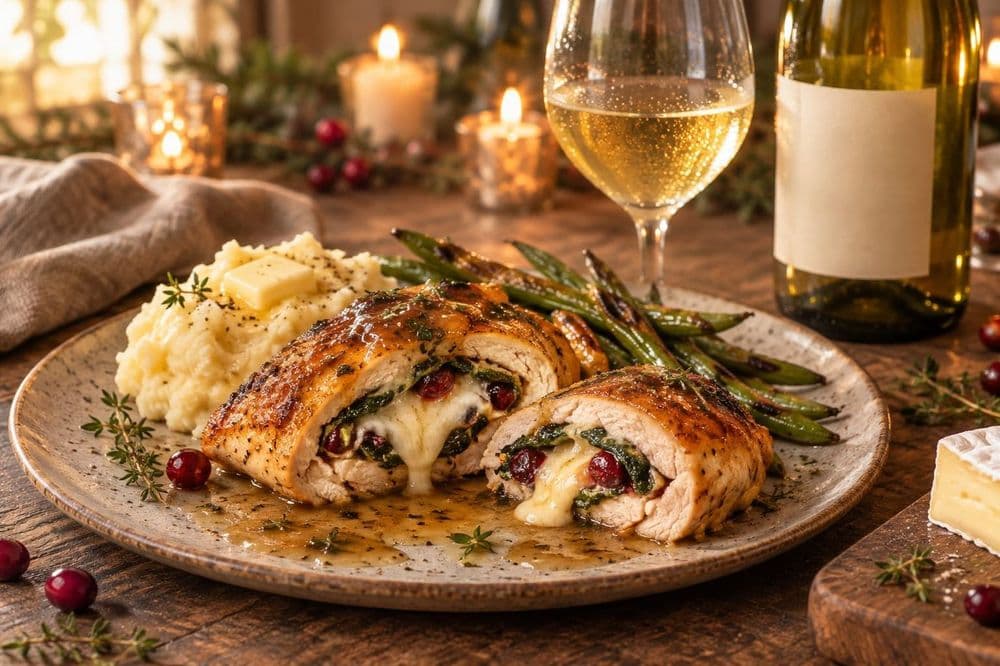
Slice the chicken on the bias to reveal the spiral of green, red and cream, and spoon the pan juices over the top. Creamy mashed potatoes or a buttery wild rice pilaf anchor the plate, while roasted green beans or Brussels sprouts add textural contrast.
For a fuller holiday spread, consider following with the Rosemary Citrus Roast Chicken from our Wine Wednesday archive, which shares the same seasonal flavor profile and similar wine pairings.
Storage, Reheating, and Make-Ahead TipsRefrigerate leftovers in an airtight container for up to three days. Reheat covered at 325°F for 15 to 20 minutes until warmed through, which preserves moisture better than a microwave.
You can assemble the stuffed breasts up to 24 hours ahead, keep them covered in the refrigerator, and sear just before baking. Add a few extra minutes of oven time if they go in cold.
Why This Recipe Deserves a Spot in Your Wine Wednesday RotationThis is accessible luxury at its best: a handful of ingredients, a few precise techniques, and a result that looks and tastes like fine dining. It rewards attention to detail without demanding hours in the kitchen.
Pour a glass of Chardonnay, carve at the table, and let a midweek dinner feel like a celebration. Understanding why each step works makes you a more confident cook, and that confidence is the real reward.