


Cranberry Orange Scones: A Pastry Chef's Brunch Darling
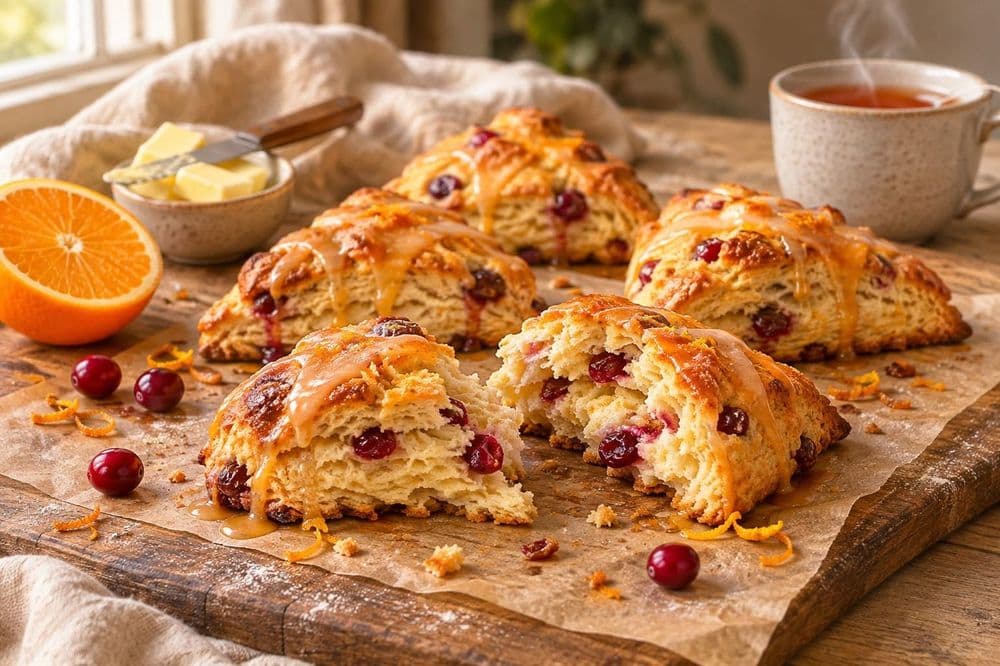
Some mornings call for a showstopper, and a tray of golden, ruby-flecked scones fits the bill. These Cranberry Orange Scones are the kind of bake that makes the kitchen smell like a holiday bakery before the first cup of coffee is even poured. Think buttery, flaky layers, jewel-bright cranberries and a shiny orange glaze that crackles just a little when you bite in.
As a pastry chef, I have a soft spot for anything that lets cold butter and a little patience do the heavy lifting. Scones are a wonderful lesson in restraint: a light hand, a cold bowl and a hot oven give you a tall, tender crumb with crisp edges.
Best of all, they come together in under an hour, so you can serve something that looks bakery-made without being chained to the stove all morning.
The Inspiration Behind This Recipe
Cranberry and orange are one of the great flavor marriages of the cold season. The tartness of the berry cuts straight through the richness of butter, while orange zest brings a floral, fragrant brightness that lifts everything. I wanted a scone that tasted like early December: festive, a little tangy, and not too sweet.
The glaze is where the whimsy comes in. A drizzle of orange-scented icing turns a humble scone into something dessert-adjacent, which, as you know, is exactly my favorite kind of brunch.
A Brief History of Scones
Scones trace their roots to Scotland in the early 1500s, where they began as flat oat cakes cooked on a griddle. Once baking powder arrived in the nineteenth century, scones rose into the tall, tender wedges we know today and became the centerpiece of British afternoon tea alongside clotted cream and jam.
In America, scones took on a richer, more cake-like personality, often studded with dried fruit and finished with a glaze. Cranberry orange versions are a holiday staple, borrowing the berry's long association with autumn and winter tables.
Why This Cooking Method Works
The secret to a flaky scone is cold fat. When small pieces of cold butter hit a hot oven, the water in the butter turns to steam and pushes the dough apart, creating those lovely layers. That is why we grate the butter frozen and keep the cream chilled until the last second.
Minimal mixing matters just as much. Overworking develops gluten, which makes scones tough and bready. Stir only until the dough comes together, then pat and cut. A bit of shagginess is a good sign.
Baking at a high temperature gives an immediate burst of rise, setting the structure before the butter melts out. A brush of cream on top encourages a deep golden color and a slightly crisp crust.
Flavor Profile: What to Expect
Every bite balances buttery richness with bright, tart fruit and fragrant citrus.
- Buttery and tender: a soft, flaky interior with layers you can pull apart.
- Tart and juicy: dried cranberries plump in the oven and pop with tang.
- Citrusy: fresh orange zest in both dough and glaze perfumes every bite.
- Sweet finish: a thin, crackly glaze adds sparkle without overpowering.
The result is a scone that is lightly sweet, perfect with a hot drink, and just as lovely on its own.
Tips for Making the Best Cranberry Orange Scones
A few small details make the difference between good and bakery-worthy.
- Freeze your butter: grate it straight from the freezer for even, cold pieces.
- Zest into the sugar: rubbing the zest into the sugar releases the fragrant oils.
- Do not overmix: stop as soon as no dry flour remains.
- Chill before baking: 10 minutes in the freezer keeps edges sharp and rise tall.
- Cool before glazing: a warm scone melts the icing right off.
Serving Suggestions and Side Pairings
Serve these warm or at room temperature on a pretty platter, with softened butter, orange marmalade or a bowl of whipped cream. For a heartier spread, add scrambled eggs, crisp bacon or a fresh fruit salad of citrus segments and pomegranate seeds.
They also make a stunning holiday gift. Stack a few in a parchment-lined box and tie it with ribbon for a sweet surprise.
Storage, Reheating, and Make-Ahead Tips
- Room temperature: store unglazed or glazed scones in an airtight container for up to 2 days.
- Freeze unbaked: freeze cut wedges on a tray, then bag; bake from frozen, adding 3 to 5 minutes.
- Freeze baked: wrap unglazed scones well and freeze up to 2 months.
- Reheat: warm at 325°F for 5 to 8 minutes to refresh the crust, then glaze.
- Make ahead: mix and shape the dough the night before and refrigerate, covered.
Why This Recipe Deserves a Spot in Your Rotation
These scones are festive, forgiving and endlessly adaptable. Swap in blueberries, add white chocolate chips or toss in chopped pecans. Once you have the method down, you can bake them on a whim any lazy weekend.
They deliver the wow factor of a patisserie case with pantry-friendly ingredients, and they make any morning feel like a celebration.
Recommended Drink Pairing
A pot of Earl Grey or a creamy latte is a classic match, with bergamot echoing the orange. For something bubbly, pour a brut Prosecco or a mimosa to make brunch extra festive.
Cross-Promotion
Craving more sweet-leaning brunch bakes? Try our Apple Cinnamon Crumb Muffins for another tender, fruit-studded treat, or the Blueberry Ricotta Scones for a creamy, berry-packed cousin to these.