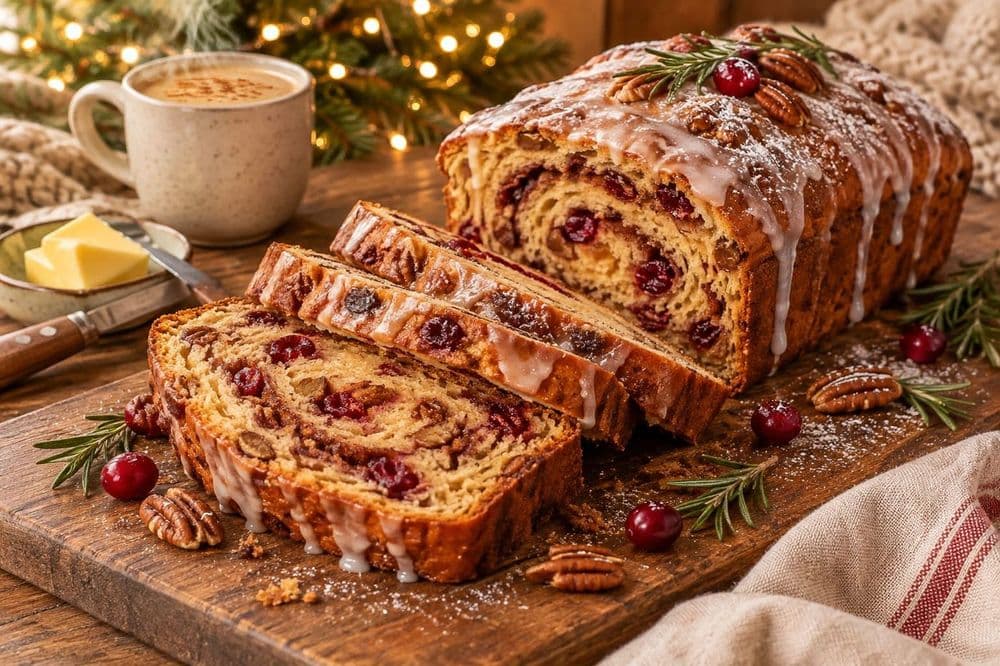



Some brunch dishes whisper, and then there is Christmas Bread, which walks into the room wearing a red-and-green sweater and a sparkly glaze. This is the loaf I picture when I think of a holiday morning: soft, golden, perfumed with cinnamon and orange, and dotted with jewel-bright cherries and toasted pecans. It looks like a bakery showpiece, yet it comes together with simple pantry staples.
As a pastry chef, I love a bread that behaves like a dessert without apologizing for it. The tender, enriched crumb has just enough sweetness to feel celebratory, while the swirl of brown sugar and spice makes every slice a little work of art. Cut it and you get a spiral that practically begs for a photo.
Best of all, it fits the leisurely rhythm of a weekend. Mix the dough, let it rise while the coffee brews, and by the time the stockings are emptied your kitchen smells like the holidays.
The Inspiration Behind This Recipe
This loaf was inspired by the sweet breads that appear on holiday tables across the world, from German stollen to Italian panettone. I wanted something with all that festive character but friendlier for a home baker: no candied-peel marathon, no days of fermentation, just a lovely enriched dough and a generous filling.
The cherries and pecans are a nod to the colors and flavors of the season. Red against cream, with a crunch of toasted nuts, makes every slice look dressed for the occasion.
A Brief History of Holiday Sweet Breads
Festive breads have been part of winter celebrations for centuries. When sugar, butter, spices and dried fruit were luxuries, bakers saved them for special days, and the loaves that resulted became symbols of abundance. Stollen in Germany, panettone in Milan and kulich in Eastern Europe all grew from this tradition.
Those breads share a common idea: an enriched dough, enhanced with fruit, nuts and spice, shared with family. Our Christmas Bread follows in that lineage with a streamlined, modern approach.
Why This Cooking Method Works
Enriched doughs rely on milk, butter and egg to create a soft, tender crumb. Fat coats the gluten strands, shortening them, which is why this bread is pillowy rather than chewy. A warm, covered rise lets the yeast produce gas slowly, building flavor along with volume.
Rolling the dough around a buttery sugar-and-spice filling creates the spiral, and baking at a moderate temperature lets the center set before the exterior over-browns. Brushing the loaf with butter right out of the oven keeps the crust supple, and the glaze goes on while it is still slightly warm so it melts into a thin, glossy sheen.
Flavor Profile: What to Expect
Each bite balances sweet, spiced and bright notes:
- Warm spice: cinnamon and a hint of nutmeg through the swirl.
- Citrus lift: orange zest keeps the richness from feeling heavy.
- Tart pops: dried cherries add chewy, jammy bursts.
- Toasty crunch: pecans bring buttery depth and texture.
The vanilla glaze ties everything together with a gentle sweetness that doesn't overwhelm the bread itself.
Tips for Making the Best Christmas Bread
A few small details make a big difference in the final loaf:
- Check your yeast: it should foam within 10 minutes; if not, start over.
- Warm, not hot, milk: about 110°F so the yeast thrives rather than dies.
- Toast the pecans: five minutes in the oven deepens their flavor.
- Roll tightly: a snug roll prevents gaps in the swirl.
- Tent with foil: if the top browns too quickly, cover loosely for the last 15 minutes.
- Glaze when slightly warm: too hot and it runs off; too cool and it sits thick.
Serving Suggestions and Side Pairings
Serve thick slices on a platter dusted with a little powdered sugar and a few sprigs of rosemary or cranberries for that holiday-card look. A smear of salted butter or whipped cream cheese is lovely on top.
For a fuller spread, add something savory to balance the sweetness, like a ham and cheese croissant casserole or crispy bacon. Fresh citrus segments and a bowl of yogurt round it out beautifully.
Storage, Reheating, and Make-Ahead Tips
- Room temperature: wrap tightly and keep up to 3 days.
- Refrigerator: store glazed slices up to 5 days in an airtight container.
- Freezer: freeze unglazed loaf, wrapped well, for up to 2 months; thaw overnight and glaze fresh.
- Reheating: warm slices 10-15 seconds in the microwave or 5 minutes in a 300°F oven.
- Make-ahead: shape the loaf, refrigerate overnight, then let it come to room temperature before baking.
Why This Recipe Deserves a Spot in Your Rotation
This is the kind of bake that makes a holiday morning feel special without keeping you chained to the stove. It is gorgeous, forgiving and endlessly adaptable: swap in cranberries, walnuts or chocolate chips and it's a new loaf every time.
Make it once and it may become the tradition people ask for every December.
Recommended Drink Pairing
Pair slices with a mug of spiced chai or a creamy latte for a cozy morning. If you're toasting the day, a chilled glass of Moscato d'Asti or a dry sparkling wine echoes the fruit and cuts through the sweetness.
Cross-Promotion
If you love this festive loaf, try our Cranberry Orange Scones for another citrusy, fruit-studded bake, or Gingerbread Waffles for more cozy holiday spice on the brunch table.